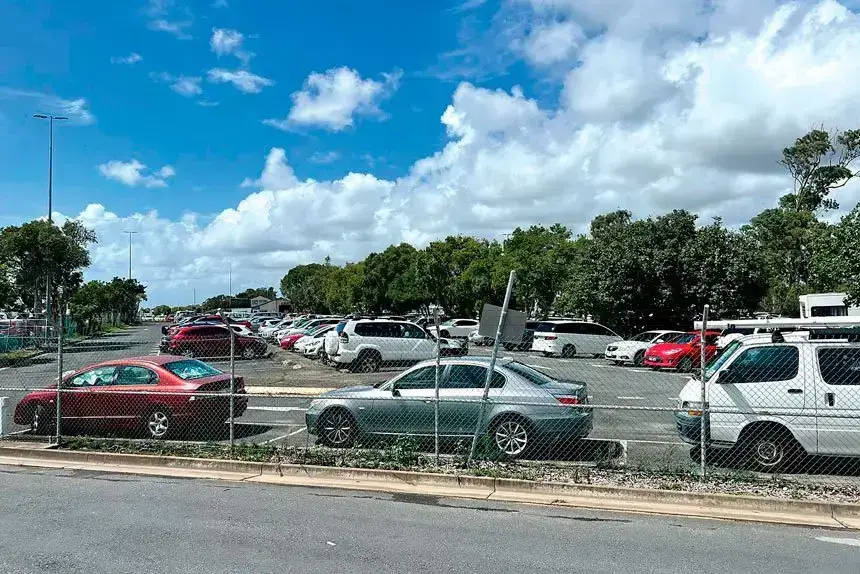

THE Federal Government has given the long-awaited green light to the Birkdale Community Precinct and Redland Whitewater Centre.
This removes one of the biggest hurdles facing a project that sits among more than $7 billion worth of developments planned across Redlands Coast over the next two decades.
The Government has determined the Birkdale Community Precinct – including the proposed Redland Whitewater Centre – is a Not a Controlled Action – Particular Manner (NCA-PM) under the Environment Protection and Biodiversity Conservation Act 1999 (EPBC Act).
The decision means the project will not require further Federal environmental assessment, provided it is delivered under a series of conditions designed to protect nationally significant environmental values.

The announcement came as Champion Redlands Coast unveiled new research showing more than $7 billion in projects are planned across the city, with Chief Executive Officer Cindy Corrie declaring there were now “seven billion reasons to champion Redlands Coast”.
Redland City Council Acting Mayor Julie Talty said the EPBC determination validated years of scientific investigations and environmental planning undertaken by Council.
“Ecology has been integrated into this project from the outset,” Cr Talty said.
“Council was always confident that its positive environmental stewardship of the site would factor in the result we have now achieved following Council’s self-referral to the EPBC process.
“The decision means Council can proceed without further Federal assessment, with the precinct’s delivery and some future operational matters subject to a limited number of conditions the Commonwealth have imposed.”
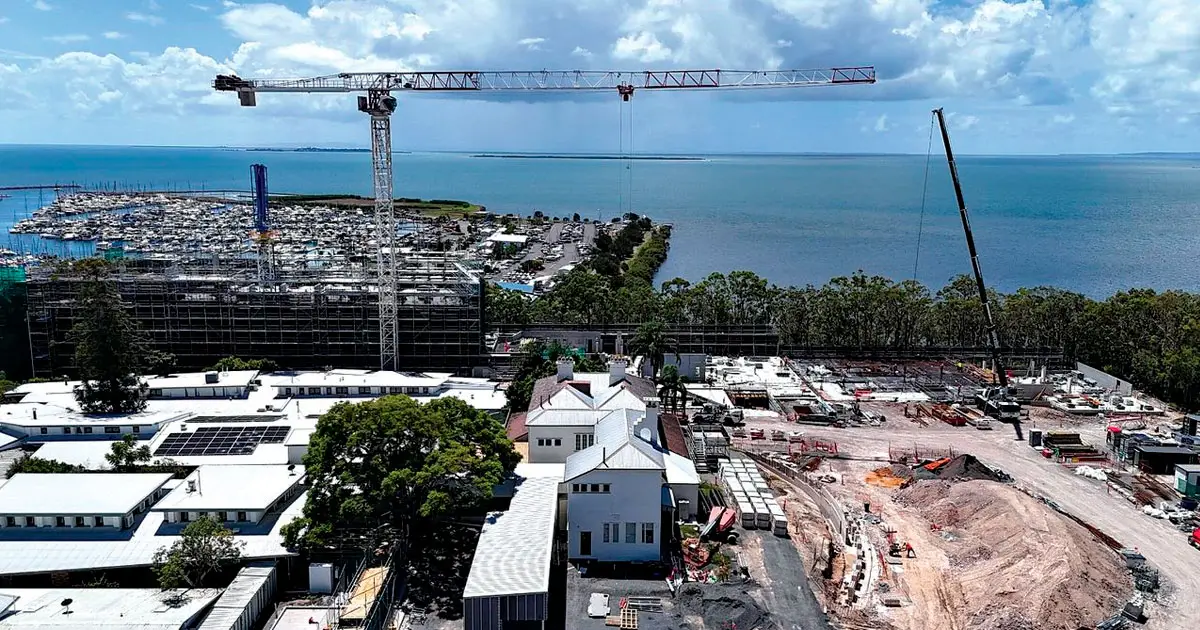
The 62-hectare Birkdale Community Precinct includes a consolidated development footprint of less than 20 hectares, with almost 39 hectares – approximately 62 per cent of the site – retained for conservation, protection and ecological enhancement.
Environmental commitments include the planting of approximately 10,000 native trees and tube stock, habitat corridors, nest boxes, specialist koala monitoring, weed and pest management, stormwater treatment systems and fully lined whitewater channels designed to prevent groundwater interaction.
The precinct will combine conservation areas, community recreation facilities, heritage attractions and the Redland Whitewater Centre, which is earmarked to host canoe slalom events during the Brisbane 2032 Olympic Games.
The project also includes plans for a public swimming lagoon, amphitheatre, adventure play spaces and preservation of the site’s heritage-listed Willards Farm and World War II Radio Receiving Station.
The Federal approval comes as new research released by Champion Redlands Coast highlights the scale of investment opportunities emerging across the region.
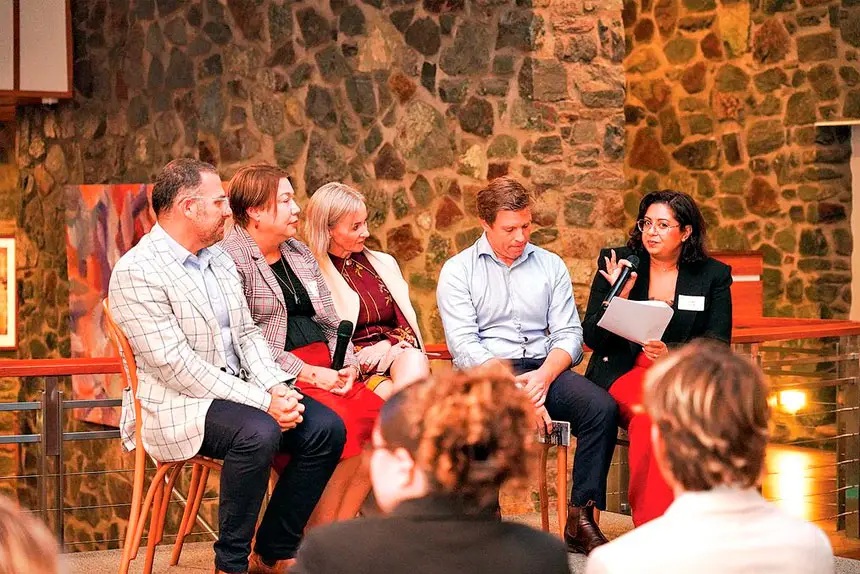
More than 80 industry leaders, senior government bureaucrats and elected officials gathered at Sirromet Wines for Champion Redlands Coast’s first major event since relaunching the organisation, where the group unveiled its updated Project Pipeline research conducted in partnership with Econisis.
The research tracks 90 projects planned across Redlands Coast and, for the first time, includes a delivery risk framework examining the challenges facing major developments and infrastructure projects.
Ms Corrie said the pipeline highlighted enormous opportunities for the region but warned none of the projects could be taken for granted.
“Half of these projects – hospitals, roads, housing, community spaces – are being delivered right now,” she said.
“But delivery of city-shaping projects comes with great risk – nothing is guaranteed.
“These projects belong to all of us – Federal, State and local government, private industry and the broader community.
“Every single one of us has a role to play in whether this pipeline succeeds or stalls.”
Addressing attendees at the “What We Champion” event, Ms Corrie said Redlands Coast needed stronger leadership and collaboration to ensure projects moved from planning to reality.
“Success comes when industry, government and community stop treating growth as something that happens to us and start treating it as something we actively shape together,” she said.
“Redlands has all the right ingredients to succeed, but the ingredient most lacking right now is leadership.
“Leadership that understands that protecting lifestyle and enabling growth are not opposing ideas – leadership that is prepared to back this city.
“That leadership has to come from everyone in this room.”
She noted that while around half the projects were classified as being delivered, many remained in planning and approval phases.
“Around half the pipeline is technically sitting in the ‘being delivered’ category,” she said.
“Which sounds fantastic – until you realise ‘being delivered’ can mean anything from bulldozers on site tomorrow to a consultant somewhere working very hard on page 347 of an environmental assessment.”
The Birkdale Community Precinct itself was highlighted as one of the region’s most significant city-shaping projects, with the EPBC decision removing a major source of uncertainty and paving the way for the next stages of delivery.
The event also featured a panel discussion involving State Member for Redlands Rebecca Young, Economic Development Queensland CEO Julian Simmonds, Queensland Government State Planner Peta Harwood and Redland City Council General Manager Infrastructure and Operations Chris Isles.
Discussion centred on growth, housing, infrastructure investment and opportunities associated with the Brisbane 2032 Olympic and Paralympic Games.
Mr Isles said the Olympics presented a major tourism opportunity for the region.
“We have everything here that you otherwise need to travel to the far corners of southeast Queensland to go and experience,” he said.
“Come 2032 and the Olympics is here; we have this unbelievable tourism opportunity.”
Mr Simmonds said Redlands Coast was well positioned for future growth.
“You’ve got really exciting things coming down the pipeline. Growth is coming. That is a good thing,” he said.
“This is a beautiful place to live. Why wouldn’t you want to be here?”
Mrs Young said the community needed to embrace growth and innovative development models.
“We all have a collective responsibility to shift the culture of the Redlands and lean into the future,” she said.