

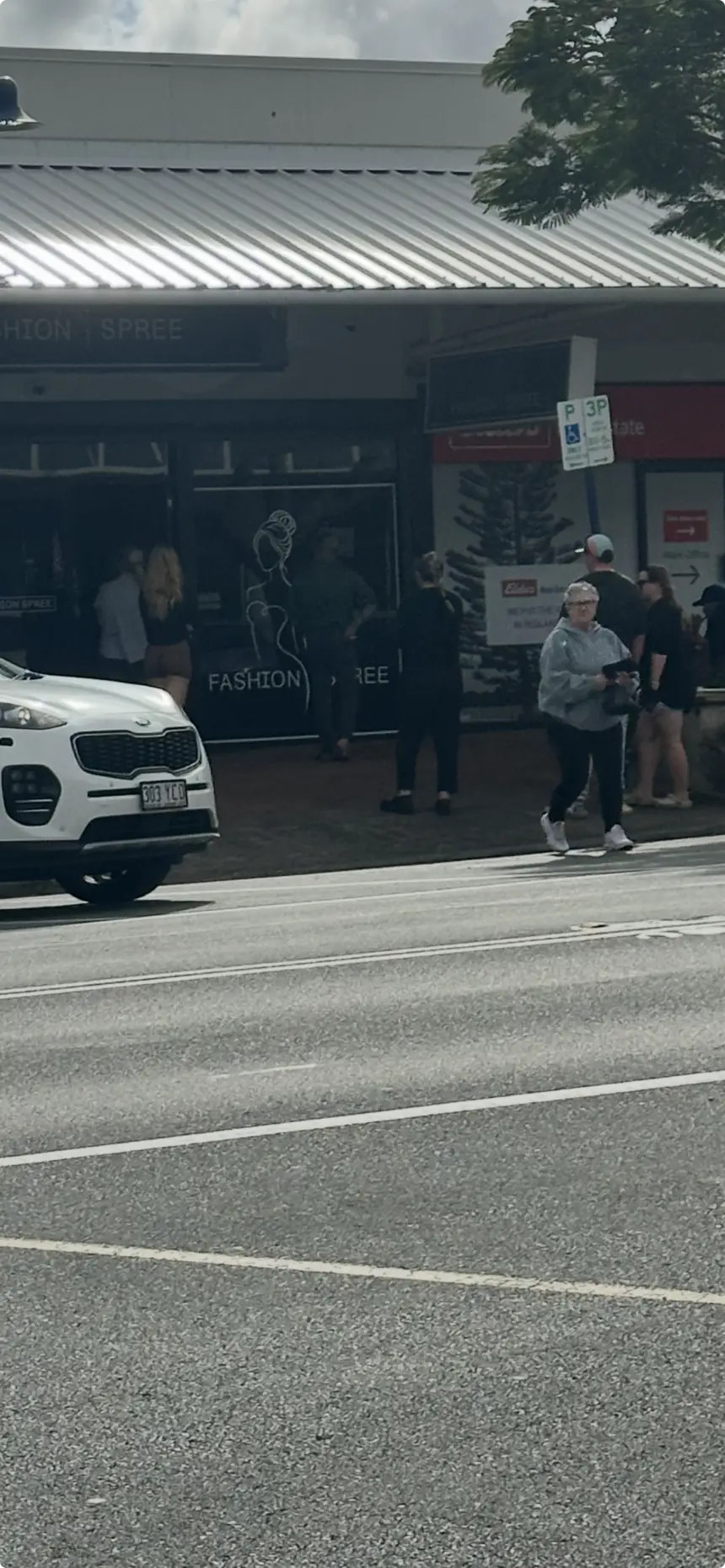
The renaming of Cleveland’s Fashion Spree to Cleveland Convenience raises an obvious question: has anything really changed?
The Bloomfield Street business was previously raided by Queensland Health over alleged illegal tobacco and vape sales.
A new sign above the door does not, by itself, answer community concerns about whether discounted cigarettes and vapes remain available.
That is why this issue deserves to be reported — and why it should not be dismissed as an attack on smokers.

It is not.
Smokers should not be shamed, lectured or treated as criminals for a legal habit.
Many are long-term users caught between addiction, rising living costs and a legal product that has become extraordinarily expensive.
The focus must instead be on the illicit market.
The operators who allegedly sell outside the law, evade tax, undermine legitimate retailers and, in some cases, feed profits into organised criminal networks.
That distinction matters.
A legitimate retailer that complies with licensing, taxation and public-health requirements should not be forced to compete against a business allegedly selling cut-price cigarettes or vapes without the same obligations.
Nor should young people find nicotine products easier to obtain because illegal operators can undercut lawful businesses and evade safeguards designed to restrict access.
The financial cost is significant too.
Illegal tobacco avoids the taxes and excise paid on legal products, leaving the broader community to make up lost government revenue.
More importantly, unregulated products sit outside the checks and controls applied to lawful tobacco and vaping products.
Journalism has a role here.
It is not to declare someone guilty before authorities have completed their work.
It is to report what is known, ask whether enforcement is working and ensure residents understand where they can raise concerns.
The situation in Cleveland is also a symptom of a much larger policy problem.
Australia’s high tobacco excise has helped reduce smoking rates over many years.
That public-health achievement should not be ignored.
Fewer people taking up smoking, particularly young people, is a good outcome.
But the policy has also created an enormous price gap between legal cigarettes and bootleg tobacco.
When a legal packet costs more than $40 — with roughly $34 going to government through excise and GST — while illicit products can reportedly be sold for a fraction of that price, criminal operators have a powerful incentive to enter the market.
That does not excuse illegal trading.
It explains why enforcement agencies appear to be locked in a costly and relentless game of whack-a-mole.
Raids, seizures and closure notices remain necessary.
Businesses found to be breaking the law should face serious consequences.
But enforcement alone cannot solve a market made so profitable by the gap between legal and illegal prices.
Canberra should review the heavy duty imposed on tobacco products and consider a carefully calibrated cut to excise, alongside stronger licensing, border controls, tracing requirements and severe penalties for illicit traders.
The aim is not to make smoking cheap, encourage people to smoke or wind back public-health protections.
It is to make the illegal trade less lucrative — and to stop handing organised criminals an ever-growing market created by policy settings that have gone too far.
This is not a war on smokers.
It is a call for a smarter approach: protect public health, support lawful retailers, keep nicotine products away from children and make bootleg tobacco a far less attractive business for criminals.