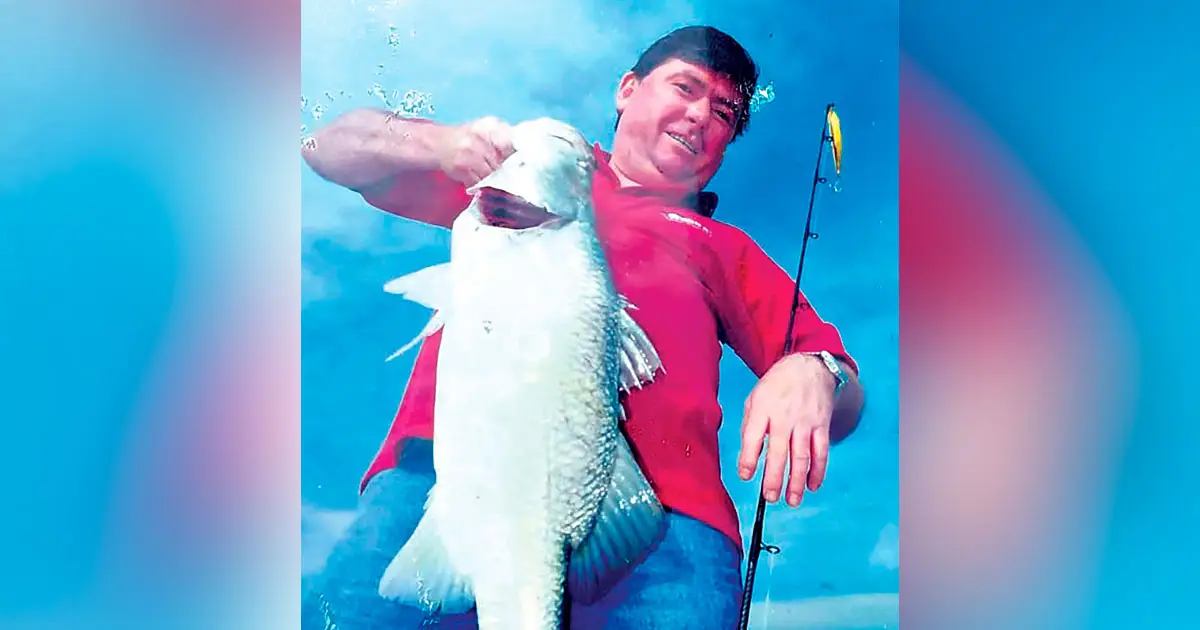

WHEN Matt Burns goes fishing, he does it the traditional way – slapping the water before spearing the fish, just as his ancestors have done for centuries.
The proud Quandamooka man said dolphins once helped by bringing flathead towards the shore but their numbers were severely depleted after being culled by early European settlers.
Mr Burns, 53, of Dunwich, is passionate about keeping Quandamooka culture alive by sharing traditional knowledge with younger generations and visitors to North Stradbroke Island (Minjerribah).
As SeaLink’s cultural education officer, he leads Goompi Trail tours where he shares stories, artefacts, dances and memories from his life on the island.

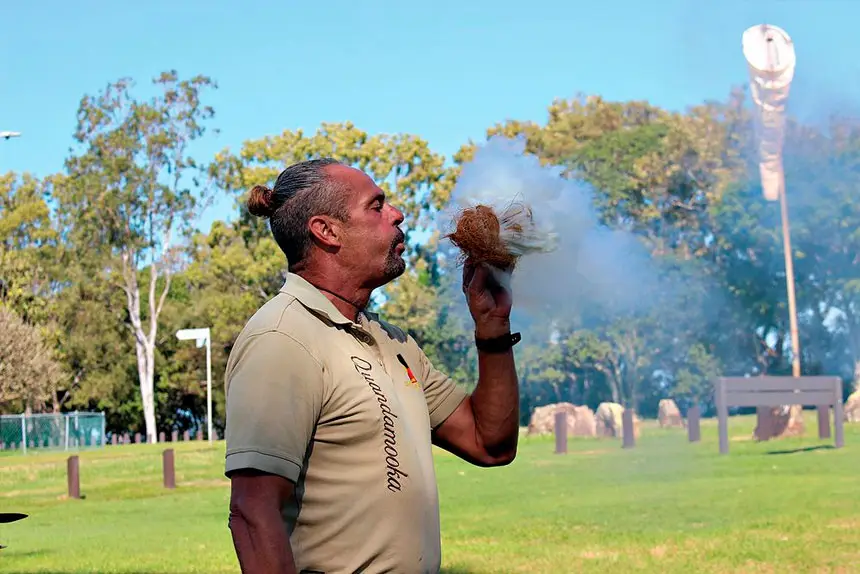
His demonstrations include spear and boomerang throwing, traditional hunting, gathering bush medicines, smoking ceremonies and dancing.
Each year, Mr Burns shares his knowledge with about 7000 people through cultural tours and school presentations.
His tours also feature a collection of traditional artefacts, including tools and weapons.
“I think it is important for our culture to stay alive, and this original eco-tourism is a great way to do this,” he said.
“Some people have told me they were blown away by the experience, and it changed their perspective of our culture and our people.
“It changed their way of thinking.”
One of the tour’s significant stops is a historic midden that Mr Burns described as a living archaeological site where traditional tools and weapons continue to be uncovered.
The midden is near a sacred Dunwich area once used for feasting, dancing and corroborees.
Mr Burns grew up on Minjerribah and is the father of eight children and grandfather of seven.
“There are four lineages on Minjerribah and Moreton islands. I’m related to half the island,” he said.
Mr Burns said he was proud to see many of his relatives holding important positions on the island, including working as rangers and in national parks.
He is regularly invited to conduct smoking ceremonies and Welcome to Country ceremonies, demonstrate boomerang throwing and lead dance workshops.
“There are heaps of jobs, particularly as rangers. We are workers and we take pride in ourselves,” he said.
Mr Burns said smoking ceremonies traditionally helped other mobs see people approaching and created an opportunity to exchange knowledge.
“That way we could share information on plants, animals and waterways as we travelled through the country,” he said.
“We are the people of the sand and the sea.
“We live on the oldest site on the east coast. (Amity Point is the oldest town in Queensland and once marked to become the port of Brisbane).”