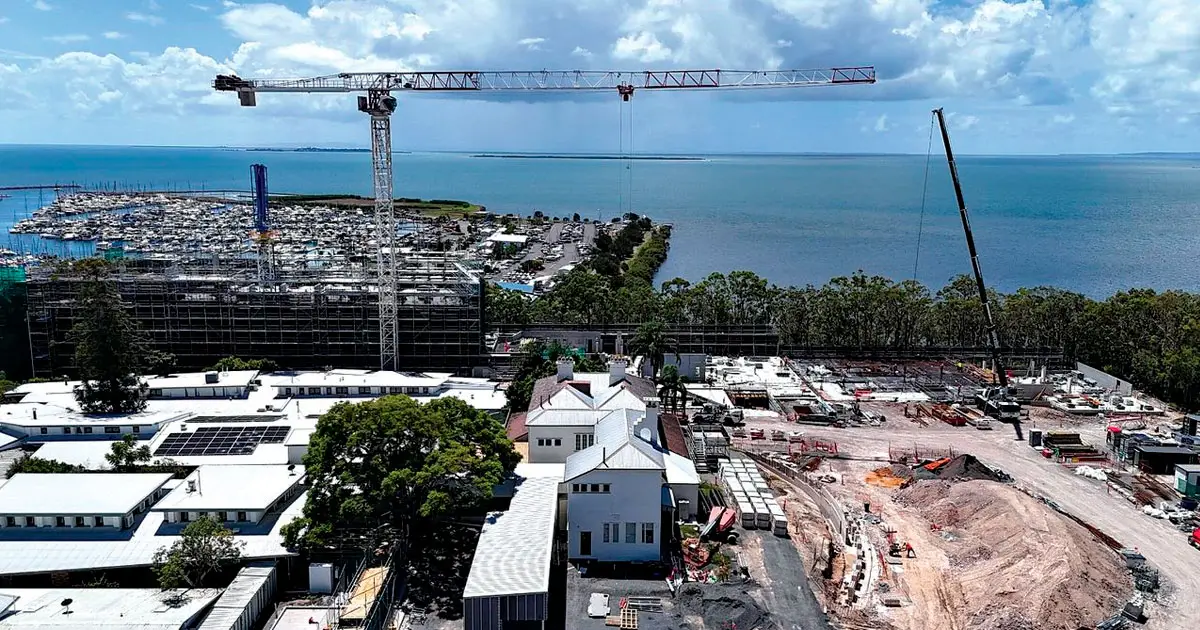


A MAJOR redevelopment vision for Wynnum’s CBD has officially been locked in, with Brisbane City Council adopting the Wynnum Centre Suburban Renewal Precinct Plan into City Plan following State Government approval.
The plan, which will take effect from June 12, is aimed at revitalising the Wynnum centre around Wynnum Central Station, Kitchener Park and Bay Tce, while delivering more housing choice and supporting future growth across Brisbane’s Bayside.
Under the plan, new cafes, restaurants, retail spaces and apartments will be encouraged within the CBD precinct, with building heights ranging from five storeys on the fringe areas to a limited cluster of up to 15 storeys near Wynnum Station.
Council said the final version of the plan was shaped by more than 500 community submissions, with changes including reduced building heights in key locations and clearer transitions between the CBD and surrounding residential areas.

Despite the proposed growth, Council said 96.5 per cent of Wynnum would remain unchanged by the plan.
The adoption comes as Brisbane continues to experience strong population growth, with Council promoting its “anti-sprawl” strategy of directing housing into well-serviced locations close to public transport, jobs and lifestyle amenities.
Wynnum’s connectivity was seen as a major advantage, with five train stations servicing the Wynnum-Manly area and peak rail services running every 15 minutes.
The renewal strategy also aligns with Council’s broader 20-year master planning process for the Wynnum, Manly and Lota foreshores.
Brisbane Lord Mayor Adrian Schrinner said the renewal precincts were designed to support growth in suitable locations.
“Our Suburban Renewal Precincts are all about identifying areas with great public transport and lifestyle opportunities to support more homes in the right places,” Mayor Schrinner said.
Cr Alex Givney said the plan aimed to balance growth with preserving the Bayside lifestyle.
“The Bayside is the best place to live in Australia and this plan strikes a balance to address the needs of today and the responsibilities we have to future generations,” Cr Givney said.