
QUEENSLAND Police Assistant Commissioner Rhys Wildman says domestic and family violence must become as socially unacceptable as drink driving.
Speaking ahead of his appearance at this year’s Dîner en Rouge event in the Redlands, Assistant Commissioner Wildman said prevention, education and changing attitudes needed to sit at the centre of the community response to DFV.
“By the time police get involved in domestic and family violence related matters, we are well and truly at a relationship position where things are already occurring and police are responding to it,” he said.
“The real key is actually getting ahead of the game and changing behaviours at the front end through culture and education.”

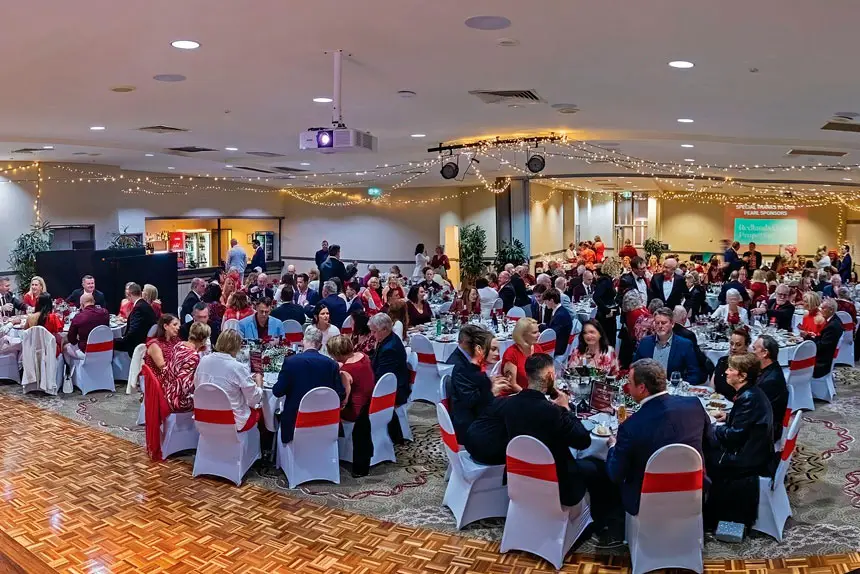
Dîner en Rouge has become one of the Redlands’ major domestic violence awareness and fundraising events, bringing together community leaders, survivors, advocates and emergency services to discuss solutions and support services.
Assistant Commissioner Wildman said events like the Redlands forum were critical.
“Any form of domestic and family violence is unacceptable,” he said.
“Everyone needs to feel safe, whether it’s in their home, in their workplace or on our streets.”
The senior police officer said men needed to take greater responsibility in challenging harmful behaviours.
“Over 80 per cent of DV offenders are males,” he said.
“For men, we actually have to take the leap and change our own behaviours and change our own cultural norms about what a healthy relationship looks like.”
Assistant Commissioner Wildman warned that children exposed to violence were often deeply impacted.
“Children are witnessing domestic and family violence matters in their own households,” he said.
“They’re growing up with a predetermined expectation that they will either be victims or offenders in this space, and we’ve got to change that.”
Coercive control and emotional abuse remained major concerns, with many signs of DFV often subtle rather than physical.
“The majority of domestic and family violence is actually more in the coercive control space,” he said.
“It’s looking for individuals becoming more isolated and unwilling to attend social events or fearful of speaking to other people.
“Often there’s financial controls put in place around people as well.”
Assistant Commissioner Wildman said there had been significant reforms in policing and legislation over the past two decades, including major cultural changes inside the Queensland Police Service.
“The service has done a huge amount of work in recent years to not only change the culture within the organisation but also the systems that support that culture,” he said.
He said attitudes in the broader community had also shifted significantly, with more people now willing to report suspected abuse.
“In the past, people might not have wanted to get involved, but now we’re seeing people reporting incidents, whether it’s neighbours having disturbances or witnessing incidents in vehicles or public places,” he said.
“We’re also seeing family members report it.”
He compared the cultural shift needed around DFV to major public attitude changes around smoking and drink driving.
“As a community, we’ve achieved amazing things in other areas like smoking and drink driving,” he said.
“That’s the type of cultural shift we need to achieve for domestic and family violence.”
He said that while DFV reporting rates remained high, there were some encouraging signs.
“We believe at least part of the increase since Covid is due to growing community confidence and changing attitudes around domestic and family violence,” he said.
“Victims are more willing to report it, and the community is less willing to accept it.
“There’s some glimmers of hope, but we’ve got work to do.”