Facebook
Notification
Redland Bayside News
  • News & Editorial
  • Digital Editions
  • Pickup Locations
  • Advertise With Us
  • News & Editorial
  • Digital Editions
  • Pickup Locations
  • Advertise With Us
  • Digital Editions
  • Pickup Locations
Facebook
Notification
Redland Bayside News
  • News & Editorial
  • Digital Editions
  • Pickup Locations
  • Advertise With Us
  • News & Editorial
  • Digital Editions
  • Pickup Locations
  • Advertise With Us
  • Digital Editions
  • Pickup Locations
Redland Bayside News > Disability News > Digital mental health programs – innovative, but do they really work?
Disability News

Digital mental health programs – innovative, but do they really work?

Redland Bayside News
Published: March 20, 2025
Share
4 Min Read
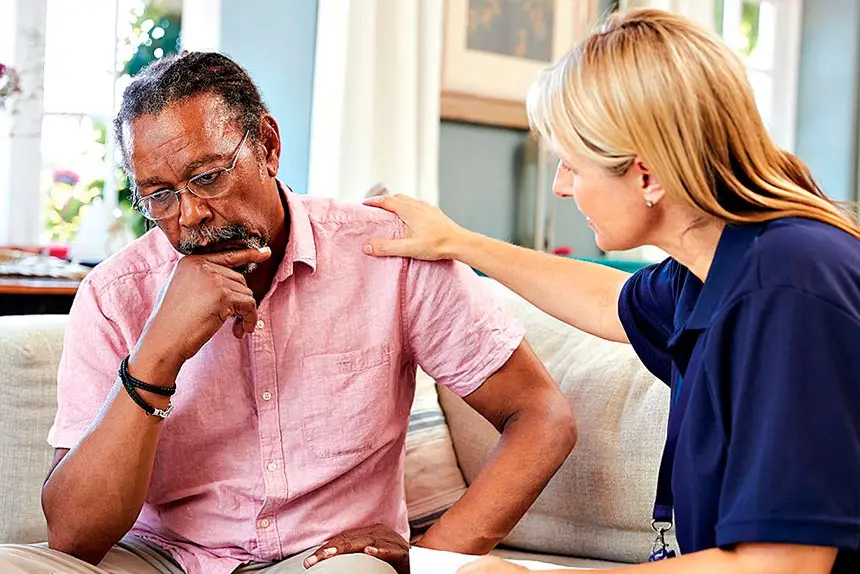
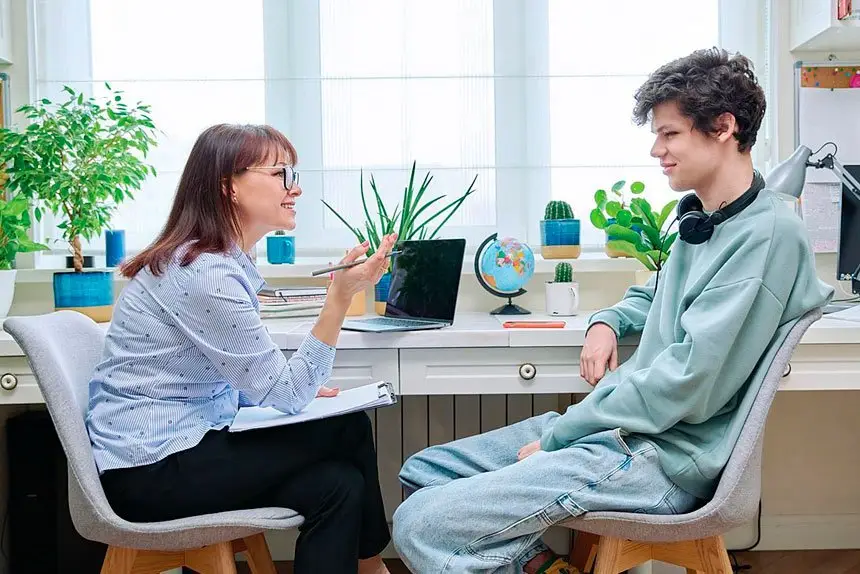
ACCESS PROBLEMS: Cost, stigma and availability of mental health workers are barriers to mental health.
SHARE

ALMOST half of all Australians will experience mental health problems in their lifetime.

Contents
  • WHAT ARE DIGITAL MENTAL HEALTH SERVICES?
  • DO THEY WORK?
  • DO USERS LIKE THEM?

Recent floods, droughts, cyclones, bushfires and the Covid pandemic have increased distress in the community.

Yet many people who need mental health services are unable to access them. Cost, stigma and availability of mental health workers are barriers to care.

Australia also has a critical shortage of mental health workers. And by 2030, it’s predicted we will be missing 42 per cent of the mental health workforce needed to meet the demand.

- Advertisement -

To partially address this gap, the Australian Government has committed to investing $A135 million in digital mental health programs if re-elected.

Online mental health programs can be more innovative and less expensive than other types of therapy. But do they actually work? Let’s assess the evidence.

WHAT ARE DIGITAL MENTAL HEALTH SERVICES?

Digital mental health services vary widely. They include online or app-based mental health information, symptom tracking tools, and learning or skills programs.

These tools can be accessed with or without support from a therapist or coach, with some using generative generative artificial intelligence (AI) and machine learning.

The umbrella term “digital mental health services” also includes peer-support networks, phone helplines and human-delivered phone, chat, or video-based telehealth services.

DO THEY WORK?

A 2020 review of the evidence found almost half the people who used online programs for common mental health conditions benefited.

This review included online programs with self-directed lessons or modules to reduce symptoms of depression or anxiety.

These programs were as effective as face-to-face therapy, but face-to-face therapy required on average 7.8 times more therapist time than online programs.

The evidence for other types of digital mental health programs is still developing.

The evidence for smartphone apps targeting mental health symptoms, for example, is mixed.

While some studies have reported mental health benefits from the use of such apps, others have reported no differences in symptoms.

Researchers suggest these apps should be used with other mental health supports rather than as standalone interventions.

Similarly, while AI chatbots have received recent attention, there is uncertainty about the safety and effectiveness of these tools as a substitute for therapy.

Chatbots, such as the AI “Woebot” for depression, can give users personalised guidance and support to learn therapeutic techniques.

But while chatbots may have the potential to improve mental health, the results are largely inconclusive to date.

DO USERS LIKE THEM?

Users have reported many benefits to digital mental health services. People find them convenient, accessible, private and affordable, and are often highly satisfied with them.

Digital services are designed to directly address some of the major barriers to treatment access and have the potential to reach the significant numbers of people who go online for mental health information.

Digital supports can also be used in a “stepped care” approach to treating mental health problems.

Authors: Bonnie Clough, School of Applied Psychology, Griffith University; Aarthi Ganapathy, Edith Cowan University; Lou Farrer, Australian National University.

Source: Theconversation.com

Share This Article
Facebook Email Print

Latest Redlands News

The Weinam Street Jetty will close for an extended period.
Redland Bay Jetty closed for repairs
Community
Dementia Australia and Masters Games Promote Brain Health
Sporting spirit helping to tackle dementia one game at a time
Health
NOT NEGOTIABLE: It is more important than ever that policymakers support housing investment and development by reducing the costs of home building.
Detached house approvals still picking up despite Budget blow
Real Estate
Build Strong Financial Foundations Before You Need Them
The invisible systems that keep life running
Finance
FUNDING BOOST: Round 1 sponsorship recipients Redland City FC will install much-needed shade for families and spectators.
Funding up for grabs as sponsorships reopen
Community
Queensland Junior State Cup Ends in Redlands
Junior State Cup wraps up after three days of outstanding Touch
Sport
COUNCIL QUERIES: Concept images for the proposed Bayside Pavilion at 18 Fox St, Wynnum, which is under scrutiny from Brisbane City Council.
Council demands answers on 20 issues for $25m Wynnum plan
Community

You Might Also Like

Narromine High students at the Wellbeing Hub where teachers and health professionals work together. PHOTO: AAP Photos
Disability News

Tiny cottage houses a powerful change in rural kids

October 10, 2024
REGISTER NOW: The Expo is a must-attend event.
Disability News

Disability Expo brings opportunity to answer all your tough questions

October 23, 2025
SPORTING CHANCE: Field of Vision is transforming the way people with low vision experience sport.
Disability News

Rise of disability tech is pushing the boundaries of possibility

November 29, 2025
Amadou & Mariam – “the blind couple of Mali”– shared heritage as descendants of the ancient Boula blacksmith lineage.
Disability News

Blind Malian musician’s joyful songs opened eyes to new hope

August 6, 2025

Published by Local News Group QLD. Dedicated to connecting local communities through informative and engaging media.

  • Contact Us
  • Advertise With Us
  • Quick Links
  • Community
  • Featured News
  • Sport
  • Cleveland
  • Real Estate
  • Redland City Council
  • Seniors
  • Capalaba
  • Redlands
  • Business
  • Victoria Point
  • Redland Bay
  • Birkdale
  • Fishing
  • Entertainment
  • Wynnum
  • Wellington Point
  • Alexandra Hills
  • Finance
  • Disability News
Copyright © 2026 Local News Group - Website by LNG Digital
Welcome Back!

Sign in to your account

Username or Email Address
Password

Lost your password?