

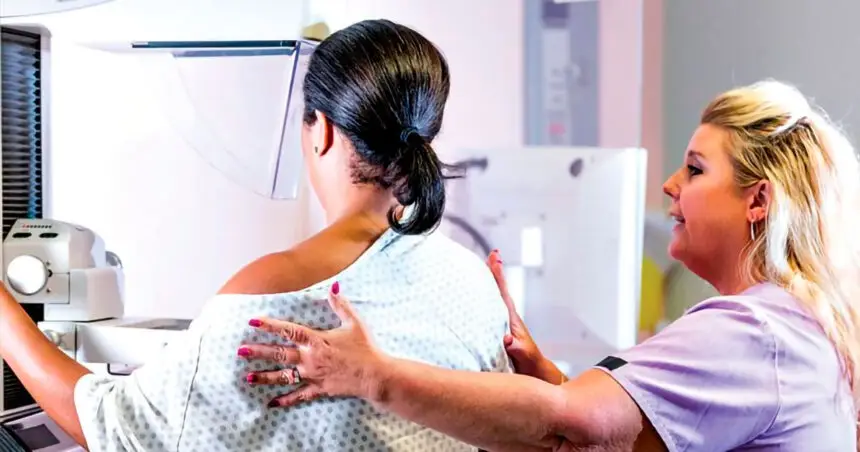
THE way Australian women are screened for breast cancer could undergo a major overhaul, with future screening set to take greater account of individual risk rather than relying primarily on age.
A newly released review of Australia’s BreastScreen program has recommended a move towards risk-stratified screening, considering factors including breast density, family history, genetic testing and potentially artificial intelligence when assessing a woman’s risk.
The changes are expected to be phased in over the next decade and could ultimately mean women receive screening better matched to their individual risk.
Under the current system, screening is largely organised around age, with women over 40 able to access a free mammogram every two years and women aged 50 to 74 invited to participate.

The proposed approach would instead consider what puts an individual woman at greater risk and potentially tailor the type and frequency of screening accordingly.
One key factor is breast density, one of the strongest and most common risk factors for breast cancer.
Dense breasts contain more fibroglandular tissue, which appears white on a mammogram. Because some breast cancers can also appear white, dense tissue can make cancers harder to detect.
BreastScreen Australia recommends women are informed of their breast density when screened, while guidance has been provided to GPs to help discuss breast density and screening options.
Family history and genetic information could also play a greater role. New risk assessment tools can combine factors such as breast density, family history and genetic test results to provide a more detailed picture of individual risk.
This could be particularly significant for younger women at increased risk who may benefit from starting screening earlier.
Artificial intelligence is another emerging tool. AI could assist radiologists in interpreting mammograms, identifying cancers and determining which women may require further assessment. Researchers are also investigating whether AI can predict future breast cancer risk.
For now, women should continue attending BreastScreen when their next mammogram is due rather than waiting for the proposed changes.
Women over 40 can access a free mammogram every two years, while women aged 50 to 74 are invited to screening.
As screening becomes more personalised, the message remains simple: know your risk, keep up with screening and don’t ignore changes to your breasts.