
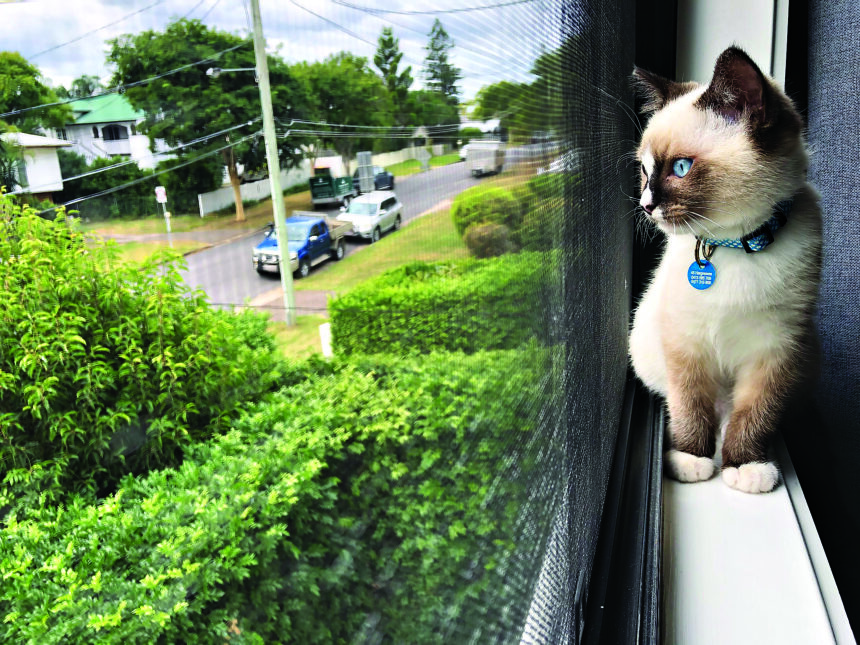
By Jaana Dielenberg, Biodiversity Council Science Communication Director and SEQ cat owner.
Living in South East Queensland, we’re lucky to share our neighbourhoods with amazing native animals, like koalas, cute furry gliders and possums, and a wide variety of colourful parrots and fairy-wrens, striking finches, dragons and skinks.
Spotting one of these animals in a local park or even my small (and bushy) SEQ yard is always an uplifting part of my day. Sadly, the likelihood of seeing these animals is declining as they face increasing pressure from a variety of threats.
Hunting by cats is just one of the threats they are facing, but is a big one and it is also one that we can do something about. Reducing the pressure from hunting cats will also give populations of these native animals more resilience to cope with other harder-to-manage threats like climate change and extreme weather.

How Australia manages cats has changed, as there are now more than ever, and we understand more about their impacts. There are over 800,000 pet cats in South-East Queensland, and research found that they were killing more than 100,000 native animals every day! Luckily, there are simple ways to get this impact down, and it just copies what we already expect of dog owners.
#1 Keep your cat safely contained. This isn’t up to personal opinion, under local laws in the Redlands, Logan, Brisbane and Ipswich cat and dog owners are legally responsible to prevent their pets from leaving their property, unless they are under effective control, like in a crate or on a leash. Councils also require you to microchip your cat so that the owner can be identified if the cat is picked up wandering.
Keeping your cats indoors, ideally with access to a secure outdoor run, protects wildlife and keeps your pet much safer and healthier and cuts expensive vet bills, from horrific injuries, painful abcesses and diseases, that can also be spread to your family. In fact, the RSPCA notes that cats kept safe at home can live up to 10 years longer than those that roam.
#2 Desex your pets. Every year, thousands of unwanted kittens are abandoned or have to be euthanised because there simply aren’t enough homes for them. This oversupply fuels the problem of unowned and feral cats, creating a cycle of poor welfare for the cats and a heavy toll on our local environments.
How councils manage unowned cats in their region can attract strong opinions. Across Australia the main approach to managing unowned cats in urban areas is to trap them. Councils and shelters like the RSPCA rehome as many suitable cats as possible. The remainder are humanely put down. Euthanasia is a very important part of a responsible strategy for dealing with unowned cats.
Because euthanasia makes some people feel uncomfortable, some alternative proposals have been circulating online, but they are not backed by science. One of these is to trap unowned cats, then desex them and release them back to the wild – also called Trap Neuter Release or TNR. It is illegal to ever release a cat to the wild in Australia, which includes local streets and parks, so Trap Neuter Release programs are illegal in Australia, and rightly so.
People would never think it is responsible for the RSPCA to simply desex unwanted dogs and then turn them out onto the streets. It is no different for cats.
Where Trap Neuter Release has been trialled overseas it has been a very expensive waste of resources, that does not reduce cat populations or stop cats from harming and killing wildlife, it also supports the spread of cat-borne diseases, and provides very poor welfare for the desexed and released cats who typically live hard lives, with frequent infections, abscesses and injuries.
The craziest bit of misinformation circulating is a claim that the released cats will protect wildlife by allowing cats to maintain stable territories. While cats are territorial, they occur at densities determined by food and shelter, not by neat territorial spacing. In suburbs, many cats overlap and hunt in the same areas.
Every cat released by these programs causes the death of hundreds of native animals every year. The welfare of these native animals is also important.
Feeding unowned cats also fuels the problem, so please do not do it. It may feel like the kind thing to do, but it leads to higher feral cat populations, and poor cat welfare. They will also still hunt local wildlife even if you feed them. Notify your council about them; they can trap them or lend you a trap and provide advice.
Research I was part of, conducted by The University of Queensland, found that most of the teams in local councils across Australia that manage pet and feral cats are really under-resourced, so appreciate what they do and tell your local Member of Parliament that you care about this issue and it should be better resourced.
The payoff from reducing cat impacts will be safe and healthy pets and for us and our kids to continue having magical encounters with beautiful birds and other native animals in our region.