
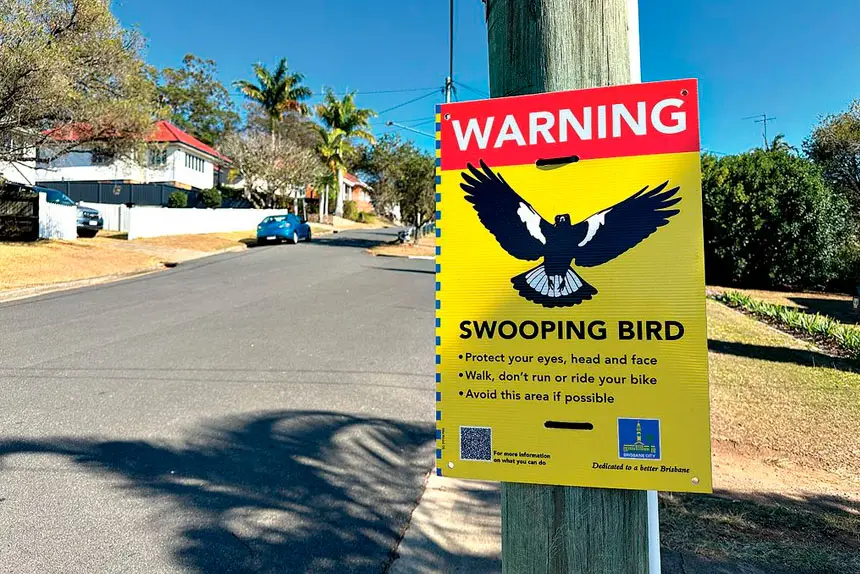
BAYSIDE residents are being urged to look up – and pack a hat or umbrella – as swooping season takes flight across the region.
Magpies, plovers and other native birds are becoming fiercely protective of their nests, with Brisbane City Council receiving 311 reports of swooping incidents in the past year.
More than half were recorded during the peak breeding months of September and October when pedestrians, cyclists and schoolchildren can find themselves targeted on suburban streets, bikeways and parks.
Coorparoo was Brisbane’s swooping capital, recording 14 reports, followed by Carindale with 12 and Runcorn with nine.

Wildlife officers relocated 18 birds in a bid to protect both residents and native wildlife.
Redland City Council received 19 reports during the 2025-26 financial year relating to nesting birds displaying defensive behaviour in public areas.
Wellington Point was at the top with five reports followed by Thornlands with four.
A Council spokesperson said residents should give nesting birds plenty of room.
“Council reminds community members that nesting birds may display defensive behaviour if they perceive a threat to their young, and to use an alternate route or stay at least 150m clear of a known nest area, if possible,” the spokesperson said.
Lord Mayor Adrian Schrinner said Brisbane’s outdoor lifestyle meant residents shared their neighbourhoods with wildlife – particularly during the July-to-January breeding season.
“Brisbane’s wildlife is part of what makes our city such a great place to live, and spring is when some native birds become more protective of their nests,” he said.
“With swooping season underway, a hat or umbrella and a little extra awareness can help you avoid an unwelcome encounter while enjoying our parks, bikeways and suburbs.”
Residents are urged not to provoke or feed birds, destroy nests or attempt to befriend swooping wildlife.
Known hotspots should be avoided where possible. Remaining calm and moving quickly through the area can also reduce the risk.
Residents can report swooping birds to their local council so warning signs can be installed and problem areas monitored.