
REDLAND City Council is facing mounting cost pressures, safety risks and looming infrastructure challenges in managing the region’s waste, with changes to how residents use tips and dispose of rubbish flagged as “inevitable”.
In a candid address to a local community group, waste portfolio chair Cr Tracey Huges laid bare the scale — and cost — of the city’s waste system, warning that doing nothing is “not an option”.
Among the most striking revelations is the true cost to households, with residents paying hundreds of dollars annually for services many believe are free.
“We all pay for that service within our rates,” Cr Huges said, debunking the long-held perception that visiting local waste transfer stations costs nothing.

This year, households are charged about $231 for access to recycling and waste centres — whether they use them or not — alongside an average $419 for kerbside bin collection.
On top of that, residents are paying a separate landfill remediation charge of $19.40 per quarter to manage 28 legacy dump sites across the city.
Cr Huges said concerns over how that remediation money is handled had driven years of internal advocacy, resulting in improved transparency through council reporting.
But she warned the biggest cost driver remains the city’s waste collection contract, describing it as council’s single largest expense.
“Waste is truly expensive,” she said.
The system itself is vast and complex, involving nine contractors, eight waste and recycling centres, island barge logistics and nearly 500,000 annual customer visits.
Each collection truck services about 650 homes before travelling to the Stapylton landfill — a round trip it completes multiple times a day.
That landfill, operated by BMI Group, is already a major cost centre for council, with Cr Huges noting Redlands is effectively its “best customer”.
However, the bigger issue lies ahead.
With the Stapylton site expected to reach capacity in coming years, waste will need to be transported further afield — likely requiring new transfer stations and significantly increasing costs.
“Please think about the logistics of how much that will drive up resources and of course, costs,” she said.
At the same time, council is preparing for major changes to how residents interact with waste facilities.
“You can expect changes to entry conditions into our Waste and Transfer Stations… that will be controversial for sure,” Cr Huges warned.
In a sign of broader industry shifts, she also confirmed future waste-to-energy incineration models are being investigated across South East Queensland.
Despite the cost pressures, council is banking on long-term savings from a new regional recycling facility.
The Greenovate Material Recovery Facility (MRF), a joint venture with Logan and Ipswich councils, is due to come online later this year and will process all of Redlands’ recycling.
Cr Huges said the facility — in which Redlands holds a 17 per cent stake — was “on time and on budget” and expected to deliver financial and environmental benefits.
Closer to home, a major landfill remediation project is underway at Judy Holt Reserve in Birkdale, transforming a former dump site into upgraded sporting fields for the Redlands Rugby Union Club.
But beyond infrastructure, one of the biggest challenges is human behaviour.
Cr Huges said widespread confusion around recycling is costing council heavily, with contamination rates sitting at about 16 per cent in general waste bins and 15 per cent in recycling bins.
“Over half of waste going into our red lid bins can be recycled or composted,” she said.
That contamination forces recyclable material into landfill, driving up costs and undermining sustainability efforts.
Council has already trialled bin inspection programs to improve behaviour, with measurable improvements recorded in suburbs such as Alexandra Hills and Birkdale.
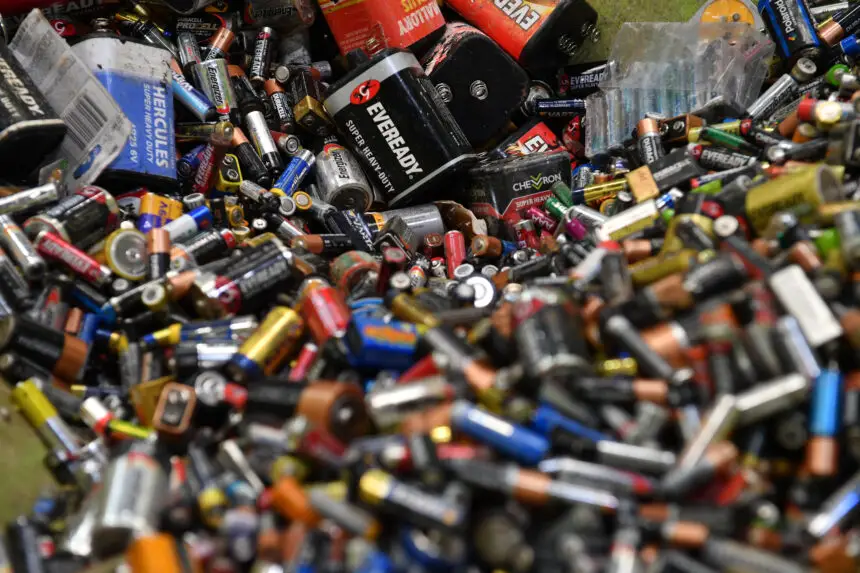
Safety is another growing concern, particularly around lithium batteries.
Cr Huges revealed multiple recent incidents where batteries sparked fires in collection trucks, forcing operators to dump burning loads on the street.
In one alarming case, two “hot load” incidents occurred within hours of each other in Capalaba.
“The risk is enormous and the impact could be life threatening,” she said.
She urged residents to stop putting batteries in household bins, warning the message is still not getting through.
The speech also highlighted equity concerns, with some public housing tenants unable to access green waste bins due to landlord restrictions — an issue Cr Huges said contradicts state waste strategy goals.
Looking ahead, she said Redlands must rethink its entire approach.
“Redland City waste management must change — to do nothing is not an option,” she said.
Despite the challenges, the city’s waste services remain highly regarded, ranked number one in council’s latest customer satisfaction survey — a result Cr Huges said reflected the efforts of frontline crews managing an increasingly complex system.
But with rising costs, infrastructure limits and behavioural challenges colliding, the message from council is clear: the way Redlands deals with its waste is set for a major shake-up.