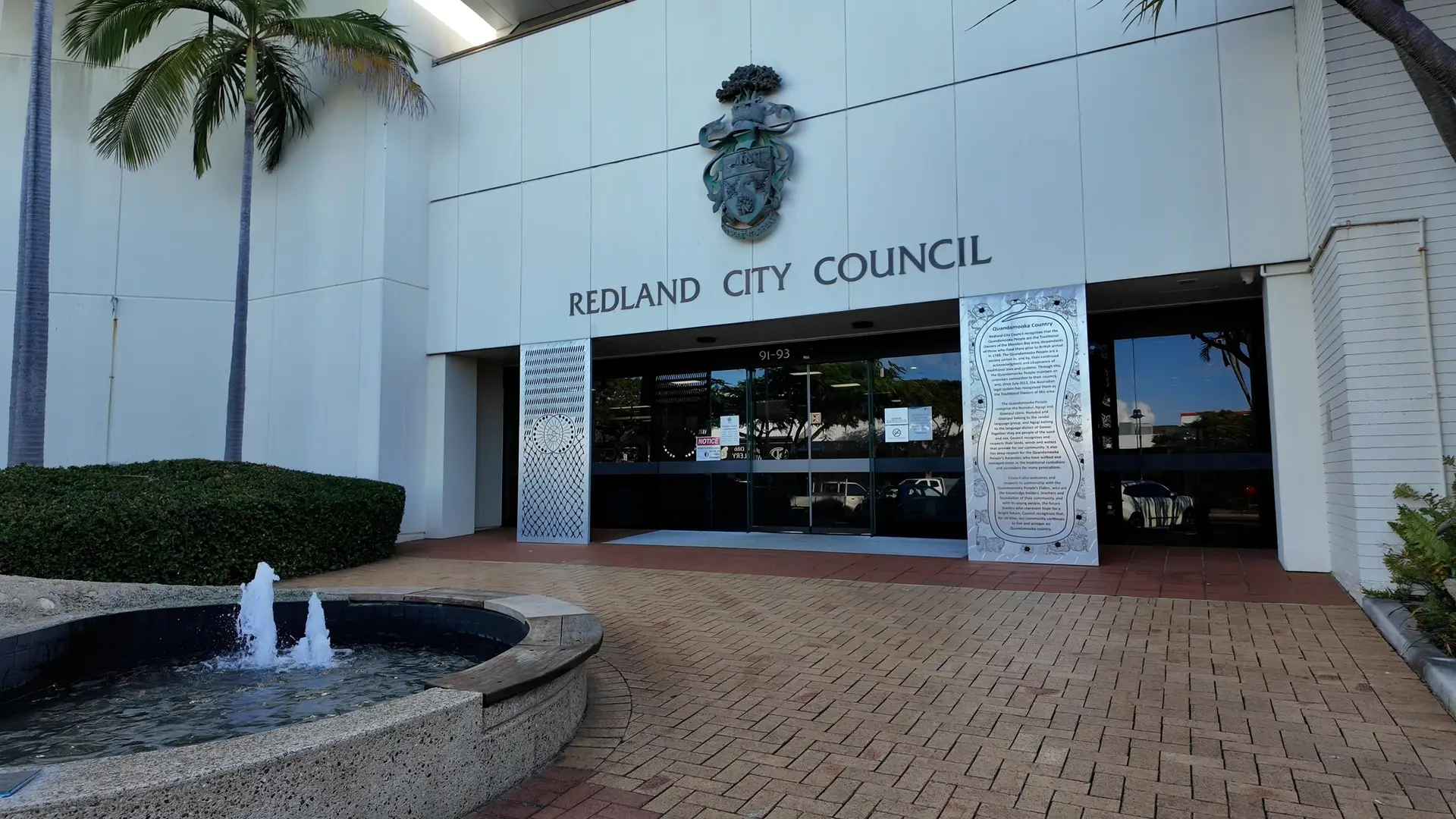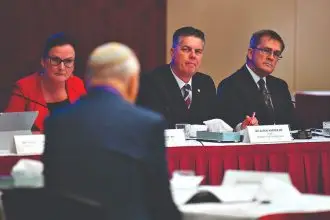

Rules covering public speaking, online petitions, closed-door debate and councillors attending remotely are set for an overhaul at Wednesday’s Redland City Council meeting.
Councillors will consider adopting revised meeting standing orders and a related policy, following recent changes to Queensland local government laws and the release of new State model meeting procedures.
The draft rules would formalise several processes already familiar to regular council-watchers, while setting clearer requirements around openness, conduct and decision-making.
Under the proposed standing orders, council agendas must be publicly available by 5pm on the business day after councillors receive their meeting notice.

Any additional non-confidential reports provided before a meeting must also be published as soon as practicable.
Minutes would be made public by 5pm on the 10th day after a meeting, unless they are confirmed sooner, while audio or audio-visual recordings of open meeting sessions would be placed online at the earliest opportunity after the meeting.
The rules also spell out when meetings can be closed to the public.
Council would need to pass a resolution identifying the item, providing an overview and explaining why discussion should be private.
No final decision on a confidential matter could be made while the meeting is closed, other than a procedural resolution.
The meeting would have to reopen to the public before councillors make a decision.
Public speakers would continue to require the chairperson’s invitation, with written requests due by midday on the Monday before a meeting.
Public participation would generally be capped at 15 minutes in total, with individual speakers limited to five minutes.
The chairperson could refuse a request where it falls outside council’s powers, contains misleading, unlawful, offensive or defamatory material, seeks disclosure of confidential information, or has substantially been addressed previously.
A person who has spoken to council on the same subject in the previous 12 months could also be refused.
The proposed rules would also update the petition process for online submissions.
Petitions would need at least 10 signatures or electronic endorsements, a verifiable principal petitioner, and a request within the word or character limit set on the form.
They could not name individuals, councillors, council staff, organisations or members of the public, seek a grant of public money, or revisit a petition council has already considered and responded to within the previous two years.
Eligible petitions would need to be received at least seven days before the meeting where they are to be presented.
Council would then respond to the principal petitioner within 10 business days.
Remote attendance rules would require councillors to apply at least three business days before a meeting where possible, with cameras preferred when practicable.
The chairperson would have the power to pause proceedings to address technical difficulties or continue without the remote councillor for an item if a quorum remained.
The revised orders reinforce requirements for councillors to declare material personal interests and real or perceived conflicts of interest.
Where a councillor votes despite a conflict, the minutes would need to record the nature of the interest, how it was managed and how the councillor and majority voted.
Officers say the changes will reduce governance and compliance risks by providing clearer, current procedures for councillors, staff, the chairperson and the public.
The documents were reviewed by councillors last month, with further information requested before the updated version returned to this week’s agenda.
Officers have recommended their adoption.