
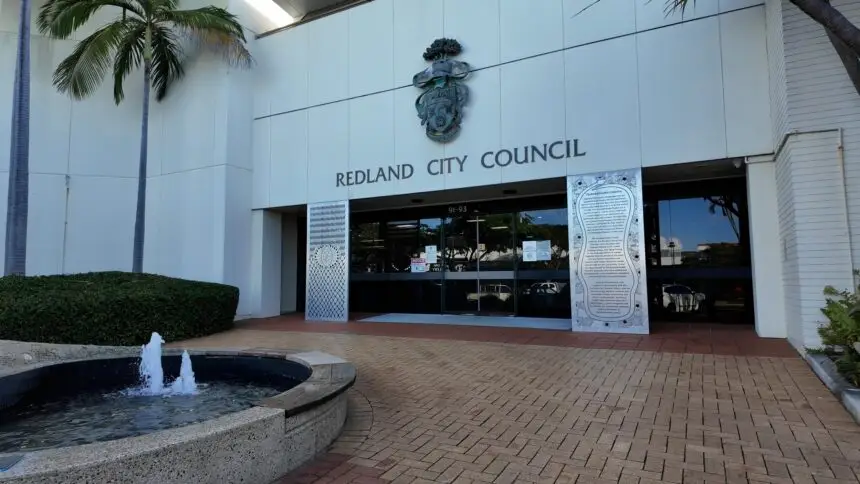
Queensland’s councillor conduct watchdog should be given stronger powers to identify and act on vexatious, coordinated and politically motivated complaints, Redlands councillor Paul Golle has told a Parliamentary Committee.
Cr Golle appeared before the committee today to present his submission to its inquiry into the operation and effectiveness of Queensland’s councillor conduct framework.
He argued the Office of the Independent Assessor (OIA) should be better resourced and equipped to examine patterns across complaints, rather than assessing allegations one at a time.
“While individual complaints may appear minor when viewed in isolation, a broader intelligence-led approach is often required to identify coordinated campaigns, vexatious complainants, political interference, or the weaponisation of the complaints process,” Cr Golle said.

He warned the present complaint-by-complaint model limited the OIA’s ability to link related matters and understand systemic conduct issues.
“This creates opportunities for the complaints process to be misused as a political tool rather than serving its intended integrity function,” he said.
Cr Golle called for the OIA to be given enhanced powers to gather and analyse intelligence, identify patterns of frivolous or coordinated complaints, investigate third parties acting for political interests, dismiss complaints that are clearly an abuse of process and act against people who repeatedly misuse the framework.
He said the watchdog should also have greater power to determine matters centrally, instead of routinely sending them back to individual councils.
“The current practice of returning matters to local governments for determination can create inconsistencies in outcomes, perceptions of bias, and varying standards of enforcement across Queensland,” he said.
“Councillors are elected under the same legislative framework and should therefore be subject to a more consistent integrity framework across the State.”
Cr Golle stressed his submission was not criticism of the OIA or its staff. Instead, he said the agency had been given an increasingly complex task without the full resources and legislative authority needed to carry it out.
“The solution to many of the challenges identified throughout this submission is not to weaken the OIA or further restrict its functions,” he said.
“On the contrary, the OIA should be strengthened.”
He also raised concerns about delays in the Councillor Conduct Tribunal, saying councillors could remain subject to unresolved allegations for extended periods.
“Lengthy delays can have significant consequences for all parties involved,” Cr Golle said.
“Councillors may remain subject to unresolved allegations for extended periods, creating uncertainty, reputational harm, stress, psychosocial impacts, and disruption to their ability to effectively perform their elected duties.”
He called for statutory benchmarks and performance measures to ensure investigations, hearings and reviews were completed more quickly.
Cr Golle’s submission also presses for tougher candidate preparation before elections, including strengthened governance and integrity education, conflict-of-interest training and better validation of candidates’ qualifications and affiliations.
He said integrity oversight needed to be preventative as well as reactive.
“Queensland requires an integrity body that is properly empowered, independent, and sufficiently resourced to identify genuine misconduct, provide consistent governance oversight, detect patterns of behaviour, prevent misuse of the complaints framework, and maintain public confidence,” he said.
“The integrity framework should be designed to identify and address genuine misconduct, rather than facilitate political warfare, harassment, or the strategic misuse of complaints processes.”