



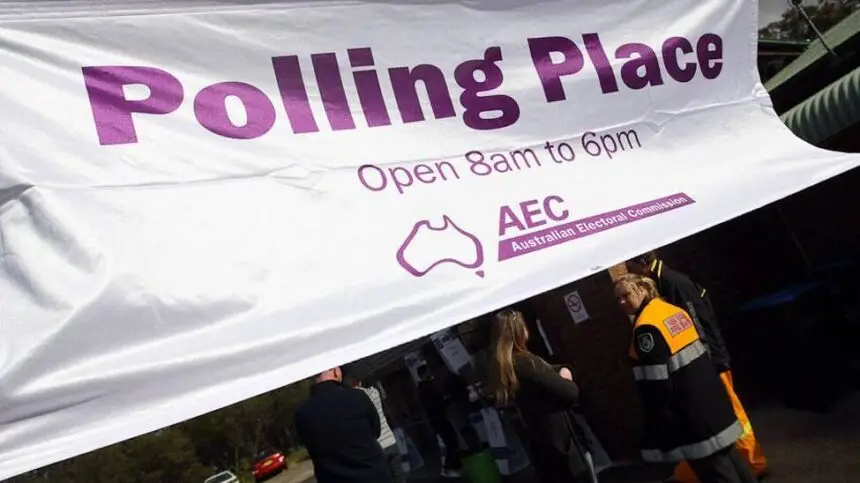
A new report has revealed widespread misleading political advertising, transparency gaps and covert campaigning across social media during the 2025 Australian federal election, raising fresh concerns about what voters are actually seeing online.
The 2025 Australian Election Advertising on Social Media report, led by Professor Daniel Angus from the QUT Digital Media Research Centre, draws on real-world data collected directly from voters’ smartphones and highlights what researchers say is an urgent need for electoral law reform.
Professor Angus said the findings showed it had become increasingly difficult for voters, regulators and journalists to identify who was attempting to influence political debate online.
“Online political advertising is largely invisible to public scrutiny,” he said.

“Our research shows voters are being targeted with political messages that are difficult to track, often poorly disclosed, and in many cases misleading or deliberately decontextualised.”
Researchers collected more than 22,000 advertisements by asking participants in key electorates to install a Mobile Online Advertising Toolkit (MOAT) on their phones in the weeks leading up to election day.
The method allowed researchers to capture what users actually saw on platforms such as Facebook, Instagram and TikTok, rather than relying on platform-provided ad libraries.
“By collecting ads directly from participants’ devices, we were able to see how political influence operates in practice, not just what platforms choose to report,” Professor Angus said.
The report found political advertising made up only a small share of total ads but was heavily dominated by third-party groups, many of which presented themselves as grassroots organisations while obscuring their political or financial backing — a tactic known as astroturfing.
Researchers also identified widespread use of misleading and decontextualised claims, particularly around cost-of-living issues, by both major political parties and third-party advertisers.
The study further detected scam advertisements and impersonation, raising concerns about the growing use of artificial intelligence and deepfake-style content in online political campaigns.
“These practices undermine trust and make it harder for voters to make informed decisions,” Professor Angus said.
“Without stronger oversight, this kind of opaque campaigning risks becoming the norm rather than the exception.”
The report recommends sweeping reforms, including national truth-in-political-advertising laws, real-time disclosure of donors, consistent blackout rules across broadcast and digital media, and greater accountability for social media platforms.
Professor Angus said Australia’s current electoral laws were no longer fit for purpose in a digital campaigning environment.
“Australia’s electoral laws were designed for an analogue era,” he said.
“If we want to protect democratic integrity, regulation, transparency and independent oversight must catch up with the realities of digital campaigning.”
The study was conducted through the Australian Ad Observatory, part of the ARC Centre of Excellence for Automated Decision-Making and Society, in collaboration with Monash University, the University of Queensland and the University of Melbourne.