

REDLAND City Council has backed a sweeping new economic strategy to guide the region’s growth to 2031 but not without debate over how far local government should go in shaping the economy.
The Redlands Coast Economic Development Strategy 2026–2031 was adopted at Wednesday’s council meeting, laying out a five-year blueprint focused on diversifying industry, attracting investment and creating more local jobs.
Speaking in support, Cr Peter Mitchell said the plan was about more than growth figures, framing it as a people-first approach to the city’s future.
“The strategy is not just about economic growth in the abstract — it’s about people,” he said.

“It’s about backing our local businesses, creating meaningful jobs close to home, and supporting innovation and opportunity so our young people — and older residents — can see a future for themselves right here on the Redlands Coast.”
Cr Mitchell said the region was entering a period of “strong economic momentum”, but warned growth alone would not deliver the outcomes residents expected.
“This strategy gives us a clear, practical framework to guide that momentum helping ensure our economy becomes more diverse, more resilient and more opportunity-rich, while still protecting the lifestyle and character that defines us,” he said.
He pointed to the strategy’s five pillars — including business support, investment attraction, workforce pathways and governance — alongside four priority sectors: advanced manufacturing, high-value services, construction and the visitor economy.
“These sectors have been chosen strategically for their ability to deliver high-value employment and broaden the economic base of Redlands Coast,” Cr Mitchell said.
“It’s about working smarter and doing what we do best, not chasing growth that doesn’t fit our city.”
Cr Mitchell also welcomed the introduction of a Redlands Coast Prosperity Index to track progress, describing it as a transparent way to measure job quality, investment and workforce capability over time.
“With this strategy, council is choosing to lean into opportunity — to diversify our economy, support local enterprise, and build a future that is prosperous, resilient and proudly Redlands,” he said.
But the strategy did not receive unanimous support.
Cr Lance Hewlett questioned the role of council in economic development, arguing the private sector, not local government, should lead.
“I believe government spends far too much money on economic development, when in reality it’s an area that should be driven by private enterprise and entrepreneurs,” he said.
“Economic leadership sits with the state and federal governments particularly the state.
“Council’s role, in my view, is to zone the land appropriately and then let business get on with it.”
Cr Hewlett said while he had supported past business engagement initiatives, he believed the new strategy represented an overreach.
“What we’re seeing now is something much bigger and broader — an umbrella approach that, in my opinion, isn’t working,” he said.
“For that reason, I won’t be supporting this strategy, and I believe council could save a significant amount of money by reducing resources in this area.”
Cr Wendy Boglary, drawing on her experience as a former small business owner, offered a contrasting perspective backing council involvement while emphasising practical, grassroots support.
“My experience was that council didn’t get in my way — they assisted me,” she said.
She recalled working with council more than two decades ago when simple measures such as improved lighting and signage helped customers find her business.
“It’s all those small things that can really help boost local businesses,” Cr Boglary said.
She said stronger collaboration between council and business, particularly around events and tourism, could unlock significant opportunities for the region.
“I actually believe Redlands hasn’t even begun to tap into its full potential when it comes to tourism and supporting local businesses,” she said.
“We’re at a point where the world is increasingly looking at our region, and we need to take full advantage of every opportunity.”
Cr Boglary also highlighted the role of council’s economic development team, encouraging businesses to engage with available support.
“The economic development team are very skilled, and importantly, they have strong connections,” she said.
“I would encourage businesses to take advantage of that.”
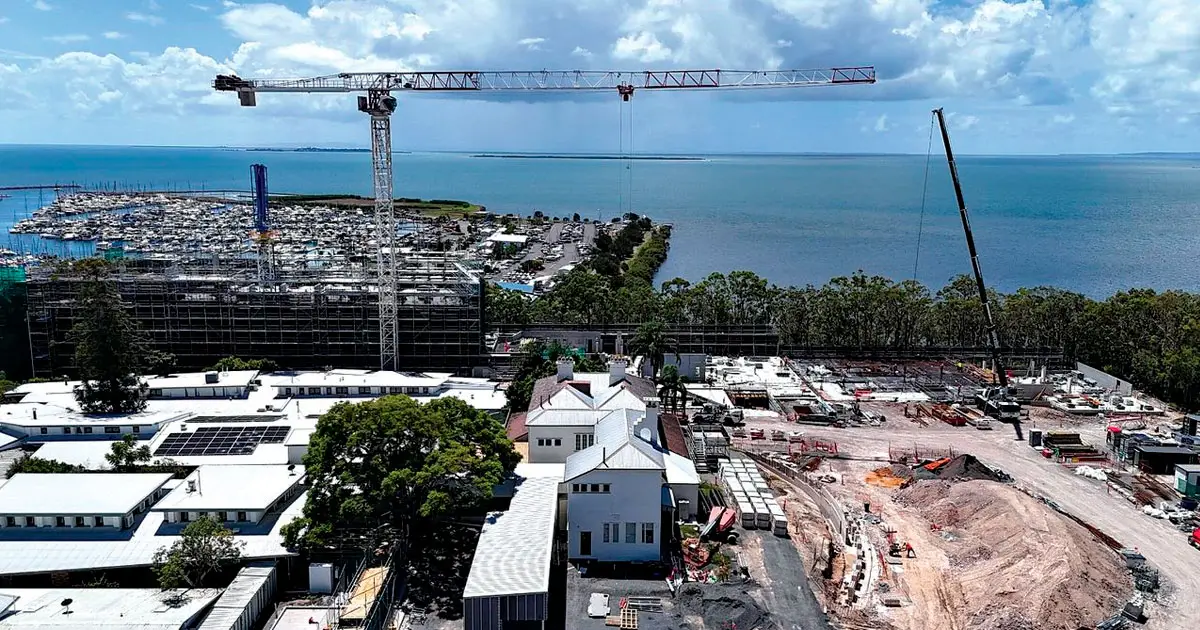
The strategy comes as Redlands positions itself for continued growth, with major projects including the Birkdale Community Precinct, Cleveland CBD renewal and Weinam Creek redevelopment expected to act as economic catalysts.
Council figures show the region already has more than 12,800 businesses, but only about 42 per cent of residents currently work locally — a gap the strategy aims to address by attracting higher-value industries and improving job self-containment.
If successful, the plan is expected to shape Redlands’ economic direction through to 2031, balancing growth with the lifestyle and coastal character that defines the region.