
Redland City Council is set to adopt a new long-term strategy that could reshape how residents access key destinations across the city, with a stronger focus on walking, cycling, public transport and shared mobility rather than simply building more car parks.
The proposed Redlands Coast Access and Parking Strategy will be considered by councillors at next week’s general meeting and outlines a 20-year vision to provide “equitable, affordable and efficient access to vibrant destinations” across the city.
While acknowledging that driving remains the dominant mode of transport on the Redlands Coast, the strategy argues that continuing to respond to parking pressures by constructing more parking spaces is neither sustainable nor cost-effective as the city’s population grows.
Council forecasts Redland City’s population will increase from about 159,000 residents in 2021 to more than 211,000 by 2046, while local employment is expected to rise from 50,200 jobs to 71,900 over the same period.

Under current travel patterns, that growth would place increasing pressure on parking at major destinations.
The strategy notes that parking demand already exceeds supply at some locations during peak periods and warns that without intervention, access issues could worsen before and beyond the Brisbane 2032 Olympic and Paralympic Games.
Rather than focusing solely on parking, the strategy proposes an “access-first” approach that prioritises how people reach destinations, whether by walking, cycling, public transport, ride-share, community transport or private vehicle.
The document highlights that around 20 per cent of the population either cannot or do not drive, including young people, older residents, people with disabilities and households without access to a car.
Council argues improving alternative transport options would improve accessibility while reducing pressure on parking infrastructure.
A key plank of the strategy is the development of Destination Access Plans (DAPs), which would provide detailed access and parking solutions for major centres, ferry terminals, sporting precincts, transport hubs and recreational destinations.
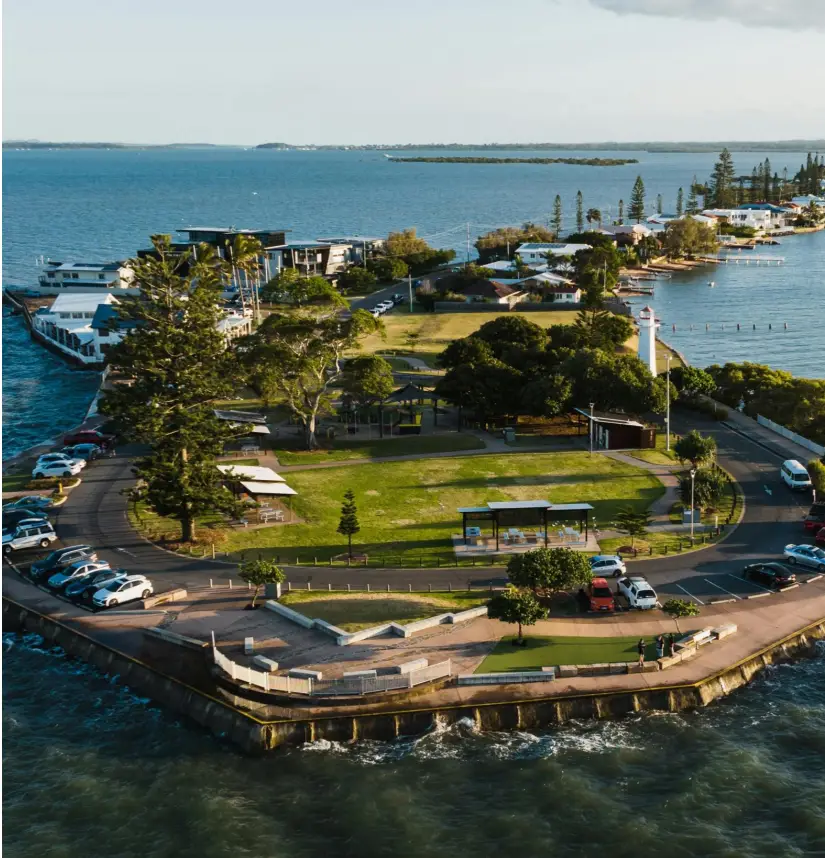
Victoria Point Reserve has been selected as the first location to trial the approach, with council officers describing it as an ideal test case before applying the model to more complex sites.
The strategy also signals a greater willingness to use parking regulations and management tools to influence travel behaviour.
Council could increasingly rely on time limits, parking enforcement, smart parking technology and potentially priced parking in areas where demand becomes excessive.
The strategy identifies an 85 per cent parking occupancy rate as the point where drivers begin experiencing difficulty finding spaces and congestion increases.
Technology such as parking sensors, digital signage and mobile applications could also be introduced to provide real-time information about available parking spaces.
The document argues that many residents underestimate the true cost of providing “free” parking.
According to the strategy, surface car parks can cost between $5,000 and $10,000 per space to construct, while multi-storey parking can cost up to $100,000 per space and underground facilities up to $120,000 per space.
Council notes these costs are ultimately borne by the broader community through rates, development costs and higher prices for goods and services.
The strategy also cites research showing the average South East Queensland household spends more than $23,500 annually owning and operating vehicles.
Beyond transport considerations, the document argues that large car parks often occupy some of the city’s most valuable waterfront and town centre land, limiting opportunities for housing, recreation, landscaping and economic development.
Council says destinations such as ferry terminals and waterfront precincts could become more attractive and vibrant if space is reallocated toward pedestrians, public spaces, cafés and community activities rather than being dominated by vehicle parking.
The strategy aligns with the recently adopted Redlands Coast Transport Strategy and supports council’s broader goal of increasing walking, cycling and public transport use while reducing long-term dependence on private vehicles.
If adopted, priority actions over the next five years will include preparing Destination Access Plans, reviewing parking standards in the City Plan, investigating smart parking technologies, advocating for improved public transport services and implementing travel behaviour change programs aimed at reducing reliance on cars.
Council officers have recommended councillors adopt the strategy at the 17 June meeting.