
REDLAND City Council has unanimously noted the first annual plan and 10-year strategy for Greenovate, the regional recycling venture expected to process the city’s yellow-lid bin material.
Councillors considered the plan at Wednesday’s General Meeting, with Cr Tracey Huges praising the work behind the partnership between Redland, Logan and Ipswich councils.
“This is a fabulous time in our city for waste,” Cr Huges said.
“The work that has gone into setting up this business is tremendous. It is really, really wonderful that the South East Queensland local governments have come together to get to this stage.”

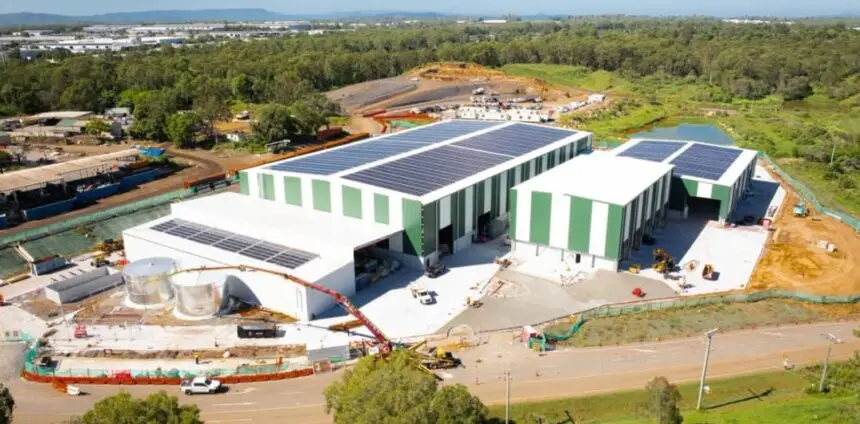
Greenovate Pty Ltd was established by the three councils to build and operate a Materials Recovery Facility, where household recycling will be sorted into materials such as cardboard, plastics, glass and metal for reprocessing.
The company’s first annual plan outlines a target of recovering at least 98 per cent of recyclable material, while keeping contamination—non-recyclable rubbish placed in yellow-lid bins—below 5 per cent.
Cr Peter Mitchell said the Greenovate arrangement and the proposed facility were “an incredibly positive effort”, but questioned what role it would play in addressing the city’s broader waste challenge.
“This Greenovate arrangement and the centre attached is an incredibly positive effort, but it does not solve the waste issues for our city,” Cr Mitchell said.
Acting Mayor Julie Talty referred the question to council officer Chris Isles, asking for clarification about what the facility would—and would not—handle.
Mr Isles said Greenovate was a recycling facility, rather than a solution for all waste streams or a replacement for landfill.
“Greenovate is not a landfill facility; it is a material recovery facility, which is a recycling centre,” he said.
“All of your yellow-top bins from around the city will go there, where they are sorted into component parts—cardboard, plastics, bottles and glass—which are then sent on for recovery or recycling.”
Mr Isles said co-ownership of the plant offered opportunities for recycled materials to be used locally, including in asphalt and construction works.
“We actually have lots of ways that these materials will come back into the city and be diverted from landfill, which is the core opportunity here,” he said.
“The ability for us to continue to dispose of residual waste into landfill is getting harder and harder. The more that our community can recycle through this facility, it is better for everybody. It reduces our costs and, more importantly, it is environmentally beneficial.”
The Greenovate strategy also flags a possible future eco-industrial precinct, including potential plastics reprocessing and glass-beneficiation operations, subject to feasibility.
Council noted the Greenovate annual plan, confidential budget and 2025-35 strategic plan unanimously.