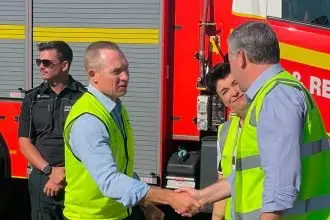

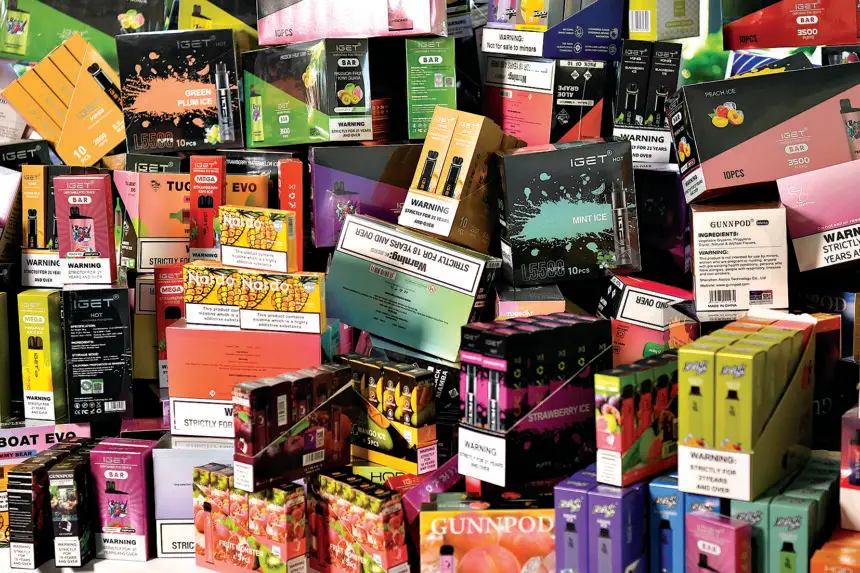
The raid and closure notice issued to Cleveland business Fashion Spree this week should prompt more than another round of tough talk about illicit tobacco and vapes.
It should prompt an uncomfortable question for Canberra.
Has the Federal Government pushed cigarette taxes so high that it has helped create the black market it is now struggling to contain?
No one should pretend alleged illegal sales are acceptable. They are not.

If businesses are found to be selling illicit cigarettes or vapes, they should face the full force of the law.
Tobacco products sold outside the legal system are unregulated, untaxed and increasingly linked to organised crime.
But enforcement alone is plainly not fixing the problem. The shop in Bloomfield Street ripped off its closure notice 90 minutes later and resumed sales.
A legal pack of 20 cigarettes now carries about $30.57 in federal excise alone, before GST.
On a packet costing more than $40, the government’s tax take is roughly $34.
Meanwhile, illegal cigarettes can be bought for a fraction of that price – often a tenner.
That enormous price gap is not an accident.
It is the direct result of a public-health strategy designed to make smoking prohibitively expensive.
The strategy has had important benefits.
Smoking rates have fallen dramatically over the past two decades, and fewer young Australians are taking up the habit.
But policy has consequences — including unintended ones.
When the legal product costs three or four times more than its illicit equivalent, a black market does not merely emerge. It becomes exceptionally profitable.
That profit attracts criminal networks, puts legitimate retailers under pressure and leaves police, Australian Border Force and health officers in a constant game of catch-up.
The allegations surrounding Fashion Spree, and the wider string of closures and raids in the Redlands and Brisbane, are a local symptom of a national failure.
It is not enough for governments to seize stock, shut stores and issue warnings if another outlet simply opens, or allegedly resumes trading 90 minutes later.
Canberra should not abandon its anti-smoking agenda.
But it should honestly review whether the current excise settings are reducing smoking or merely shifting more sales into the underground economy.
A carefully calibrated reduction — paired with tougher licensing, stronger border enforcement and severe penalties for illicit traders — could narrow the price gap and make legal products more competitive against bootleg cigarettes.
The aim should not be to make smoking cheap. It should be to stop making criminal tobacco so lucrative.
Until the Federal Government confronts that reality, raids like the one in Cleveland may keep making headlines — while the black market keeps counting the cash.