
REDLAND City ratepayers deserve certainty. Right now, they do not have it.
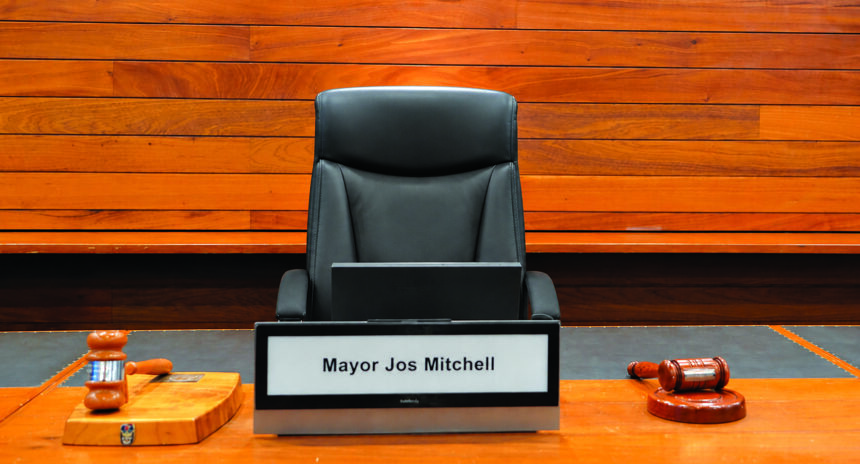
Mayor Jos Mitchell has now accumulated 18 weeks of sick leave in 2026 alone.
Her latest extension means she will have been absent from the role for four-and-a-half months this year by the time she is due to return on August 1.
Nobody should be criticised for becoming ill.

Every worker is entitled to take medically necessary leave, and there is no suggestion Mayor Mitchell should not access the same protections available to others.
The question is no longer about her health; it is about how long the city can function without its elected leader.
For much of this year, Redland City has been led by Acting Mayor Julie Talty, who continues to carry the responsibilities of the mayoralty while also representing Division 6.
While continuity has been maintained, it is fair to ask how long one councillor can effectively perform both roles.
Meanwhile, ratepayers continue to fund Mayor Mitchell’s $209,739 annual salary at a cost of about $4,000 a week.
At some point, a difficult question must be asked.
How long can a city continue without its elected leader before the State Government has a responsibility to intervene?
The challenge extends beyond the mayor’s absence.
Council is also dealing with serious allegations raised publicly by Mayor Mitchell about a meeting she attended in April.
Those claims were serious enough for councillors to vote in favour of seeking departmental advice on whether an independent review should be considered.
As Cr Shane Rendalls argued during debate, a cloud remains over both council and the community.
Yet the person at the centre of those allegations remains absent and unable to participate publicly in the process, leaving important questions unresolved.
The mayor’s prolonged absence also raises questions about the role of State-appointed Governance Advisor Chris Rose.
Mr Rose was appointed in December 2025 to address concerns around councillor conduct, meeting attendance, leadership and governance culture.
One of his key responsibilities was advising the Department on whether further intervention or support may be required.
Given the mayor’s latest leave extension and the governance issues that have emerged since his appointment, there is a strong public interest case for greater transparency around his findings.
Ratepayers are funding the intervention and deserve to know whether the concerns that prompted it have improved, deteriorated or remain unresolved.
If Mr Rose has provided recommendations regarding leadership, councillor performance, attendance, governance culture or the need for further intervention, the Minister should seriously consider releasing an appropriate summary.
Transparency was one of the key principles cited when the State stepped in.
That principle should apply equally to the outcomes of the intervention itself.
What makes the situation more troubling is that Mayor Mitchell was elected on a platform of accountability, transparency and delivering better value for ratepayers.
Instead, ratepayers have witnessed two years of instability, investigations, governance disputes, public infighting and mounting costs.
The promise was to restore confidence in council.
The reality is that public confidence appears to be deteriorating.
Queensland legislation provides mechanisms for State intervention when councillors become dysfunctional or elected officials are unable to effectively perform their duties.
Those powers should never be exercised lightly, nor simply because a mayor becomes ill.
But when an elected leader has been absent for months, governance concerns continue to mount and no clear resolution is in sight, it is reasonable to ask whether the current arrangements remain sustainable.
If Mayor Mitchell is unable to fulfil the role she was elected to perform, difficult decisions may be required.
Those decisions should be guided by fairness and compassion, but ultimately by the interests of the 172,000 residents who expect their city to have effective and accountable leadership.