
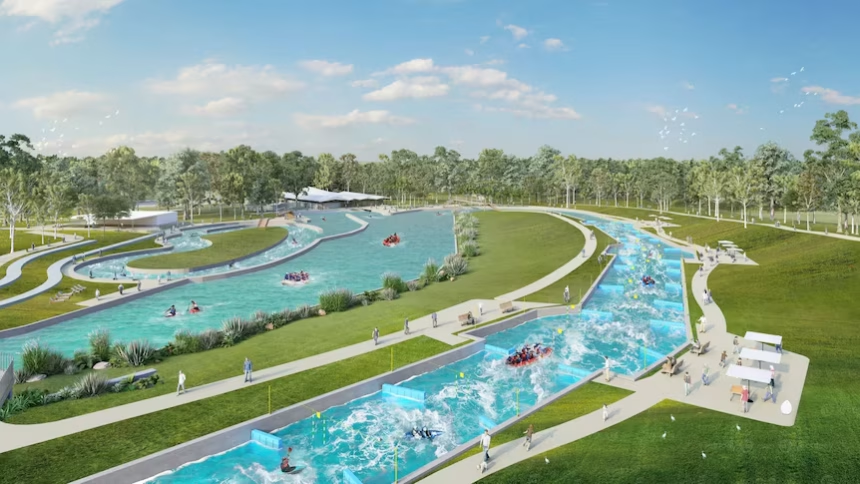
The proposed Redland Whitewater Centre and Birkdale Community Precinct have been formally referred to the Federal Government, setting up a critical test under national environmental laws as planners argue the Olympic-linked project will not significantly impact protected species or habitats.
The referral, lodged by Redland City Council and the State Government’s Games Independent Infrastructure Coordination Authority, is now under consideration through the Environment Protection and Biodiversity Conservation Act 1999, which determines whether major developments require federal approval.
Despite the scale of the proposal, proponents have concluded the project is “unlikely to result in a significant impact” on any matters of national environmental significance — a key threshold that would otherwise trigger a full federal assessment.
However, documents lodged with the referral highlight the environmental footprint of the development, including plans to remove 168 trees within the construction zone, while a further 74 trees will be retained subject to detailed arborist assessment as designs are finalised.

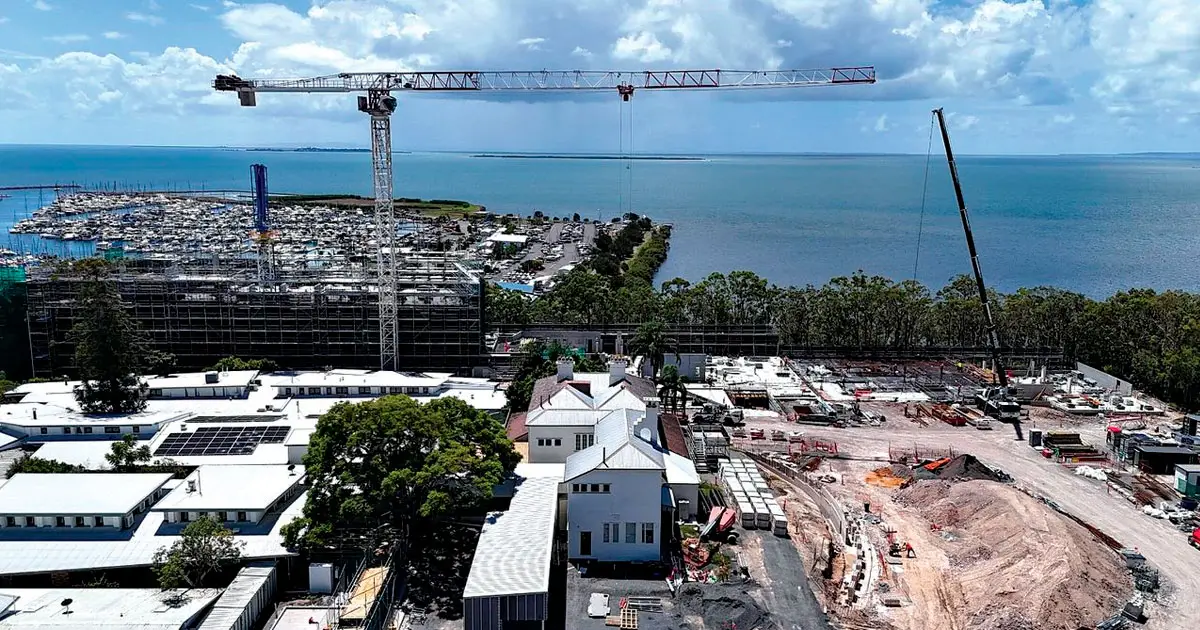
The project spans more than 62 hectares at Birkdale, with a disturbance footprint of about 20 hectares.
Planning documents state this footprint has been deliberately positioned on land that has been largely cleared since the 1940s for farming and later military use, including a former US Army signal station.
In contrast, about 39 hectares of the site — primarily along Tingalpa Creek — is designated as a conservation area and will remain protected under an agreement with the Commonwealth.
This zone contains the highest ecological values on the site, including remnant vegetation and habitat for threatened species.
Environmental assessments identify species of concern in the broader area, including koalas, grey-headed flying foxes, greater gliders and south-eastern glossy black cockatoos, along with endangered ecological communities such as coastal swamp oak forest.
The referral states that while these species and habitats are present within the wider project area, the design has been structured to avoid direct impacts by confining works to already disturbed land and buffering sensitive zones.
More than seven years of ecological studies underpin the submission, including ongoing koala monitoring since 2021 using GPS tracking, thermal imaging and detection dogs.
The findings informed project design, with planners stating impacts to koalas and other species are unlikely.
Mitigation measures outlined in the documents include the planting of at least 10,000 native trees, habitat replacement at a minimum ratio of three to one, installation of fauna crossings and canopy links, and targeted programs to remove invasive species such as foxes.
Hydrology has been another key focus of community concern, particularly the potential impact on Tingalpa Creek and the downstream Moreton Bay wetlands.
A detailed groundwater assessment found the site’s shallow groundwater system has limited connectivity to the creek and that stormwater will be captured and treated through basins, swales and constructed wetlands.
The whitewater channels themselves will be fully lined to prevent interaction with groundwater.
The report concludes the project will have no measurable impact on the Moreton Bay Ramsar wetlands, located several kilometres downstream, and may improve existing water quality conditions through modern stormwater treatment.
The whitewater centre is a centrepiece of Redlands Coast’s proposed legacy infrastructure for the Brisbane 2032 Olympic and Paralympic Games, following the State Government’s decision to proceed with a new facility at Birkdale rather than pursue alternatives interstate.
Planning documents note that alternative locations were considered but ruled out, with the Birkdale site identified as the only suitable location within the Redlands due to its size, availability and proximity to the local community.
The broader precinct is planned as a long-term community asset, with pre-2032 works to include the whitewater facility, public lagoon, event spaces and open parkland.
Post-Games development would add permanent buildings such as an environmental visitor centre, cultural facilities and educational spaces.
Community consultation has been extensive, with council reporting engagement with thousands of residents between 2021 and 2023 through surveys, workshops and public sessions, as well as further sentiment studies commissioned by the State Government.
The referral is now open for public comment until April 24 via the EPBC Act public portal, giving residents and stakeholders the opportunity to weigh in before the Federal Government decides whether the project will be classified as a “controlled action”.
That decision will determine whether the development proceeds under existing state processes or faces a more rigorous federal environmental assessment before construction can begin.