



By Amanda Ariotti, MAudSt, AAudA (CCP), BBiomedSc. Amanda is a masters qualified independent audiologist specialising in hearing rehabilitation in the Redlands.
People often tell me, “Amanda, it’s not the quiet moments I struggle with. It’s when I’m at dinner at The Sands or trying to follow the banter at the RSL. That’s when I really notice my hearing letting me down.”
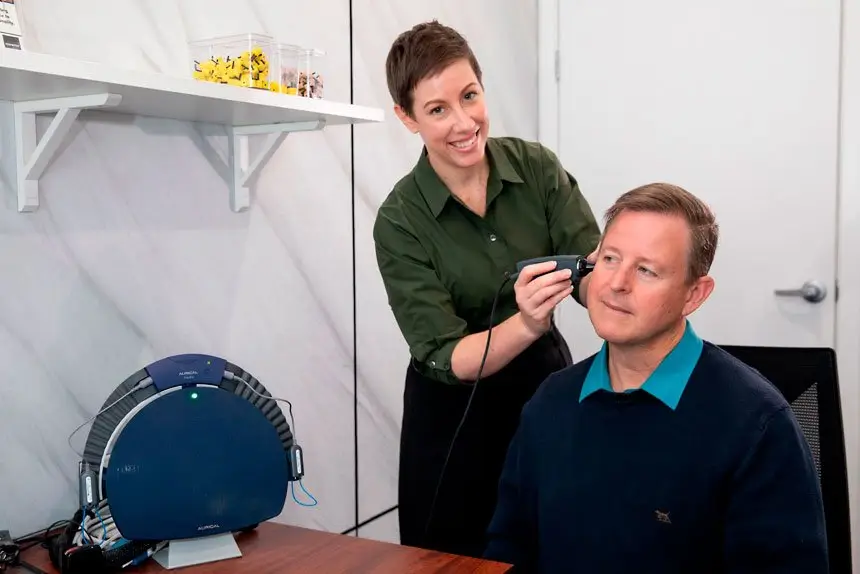
They’re right – and the truth is, most standard hearing tests don’t measure that. Sitting in a soundproof booth, listening for faint beeps, provides critical data on hearing sensitivity, but it doesn’t capture the reality of how we listen in the real world: with background noise, conversation overlap, and all the distractions of daily life.
That’s where speech-in-noise testing comes in. For some people, it’s the part of hearing care that matters most, because it reflects what they actually experience. For many, hearing loss isn’t just about how loud sounds are, but about how clearly speech stands out when the environment is busy, noisy or crowded.

I often see patients who tell me they “hear fine” in quiet, yet feel exhausted and withdrawn after social outings.
Imagine a family barbecue where everyone is talking at once – if your brain can’t separate voices from background noise, you end up guessing, nodding along, or simply retreating from the conversation.
The emotional toll can be even heavier than the hearing loss itself, leading to frustration, loneliness, or a sense of fading independence.
Best-practice audiology doesn’t stop at the beep test.
At A Better Ear, we use speech-in-noise testing because it gives us that deeper picture. It helps explain why two people with the same hearing aids can have very different experiences in the real world. More importantly, it informs not only your treatment plan, but also your device selection and the investment that comes with it.
A tailored assessment means you can choose between budget and premium devices with realistic expectations of how well they’ll perform for your situation. It allows your investment to be more precise and more likely to succeed – because your rehabilitation is guided by evidence about how you actually hear in daily life.
There’s strong evidence linking untreated hearing problems to higher risks of social withdrawal, low mood, and even cognitive decline.
The good news is that early, personalised rehabilitation can make a real difference. When people feel confident in conversation again, they not only reconnect with friends and family but also reduce the mental strain of constantly trying to “fill in the gaps”.
As an independent, family- owned clinic here in the Redlands, A Better Ear is committed to providing care that’s both evidence-based and deeply personal.
For me, the devices are never the end in themselves – they’re the means to something greater. The right device, fitted and supported properly, is what allows people to return to the moments that make life rich: the laughter around the table, the chat at the club.
If you’ve been wondering why your hearing feels fine in quiet but not in company, you’re not imagining it – and you don’t have to put up with it. The right testing can reveal the real issue, and the right support can bring you back into the conversation.