
Brisbane Airport CEO calls for direct terminal access as $5b transformation gathers pace
BRISBANE Airport wants the city’s Metro network extended directly to its terminals as it prepares for passenger numbers and its workforce to double over the next two decades.
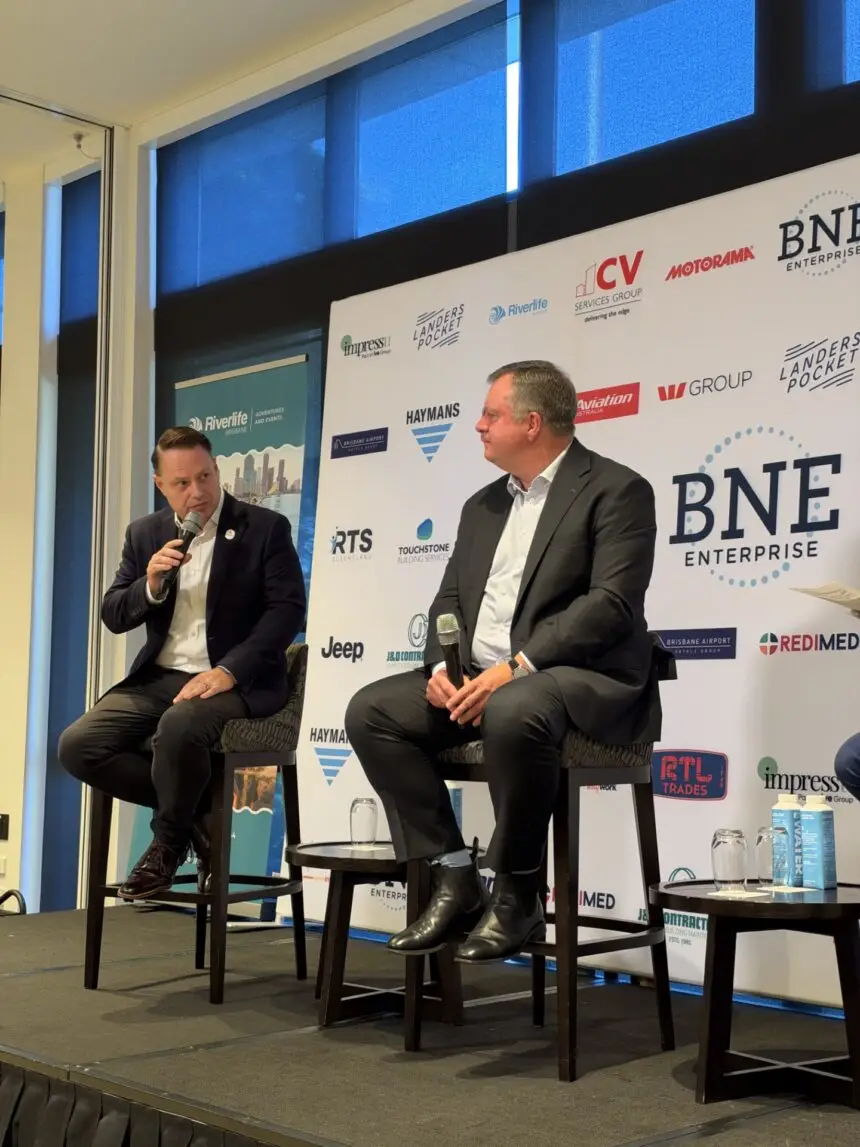
Brisbane Airport chief executive Gert-Jan de Graaff said better ground links were critical if the airport was to fulfil its role as Queensland’s gateway to the world.
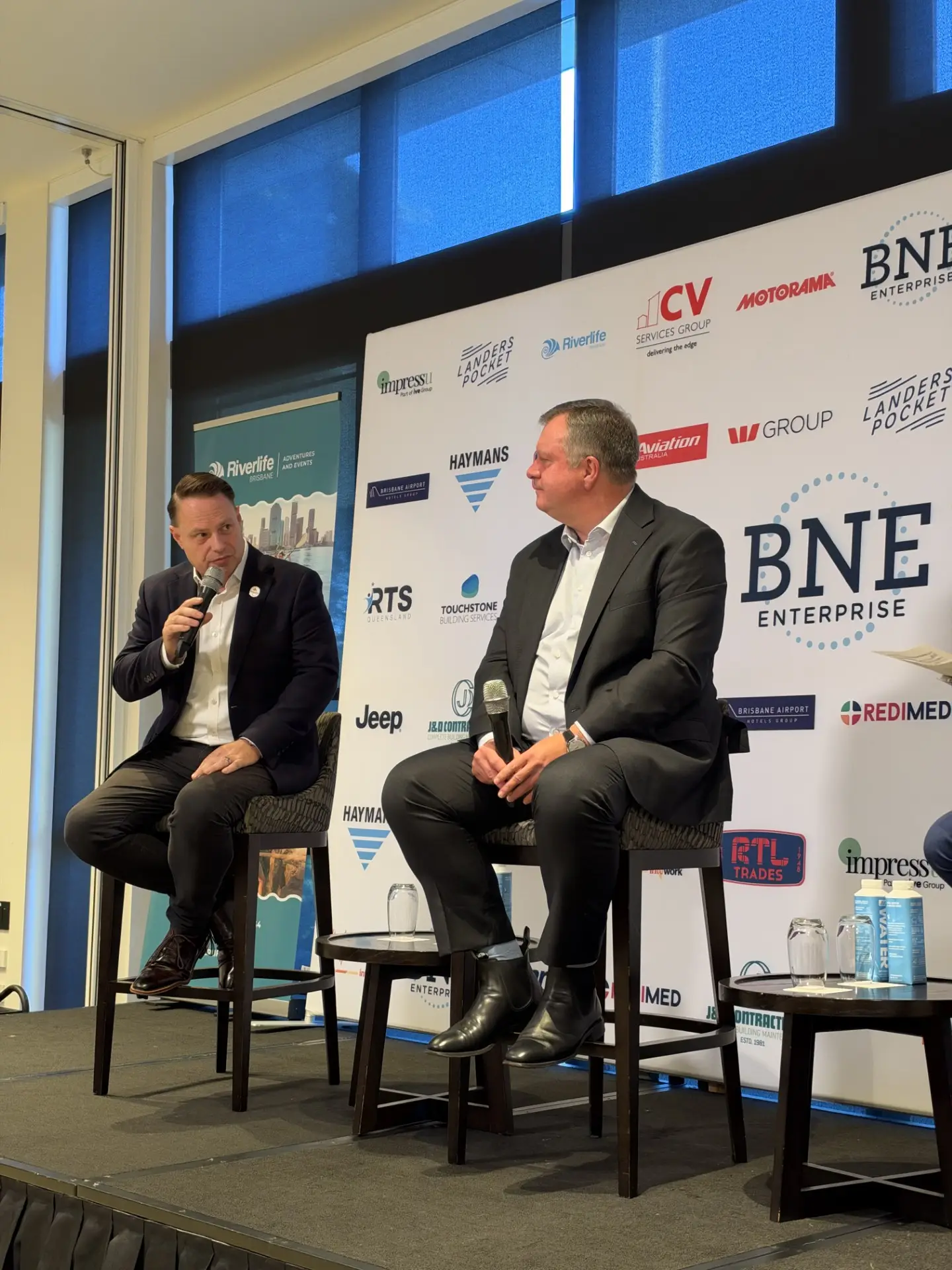
“The airport is a gateway to the world, but our air network only works if people can get to and from the airport on the ground,” Mr de Graaff told the BNE Enterprise Business Breakfast.

“Expanding road capacity is essential. We have been successful in developing a route network in the air, but we need the corresponding ground access.”
Mr de Graaff said Brisbane Airport was supporting further investment in public transport, Metro and rail, but the existing commercial arrangements around Airtrain — which run through to 2036 — presented a challenge for new terminal transport options.
“We want Metro to reach not only Skygate, but also Terminals 1 and 2, and ultimately a future Terminal 3,” he said.
The call comes as Brisbane Airport embarks on more than $5 billion in investment over the next five years, including major terminal, security, retail, cargo and precinct upgrades.
Mr de Graaff said the airport was “always ready, but never completed”, with passenger numbers forecast to surge from about 25 million a year to 50 million over the next 20 years.
The precinct’s current workforce of about 25,000 people would also need to double — if not more.
“We need to make sure we can attract that future workforce and create opportunities for those people,” he said.
“Otherwise, we will not deliver all the growth plans ahead of us.”
Lord Mayor Adrian Schrinner said Brisbane needed to ensure its infrastructure ambition did not end with the 2032 Olympic and Paralympic Games.
“If we see the journey as ending in 2032, we risk an Olympic hangover effect, where everything comes to a halt because no-one has put effort into planning the next pipeline of projects,” he said.
Mr Schrinner said expansion of Brisbane Metro needed to continue for decades as the region’s population grew.
“We do not want the endpoint for Brisbane Metro to be 2032,” he said.
“We want ongoing investment in expansion that continues for decades, because we know the region is growing and needs this kind of investment.”
The Lord Mayor said Brisbane’s global profile was rapidly changing, with international awareness predicted to grow from less than 10 per cent a few years ago to as high as 80 or 90 per cent by 2032.
He said international investors were increasingly looking beyond traditional feasibility calculations.
“They are saying: ‘I need to be here in Brisbane. I need to be part of this,’” Mr Schrinner said.
Mr de Graaff said the airport had recently held 47 meetings with airlines in Frankfurt, with strong interest in new and expanded services to Brisbane.
“There was a great deal of interest in flying to Brisbane, starting new connections and growing existing services,” he said.
“That connectivity will be essential for the city to develop.”
But both leaders warned that Brisbane’s booming project pipeline would put enormous pressure on skilled labour.
Mr Schrinner said Queensland had $173 billion in major projects planned to 2032, with shortages already emerging in key trades including concreting and tiling.
“Either we will not be able to get everything done that we need to, or the cost of doing it will be prohibitively high,” he said.
For local businesses, Mr de Graaff said there was work well beyond the airport’s headline construction projects.
Brisbane Airport Corporation has more than 600 businesses operating across its precinct, creating opportunities for suppliers, contractors and service providers.
“I often hear companies say they have difficulty finding local businesses and service providers,” he said.
“I do not hear them say there are too many. There is plenty of work to go around.”