
AFTER the convict era, the free colony at Moreton Bay was left to find a new source of cheap labour.
In 1861 Johan Heussler wrote to the Colonial Secretary offering himself as immigration officer.
Heussler visited Germany to establish a continued immigration to procure vine dressers, shepherds, hut keepers, farm labourers, domestic servants, mechanics single or in families.
He was to bring 2000 German migrants to Queensland, and in the Redlands, there are many reminders of their former presence.

Two Redlands cemeteries attest to their German inhabitants.
The Redland Bay (Serpentine Creek) Cemetery contains among others the grave of Edward Heinemann (1843-1925) and his wife Ernestine (nee Dittmann) (1853-1936).
Interestingly, in the early 1900s, Edward Heinemann worked to secure a telephone service to Redland Bay, which he later had extended to Mount Cotton.
He ran the Post Office from his home and also the telegram service.
This was a popular means of communication for the Mount Cotton settlers from 1900 onwards.
However, in the latter part of WW1 the Post Office was transferred from Mr Heinemann to the home of Dennis O’Hara Burke for “security” reasons.
The other German cemetery was at Mount Cotton.
It is well maintained and is still in use today.
In 1875 the district’s first Lutheran Church, St Paul’s, was built, however, due to borer infestation, it was replaced in 1951 by the current St Paul’s Lutheran Church at Mount Cotton. German Church Rd still remains on the map as its former site.
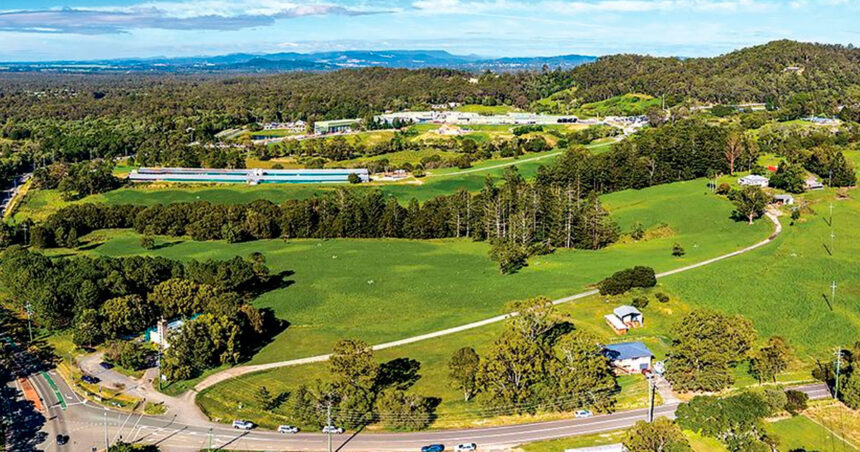
Also, at Mount Cotton farmer Adolph Benfer started a poultry farm in 1933.
By the 1950s he operated the biggest privately owned broiler enterprise in Australia.
He set up an abattoir in Mt Cotton in 1966 which processed chickens from the rapidly expanding poultry farms in the district.
His business continued to grow and in 1977 he was awarded an MBE for services to the industry.
His Golden Cockerell farm still operates.
In the Redlands, there were many families of German descent, who mainly lived in the Mount Cotton, Redland Bay areas.
They were well accepted by the farmers of the Redlands and were well respected for their community involvement.
In general, those families were too close to their German background historically for them to feel the strong Australian national sentiment, which drove much of the WW1 enlistments.
However, some Redlanders of German extraction did volunteer for the AIF to fight against the homeland of their forebears.