
THERE is an old saying that the loudest voice in the room is not always the majority voice.
In recent years, Redlands has developed a worrying habit of allowing a small number of highly organised campaigners to dominate public discussion, creating the impression they speak for the entire community when they often represent only one side of a much larger conversation.
That is not a criticism of activism.
In a healthy democracy, everyone has a right to advocate for causes they believe in.

Community groups, environmental organisations, business leaders, councillors, politicians and residents all have a legitimate place in civic debate.
The problem arises when disagreement turns into intimidation.
In response to two recent stories involving local MPs, many comments had little to do with the issues being discussed.
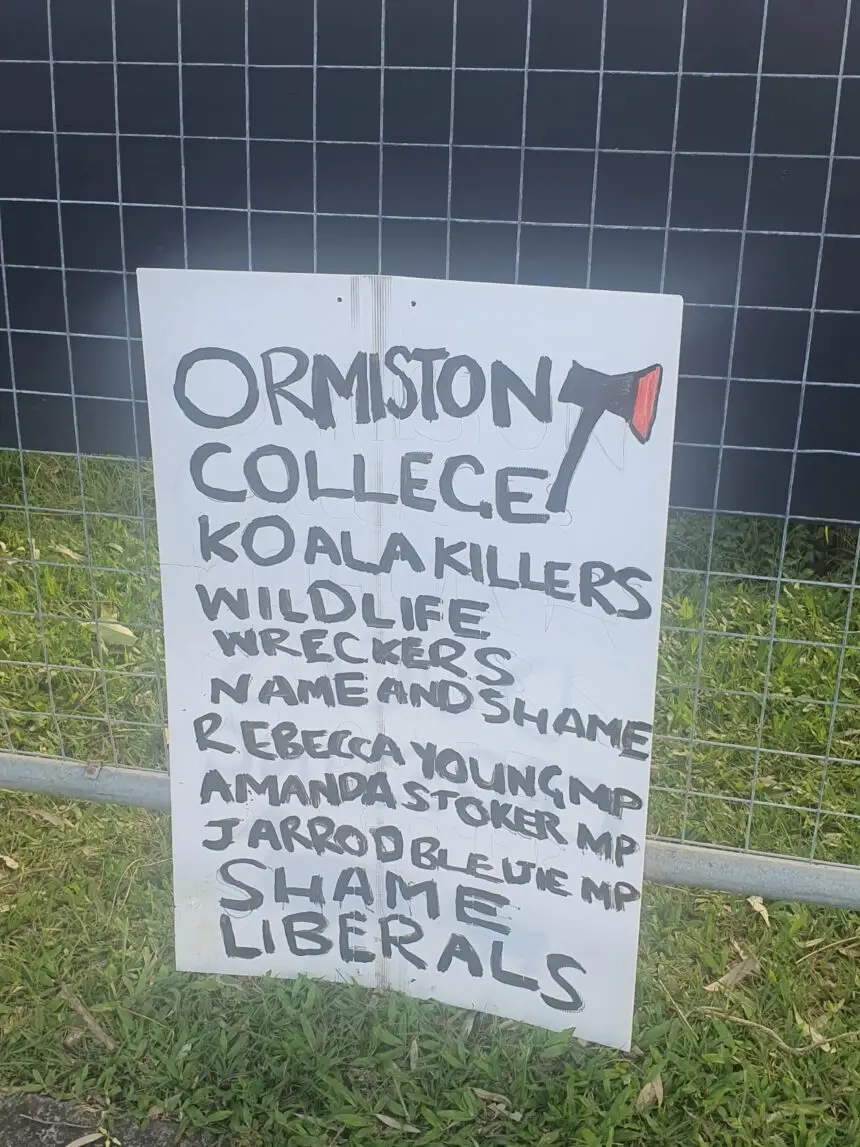
Instead, elected representatives and anyone who agreed with them were labelled “koala killers”, “environmental vandals”, “puppets”, “lunatics” and “grubs”.
Others alleged corruption or demanded politicians be removed from office without presenting evidence.
Whether people support or oppose a particular project is not the point.
The concern is that discussion is increasingly focused on attacking individuals rather than scrutinising ideas, policies and decisions.
And the problem is no longer confined to politicians.
Businesses and organisations connected to contentious projects are increasingly being drawn into campaigns designed to pressure or shame them.
Following debate surrounding the Ormiston College development, social media posts recently targeted a corporate sponsor associated with the school, questioning whether it should be linked to an organisation accused of supporting the clearing of koala habitat and encouraging customers to express their views.
People are entitled to decide where they spend their money and which organisations they support.
However, there is a fine line between expressing an opinion and creating an environment where businesses, sponsors and community organisations become reluctant to engage in local initiatives for fear of becoming the next target of a public campaign.
If businesses conclude that supporting schools, sporting clubs, community groups or development projects will expose them to reputational attacks, many will simply choose not to get involved at all. That would be a loss for everyone.
The consequences are significant.
When conversations become dominated by hostility, many people simply stop participating.
Teachers, business owners, volunteers, community leaders and ordinary residents decide it is easier to stay silent than risk becoming the next target of an online pile-on.
As moderate voices withdraw, the conversation becomes less representative of the broader community.
Redlands faces enormous opportunities over the next decade.
The lead-up to the Brisbane 2032 Olympic and Paralympic Games presents opportunities for investment, jobs, tourism and infrastructure that previous generations could only dream about.
Major developments are being assessed.
New businesses are considering investment.
Sporting organisations are exploring opportunities to bring international events to the region.
Whether every proposal proceeds is beside the point.
What matters is that Redlands develops a reputation as a city capable of having mature conversations about its future.
Investors, governments and organisations pay attention to how communities respond to change.
If the perception becomes that every proposal will be met with hostility and endless conflict, opportunities will inevitably go elsewhere.
That is not good for local jobs, local businesses or future generations who will inherit the consequences of today’s decisions.
The answer is not to silence activists or dismiss legitimate concerns.
Community groups have every right to raise issues about koalas, development, infrastructure and the environment.
In fact, strong advocacy often leads to better outcomes.
But there is a difference between saying, “I oppose this proposal because…” and labelling those who disagree as killers, vandals or enemies of the community.
One invites discussion. The other shuts it down.
Redlands does not need everyone to agree.
What we need is a culture where people can disagree respectfully, where facts matter more than slogans, and where different viewpoints can be expressed without fear of personal abuse.
The future of Redlands should not be determined by whichever group is most effective at generating outrage online.
It should be shaped by the broad and diverse community that calls this place home.
If we want confidence to return to Redlands, we need more people participating in the conversation, not fewer.
Because when good people stop participating, everybody loses.