
Facebook
Notification
Redland Bayside News
  • News & Editorial
  • Digital Editions
  • Pickup Locations
  • Advertise With Us
  • News & Editorial
  • Digital Editions
  • Pickup Locations
  • Advertise With Us
  • Digital Editions
  • Pickup Locations
Facebook
Notification
Redland Bayside News
  • News & Editorial
  • Digital Editions
  • Pickup Locations
  • Advertise With Us
  • News & Editorial
  • Digital Editions
  • Pickup Locations
  • Advertise With Us
  • Digital Editions
  • Pickup Locations
Redland Bayside News > Seniors > Finding an aid that suits you
Seniors

Finding an aid that suits you

The Hearing Health Column with Penelope Woods, BMus, MAudSt, MAudA (CCP)

Penelope Woods
Penelope Woods
Published: July 15, 2023
Share
3 Min Read
PROFESSIONAL ADVICE: Penelope Woods looks at the pros and cons of “invisible” hearing aids.
SHARE

As an experienced audiologist, I help patients find the best hearing aid for their needs. Today, I’d like to discuss “invisible” hearing aids and some of the pros and cons associated with these devices.

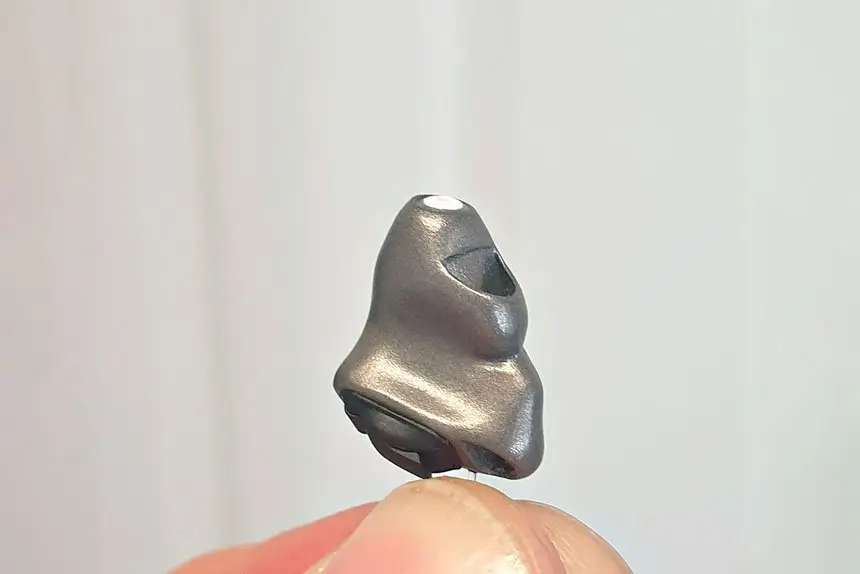
Invisible hearing aids, such as Invisible In-The-Canal (IIC) and Completely-In-The-Canal (CIC) models, are designed to be harder to see, providing a high cosmetic appeal. One of the main advantages of these devices is their discreet nature, which can help reduce the wearers perception of the social stigma sometimes associated with hearing aids.

There are however some limitations to consider when looking at an invisible hearing aid. Due to their small size, they tend to be more suitable for mild to moderate hearing loss, as their small speakers, and power, limit the output of the devices. Additionally, their compact design means they often lack features found in larger hearing aids, such as wireless connectivity, directional microphones, and aggressive background noise suppression. Battery life may also be of concern, with small size 10 batteries needing to be replaced every 1-2 days.

In-The-Canal (ITC) hearing aids, although not strictly “invisible,” are still quite discreet and offer some advantages over their smaller counterparts. Their larger size allows for more features, such as directional microphones, wireless connectivity, and rechargeable batteries. ITC devices also tend to be more suitable for a wider range of hearing loss, thanks to their larger speakers and power capacity.

- Advertisement -

When considering an invisible hearing aid, it’s essential to remember that they are not suitable for everyone. Your audiologist will be able to advise if your ear canal can accommodate an IIC or CIC device.

Additionally, those with dexterity issues or concerns about ear wax and moisture damage may find these devices challenging to maintain.

In conclusion, some hearing aids offer the benefits of being harder to see, especially when viewed from behind. However, it’s important to consider their limitations and consult with an audiologist who follows best practice guidelines to find a solution that works for you. It may be that a different style is similarly discrete and offers better performance in a variety of circumstances.

Seeking reputable and effective hearing health care can lead to better outcomes including improved mood, reduced isolation, and better connections with loved ones, so don’t hesitate to explore all your options.

Penelope is a passionate hearing health advocate and the founder of A Better Ear in Cleveland. Send your hearing health care questions to hello@abetterear.com.au and she will answer them in a future column.


Share This Article
Facebook Email Print

Latest Seniors News

SAD TREND: Older people now make up 14 per cent of the nation’s homeless population.
Elder homelessness on the rise as living costs escalate
Seniors
KEY CONSIDERATION: Having the same support worker regularly can help build trust and familiarity.
Helping you to choose a home care provider
Seniors
Older Australians Struggle With Rising Living Costs
Insurance and healthcare sit atop seniors’ financial worries
Seniors
CLOSE ANALYSIS: UniSQ Professor Kerstin Braun, lead author of new research on voluntary assisted dying and dementia.
Assisted dying study focuses on dementia
Seniors

You Might Also Like

KNOW THE SIGNS: A Better Ear is promoting good hearing health.
Seniors

Let experts test your hearing

May 10, 2023
Weigh up what’s on offer with different hearing tests.
SeniorsSound Decisions

Not all hearing tests offer best results

October 17, 2024
CRACKING DEBATE: Are eggs good or bad for you?
Seniors

Moderation is the key when deciding on eggs

February 27, 2025
Support at Home is aimed at helping older Australians live independently for longer.
Featured NewsSeniors

Aged care reform: What older Aussies need to know about

June 12, 2025

Published by Local News Group QLD. Dedicated to connecting local communities through informative and engaging media.

  • Contact Us
  • Advertise With Us
  • Quick Links
  • Community
  • Featured News
  • Sport
  • Cleveland
  • Real Estate
  • Redland City Council
  • Seniors
  • Capalaba
  • Redlands
  • Business
  • Victoria Point
  • Redland Bay
  • Birkdale
  • Fishing
  • Entertainment
  • Wynnum
  • Wellington Point
  • Alexandra Hills
  • Finance
  • Disability News
Copyright © 2026 Local News Group - Website by LNG Digital
Welcome Back!

Sign in to your account

Username or Email Address
Password

Lost your password?