
Redlands demands State close a $554m infrastructure gap before 24,000 residents move into Southern Thornlands
REDLAND City Council has warned Southern Thornlands could leave existing ratepayers carrying the cost of growth unless the State Government locks in roads, sewerage, schools, parks, public transport and emergency services before development begins.
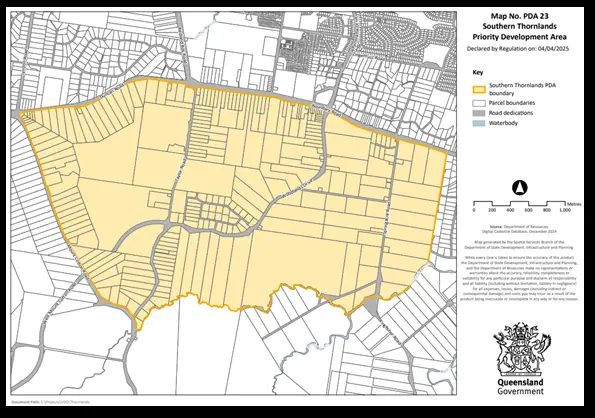
In its full submission on the Southern Thornlands Priority Development Area draft development scheme, Council says the proposed 900-hectare city for up to 24,000 residents and 8,000 homes contains major unanswered questions — and potentially undercooked infrastructure costs.
The blunt message to Economic Development Queensland is clear.

Future development must pay the full cost of the infrastructure it creates.
Council has no formal planning control inside the PDA, which was declared by the State Government in April last year.
EDQ will write the final planning rules and assess future development applications.
But Council will remain responsible for services including waste collection, road maintenance and water supply creating what it says is an unacceptable risk that local residents could be left to fund a shortfall.
The submission says the draft scheme proposes about $554 million in infrastructure, but warns even small errors in estimates, assumptions or land values could create funding gaps worth many millions.
“Setting infrastructure charges too conservatively risks creating funding shortfalls that are ultimately borne by the broader community through increased rates, taxes or government expenditure,” the submission says.
Council says the State’s proposed $750,000-a-hectare allowance for land acquisition is wildly below current local values.
Using Queensland Government valuations for two Thornlands properties, Council calculated an average unimproved land value of about $2.17 million a hectare — almost three times the figure used in the draft planning documents.
It warns the gap could leave the proposed 11-site neighbourhood park network alone at least $15 million short.
Council also questions whether the proposed $53,500 infrastructure charge per residential lot is enough, noting the draft Waraba PDA charge is about $75,000 per lot and comparable greenfield projects have imposed charges above standard caps while continuing to develop.
The submission says housing affordability cannot be used as an excuse to shift the cost of new growth on to current residents.
A major concern is wastewater.
Council says water, sewer and pump-station figures in the State’s Development Charges and Offset Plan do not reflect recent construction costs, with a comparatively small sewer pump station now estimated by Council at about $3 million.
It also warns the State’s proposed Cleveland wastewater treatment plant and effluent-disposal pathway may understate the cost directly caused by the PDA.
Council argues that without the massive Southern Thornlands growth, optimising existing licensed discharge arrangements at Hilliards Creek would remain the preferred pathway rather than accelerating a new disposal solution.
That distinction matters because it determines how much of the bill is attributed to developers — and how much could potentially land elsewhere.
“Any upgrades or augmentation of wastewater infrastructure required to facilitate PDA development must be fully funded by development proponents,” Council says.
Roads are another flashpoint.
The submission says earlier transport investigations identified the likely need to duplicate Springacre Road and Taylor Road, yet the final draft scheme now shows them as two-lane connections.
Council says EDQ has advised the proposed 22-to-23-metre corridors would not allow a future dual carriageway.
It warns that failing to protect enough land now could force future ratepayers to fund costly widening works, property acquisitions and even home demolitions later.
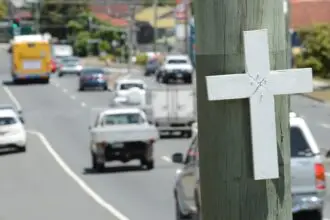
The PDA’s 24,000 extra residents would also add pressure to already congested Mount Cotton, Duncan and Boundary roads, according to Council.
It says upgrades to those corridors have been recognised by the State for almost 20 years, but many remain undelivered.
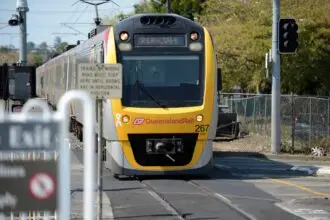
Council is also pressing for early public transport and active-transport investment, including proper bus routes, stops, interchanges and links to centres, schools, health services and jobs beyond the new estate.
It has renewed calls for region-shaping infrastructure including the Eastern Busway extension to Capalaba, investigation of Cleveland line duplication and high-frequency public transport connecting Capalaba, Cleveland, Victoria Point, southern Redland Bay and Logan Hyperdome.
The proposed school site at Woodlands Drive is also under scrutiny.
Council says its topography and development constraints raise questions about whether it can be delivered efficiently, while asking EDQ to release the methodology used to identify and rank school locations.
It says school sites should be shown by their actual land requirements rather than as simple stars on a map.
The submission argues a community of 24,000 people should also trigger planning for health, police, ambulance, fire and emergency services.
While the draft identifies indicative school sites, Council says it does not make the same strategic provision for other essential services.
It says the projected population meets or exceeds EDQ thresholds for a community health centre and police station, and is only marginally below the threshold for ambulance and fire stations.
Parks and sporting fields are another concern.
Council says the proposed open-space network relies too heavily on linear corridors and fragmented neighbourhood parks, without enough usable higher-order recreation land.
Under EDQ’s own standards, it says a population of this size would normally warrant a major recreation park of at least 10 hectares.
None is identified.
The proposed district recreation park has only about 2.25 hectares of usable land — less than half the five-hectare benchmark — while Council says the proposed district sports park may require extensive earthworks, retaining walls and costly site modifications before it can function as a genuine multi-sport venue.
Environmental protection remains a key demand, with Council warning the green network lacks a meaningful east-west wildlife corridor through the heart of the PDA.
It says the plan relies too heavily on Eprapah Creek, includes potential pinch points and dead ends, and does not adequately show how fauna will cross existing and future major roads.
Council wants wider habitat corridors, including stronger protection for Eprapah and Hilliards creeks, along with underpasses, overpasses, fencing, canopy crossings and other fauna-sensitive road measures.
It is also calling on EDQ to take responsibility for a Commonwealth environmental referral covering the cumulative impacts of the development and its major infrastructure.
The final scheme must also explain how the State’s promised target of up to 20 per cent affordable and social housing will be delivered, Council says.
Member for Redlands Rebecca Young welcomed Council’s detailed feedback, saying the consultation was the time to test whether the proposed infrastructure would match the scale of the development.
“I have been clear from the beginning that if we are going to accommodate future growth in Southern Thornlands, the infrastructure must come with it — roads, water and sewerage, public and active transport, parks, community facilities and the health and emergency services a growing community needs,” Mrs Young said.
“The proposed scheme provides for significant investment in infrastructure, but this consultation process is exactly the time to test the detail.
“That includes the capacity of the surrounding road network, infrastructure and land cost assumptions, wastewater capacity and ensuring existing residents are not left carrying an unreasonable cost from future development.”
Mrs Young said she had heard directly from residents concerned about the impact of future growth on existing roads and infrastructure, and had raised those concerns during the process.
She said Council, community and stakeholder submissions would now be considered by EDQ before the development scheme was finalised.
“We have an opportunity to plan Southern Thornlands properly from the outset,” she said.
“My focus is making sure future homes and population growth are supported by the infrastructure and services our community will need.”