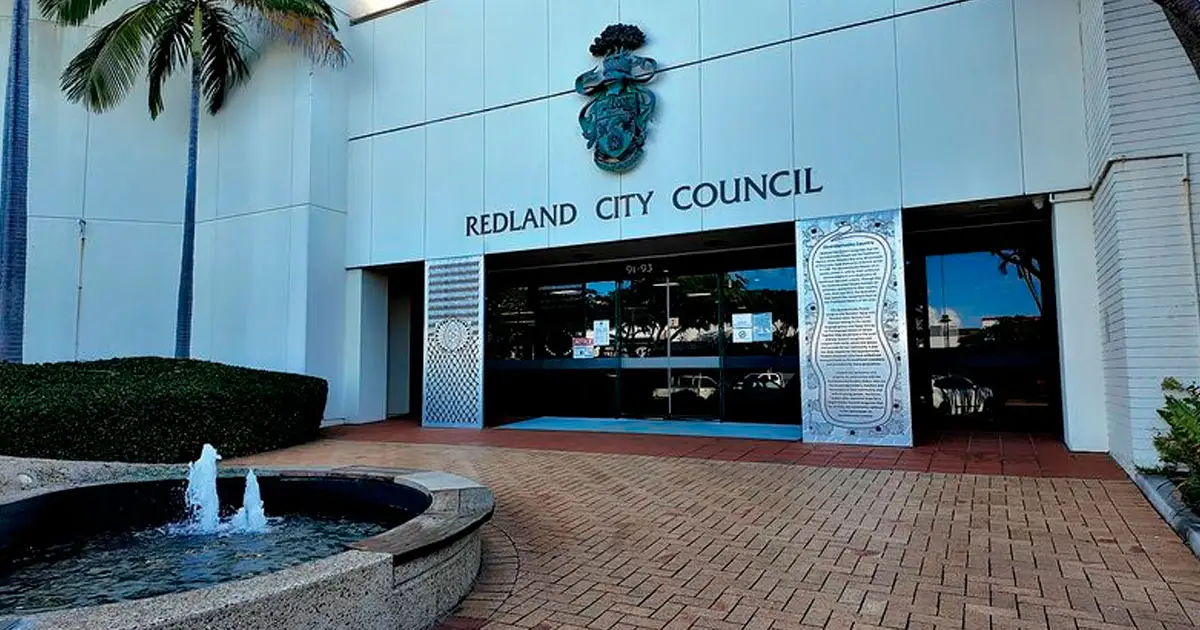

THERE is an uncomfortable question that Redlands City Council may soon have to confront: at what point does avoiding a by-election stop being practical administration and start denying residents their democratic say?
Firstly, I want to be clear about Mayor Jos Mitchell’s circumstances.
I have sympathy for anyone dealing with a serious medical situation that prevents them from working.
Public office brings pressures that most people never experience, and nobody should be criticised simply for becoming unwell or needing time away to recover.

Mayor Mitchell deserves the time, privacy and support necessary to deal with her health.
But there also comes a point when the interests of the voters must come first.
My prediction is that Mayor Mitchell will not return to the role, and that Deputy Mayor Julie Talty and her team will accept the Mayor’s continued absence until March 2027.
Why March?
Because once Council reaches the final 12 months before the next scheduled local government election, the rules around filling a mayoral vacancy change.
Rather than triggering a costly by-election, Council may be in a position where councillors themselves determine who becomes Mayor for the remainder of the term.
If that happens, Julie Talty could potentially become Mayor without the people of Redlands ever voting for her to hold that position.
And that matters.
Whatever your view of Cr Talty, nobody voted for Julie Talty to be Mayor of Redland City.
There is a fundamental difference between a Deputy Mayor temporarily performing mayoral duties while an elected Mayor is unavailable and councillors effectively determining who leads the city for a substantial period without an election.
I also understand the financial argument.
A Redlands mayoral by-election could reportedly cost somewhere in the vicinity of $650,000 to $850,000.
That is a significant amount of ratepayers’ money, particularly when Council is already under pressure over rates, infrastructure and the cost of delivering basic services.
I understand why councillors would want to avoid spending that money.
But you can’t put a price on democracy.
In my day job, I deal with workplace matters.
One thing I understand is the difficulty associated with returning to work after a very lengthy absence.
Once a worker has been away from their workplace for more than 30 weeks, the odds can increasingly become stacked against a successful return.
That does not mean a return is impossible, nor should anyone make assumptions about Mayor Mitchell’s individual medical circumstances.
Those are matters for her and her medical professionals.
But after such an extended absence, it is reasonable for the community to ask whether there is a realistic pathway back to performing the full duties of Mayor.
If there is, I genuinely hope Mayor Mitchell makes a successful recovery and returns to the job Redlands residents elected her to do.
If there isn’t, then I believe the community deserves clarity.
The worst outcome would be allowing uncertainty to continue primarily because keeping the position technically occupied long enough avoids the financial and political inconvenience of a by-election.
Saving $650,000 to $850,000 is not insignificant.
But neither is the democratic right of more than 100,000 Redlands residents to determine who leads their city.
Sometimes elections are inconvenient. Sometimes they are expensive.
That is the price of democracy.
My prediction is that the current arrangement will continue until March 2027, at which point a mayoral vacancy could potentially be filled without a city-wide by-election.
I hope I’m wrong.