

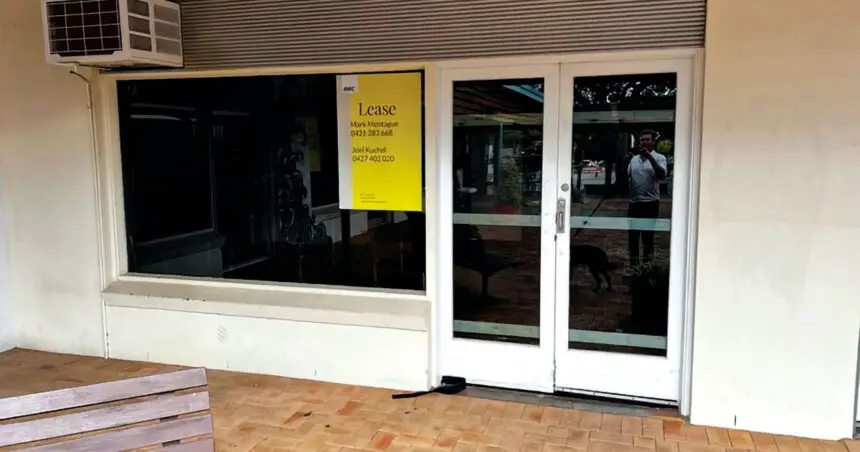
A FEW more shopfronts are sitting empty across Redlands Coast as local small businesses face rising costs, cautious consumers and an increasingly complex regulatory burden.
Businesses have always come and gone, but owners say the pace of closures has picked up and behind each one is often a family business, staff members and local jobs lost.
For many operators, the squeeze is coming from every direction.
Higher rent, insurance, power bills and compliance costs, alongside customers tightening their own household budgets.

That leaves small business owners caught in the middle, with many also frustrated by what they describe as growing red tape on top of the everyday challenge of keeping the doors open.
The broader figures paint a grim picture.
Business Chamber Queensland’s Pulse Survey recorded the steepest fall in business confidence in more than two decades, dropping below levels seen during the Global Financial Crisis.
Nationally, the Australian Chamber of Commerce and Industry’s 2026 Small Business Conditions Survey found 38.5 per cent of small business owners paid themselves less than $40,000 – or nothing at all – during the 2025 financial year.
Almost 63 per cent identified rising costs as their biggest challenge, while more than one in three had considered closing their business in the past 12 months.
The pressure matters locally.
Redlands Coast is home to more than 12,800 active businesses, while 52.3 per cent of working residents already leave the city each day for employment elsewhere.
Every business closure can mean fewer local jobs, fewer first-job opportunities for young people and fewer apprenticeships.
It can also take away the independent cafes, shops, trades and services that help give suburbs and village centres their character.
The impact reaches well beyond a balance sheet.
Red tape is also emerging as a major national concern, particularly for smaller operators without dedicated human resources or compliance teams.
The Council of Small Business Organisations Australia has warned of increasing complexity in workplace laws at a time when it says 43 per cent of small businesses are not breaking even.
The Australian Chamber of Commerce and Industry estimates business-related compliance costs have risen by at least $5.5 billion over the past five financial years.
It has called for the compliance burden on businesses to be cut by 25 per cent by 2030.
The Federal Government has acknowledged the issue, with its 2026-27 Budget including reforms estimated to reduce regulatory costs by $10.2 billion a year once fully implemented.
The changes cover tax administration, tariffs, financial regulation and other areas, but the key test for small business will be whether they result in less paperwork, less time away from customers and lower real-world costs.
For Redlands Coast businesses doing it tough, local Chambers of Commerce may be an important first point of contact.
They can provide advice, connections, advocacy and access to support that may help businesses navigate challenges, find opportunities to grow and avoid facing difficult decisions alone.