
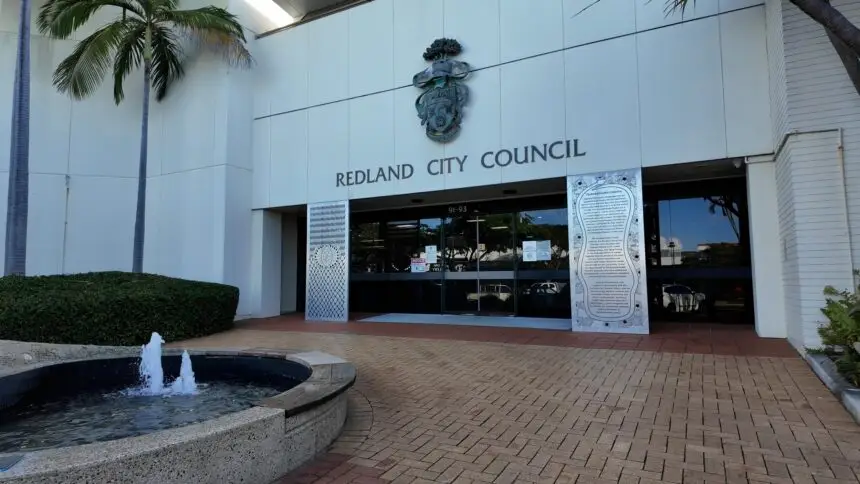
Redland City Council has warned ratepayers could face substantially higher bills if they were required to cover a growing gap between developer contributions and the cost of infrastructure needed for new housing.
Councillor Wendy Boglary raised the issue during discussion of Council’s August monthly financial report, as debate continued over the significance of Council’s $350 million cash balance.
Cr Boglary said the balance appeared large at first glance but was largely accountable and allocated through constrained reserves and other commitments.
However, she said the bigger financial challenge was the cost of infrastructure required to support growth.

“Despite having these constrained reserves and infrastructure charges being collected from developers, there’s still a gap in funding to cover the cost of infrastructure,” Cr Boglary said.
She said Council anticipated recovering only about 29 per cent of the cost of its Local Government Infrastructure Plan through developer contributions, despite reduced projects and service levels.
That equated to an estimated funding shortfall of about $40 million a year over the life of the plan.
“This means Council cannot deliver the infrastructure required in the plan to accommodate new growth and it must be funded by other means, since the developer charge does not cover it,” she said.
Cr Boglary said a 1 per cent rates increase raised about $1.5 million for Council, meaning rates would need to rise by about 27 per cent if they were the only source used to cover the annual infrastructure shortfall.
She called on the State Government to investigate changes to developer charging arrangements, arguing developers should contribute a greater share of infrastructure costs rather than leaving the burden with councils and existing ratepayers.
“It illustrates that the $350 million cash balance which has recently been recorded … though it may look initially that Council is holding a large balance, it’s certainly not a surplus,” she said.
“It is allocated and it is accountable.”
Chief Financial Officer Sandra Bridgeman said Council’s August operating surplus of $35.9 million was also a temporary, point-in-time result, with 10 months of transactions and activity still to occur in the financial year.
Ms Bridgeman said Council’s recurrent revenue of about $101 million was marginally below budget by $225,000, largely because water consumption charges were lower than anticipated at that stage of the year.
Investment earnings remained strong, with a favourable variance of about $400,000.
Capital works spending was slightly ahead of the year-to-date budget by $368,000, while closing cash balances were lower than forecast largely due to the timing of supplier payments.
She said cash movements were difficult to forecast precisely because quarterly rates and utility payments were received at different times to regular employee, supplier and major capital-project payments.
Ms Bridgeman said most of Council’s key performance indicators were meeting or exceeding targets, with asset sustainability and asset consumption ratios the exceptions.
The asset consumption ratio was marginally below its 60 per cent target, but Ms Bridgeman said it still indicated Council’s assets were being consumed broadly in line with their estimated useful lives.
Council also reported that outstanding rates debtors had declined, with 14 per cent outstanding in August 2026 compared with 15.9 per cent in August last year.