
Redland City Councillor Paul Gollé has called on the State Government to explain how it will manage fire ant risks — and who will carry the long-term cost — as development accelerates across the proposed Southern Thornlands Priority Development Area.
In a submission to Economic Development Queensland, Cr Gollé has raised concerns about the movement of soil and fill, treatment requirements for new parks and public land, and the prospect of future costs being passed on to Redland City Council and ratepayers.
The Southern Thornlands PDA is planned as one of the city’s largest future growth areas, with the wider scheme expected to accommodate up to 24,000 residents and 8,000 homes, along with schools, employment land, roads, parks and open space.
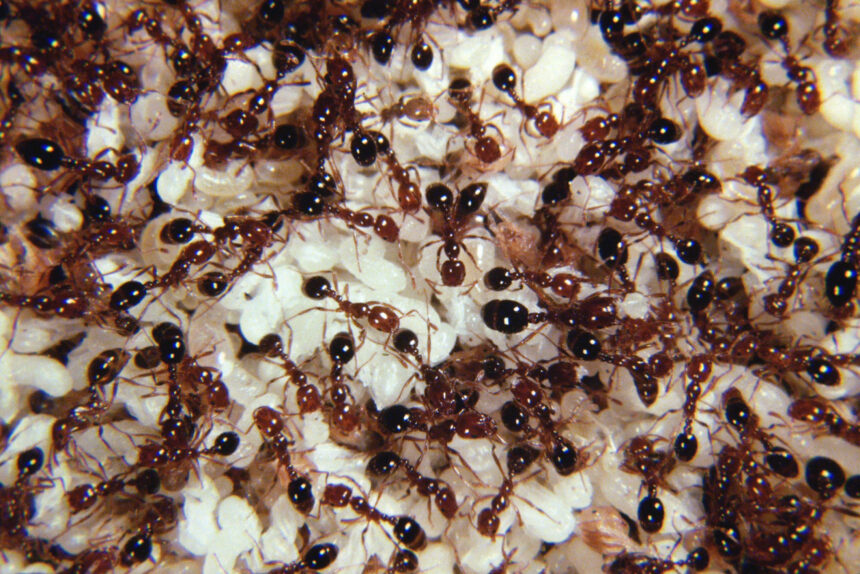
Works have already begun in parts of the area, including around Springacre Road, prompting renewed community interest in how Red Imported Fire Ant risks are being managed during earthworks, vegetation clearing and fill importation.

Cr Gollé said the State needed to demonstrate that biosecurity obligations had been properly considered from the outset particularly before public infrastructure was handed to Council.
“The Southern Thornlands PDA represents one of the largest growth areas within Redland City and will have long-term implications for residents, developers, Council and the State Government,” he said in the submission.
“Given the ongoing challenges posed by Red Imported Fire Ants across South East Queensland, it is essential that robust biosecurity measures are implemented from the outset and that the future financial burden associated with surveillance, treatment and remediation is fully understood and appropriately allocated.”
Cr Gollé has asked whether EDQ has completed detailed cost-benefit and risk modelling for fire ant surveillance, treatment, compliance and remediation across the development area.
He also wants assurances that ongoing costs will not be transferred to Council when it assumes responsibility for new public assets including parks, sporting fields, drainage corridors, roads and open-space networks.
A major focus of the submission is the importation of fill, which can present a pathway for fire ants to spread if soil and other restricted materials are not managed in line with Queensland biosecurity requirements.
Cr Gollé has requested details of the controls applying to fill entering the PDA, including how contractors and developers are audited, how often inspections occur, who carries them out and whether compliance reporting will be made available to Council and the wider community.
He has also sought clarification about the standards developers will need to meet before parks, environmental reserves and other public open-space areas can be handed over.
Questions include whether land will be required to undergo fire ant surveillance and treatment before practical completion, and what warranties or post-handover obligations would apply if infestations are later identified.
The councillor has requested an update on the fire ant management strategy currently applying to the Springacre Road project area, any site-specific biosecurity management plans, the agencies responsible for compliance monitoring, and engagement with Council over future asset handovers.
Economic Development Queensland has been asked to provide a detailed response, including relevant cost modelling, compliance frameworks, biosecurity plans and future treatment and surveillance arrangements.