
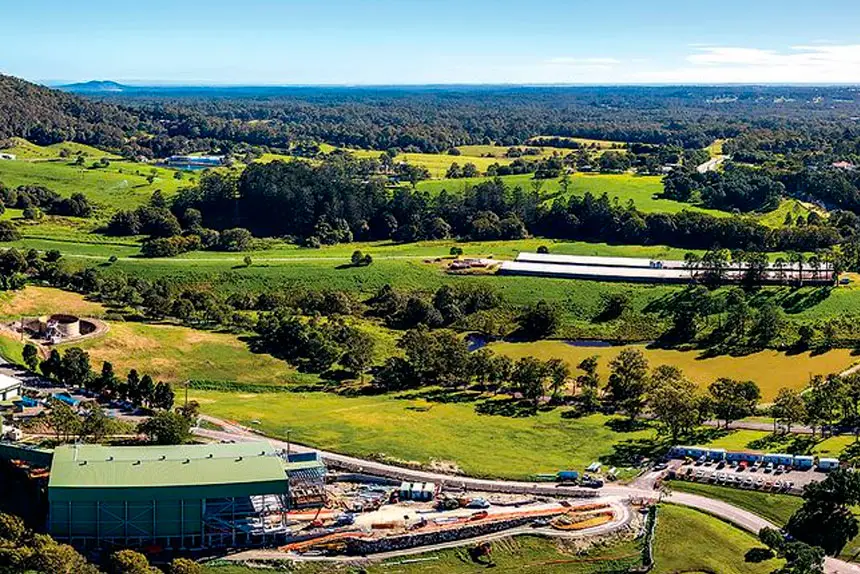
THE battle over Redlands’ future growth has shifted to Mount Cotton, with councillors backing an investigation into land that could eventually be included in the State’s urban footprint as part of a push to diversify the local economy and create more local jobs.
The decision means Council will write to the Queensland Government seeking in-principle support for the area to be considered during the ongoing review of the South East Queensland Regional Plan.
The request does not rezone any land or approve development.
Instead, it asks the State to assess whether the area is suitable for employment-
generating, tourism, sport and recreation uses, while specifically excluding suburban-scale residential development.

The motion was brought forward by Planning Portfolio spokesperson Cr Rowanne McKenzie amid concerns about future employment land supply across Greater Brisbane and Redland City’s dependence on residential rates.
According to the notice of motion, about 90 per cent of Council’s rate revenue comes from residential properties, while more than half of Redlands workers leave each day for employment elsewhere.
Supporters argued the city needed to act now to secure future investment opportunities and create more jobs closer to home.
Cr Jason Colley said the decision was about reducing reliance on residential rates and expanding local employment opportunities.
“We have an opportunity to signal Council’s intention to build a more sustainable city,” he said. “To reduce the burden on mum and dad ratepayers and invite more business and commercial opportunities to help carry that load.”
He added that too many residents currently left the city for work.
“We don’t want our greatest asset – our people – to have to leave the Redlands to earn a living.”
Cr Peter Mitchell said the proposal recognised the realities of regional growth and the need for long-term planning.
“To deny reality is to deny opportunity,” he said.
“Our role is to create an environment conducive to investment.
“Our business is delivering solutions, not finding excuses to stand in the way.”
He said South East Queensland’s rapid growth and Olympic-related investment pressures meant councils needed to plan ahead.
Cr McKenzie said there was strong planning evidence supporting the need to investigate future employment land opportunities.
The motion notes that some industrial precincts across Greater Brisbane are forecast to exhaust available land within three to five years, placing pressure on councils to identify new employment areas.
Supporters said additional employment and tourism land could help attract private investment, strengthen the local economy and reduce commuter traffic by allowing more residents to work closer to where they live.
However, opposition councillors warned the move risked pre-empting proper planning assessment and compromising Council’s role as an impartial decision-maker.