
BY 1980, Thornlands stood on the edge of major transformation — still largely defined by farmland and light industry but beginning a shift that would see it become one of Redlands Coast’s fastest-growing suburbs.
That year, Redland Shire Council announced plans to investigate a network of bicycle tracks across the shire, an early signal of changing priorities toward lifestyle infrastructure.
At the same time, Thornlands’ agricultural foundations were under strain.
A shortage of labour left strawberry crops rotting in paddocks, highlighting the vulnerability of traditional farming.

Industrial development soon accelerated.
In 1980, the Queensland Lands Department confirmed plans for an industrial estate in South Street, with 15 blocks released by auction.
Then State Member for Redlands John Goleby described the site as ideal due to its proximity to water treatment facilities and electricity infrastructure, while remaining distant from residential areas.
Construction began in November, laying foundations for decades of employment growth.
Community and education infrastructure expanded through the early 1980s.
Faith Lutheran Junior School opened in 1982 at Beveridge Road and Cleveland–Redland Bay Road, later adding a senior campus.
In 1983, Thornlands gained national and international attention with the announcement of the Pine Lodge Equestrian Centre, which later hosted Captain Mark Phillips, husband of Princess Anne.
By the mid-1980s, Thornlands was emerging as both an industrial and residential hub.
Inghams Enterprises announced a $7.5 million chicken processing plant, while residents and businesses launched an appeal to fund a hospital for the growing shire.
The Thornlands industrial estate on Wellington and South streets was officially opened in August 1985 by then Minister Mike Ahern.
Residential development followed swiftly.
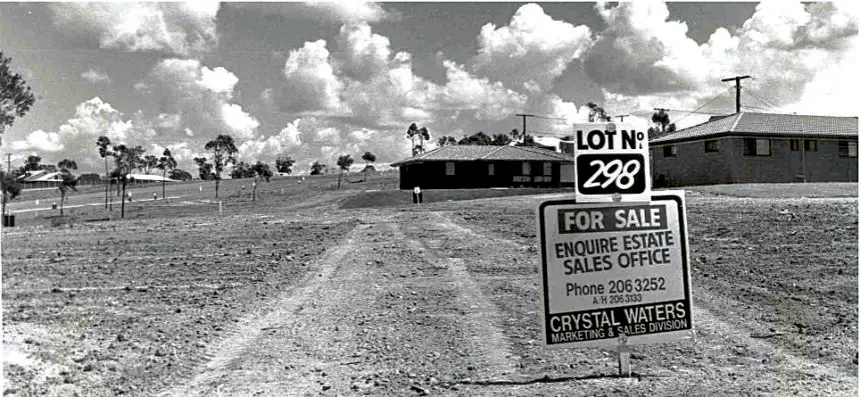
The Crystal Waters estate went on sale, followed by Champagne Gardens, with streets named after wine varieties.
The first homes in Crystal Waters were built by 1987, marking a decisive move away from Thornlands’ rural identity.
That same year, healthcare infrastructure reached a milestone with the opening of the 35-bed Redland Hospital in Cleveland.
The 1990s reinforced Thornlands’ role in food production and manufacturing.
The Moreton Bay Prawn Farm began selling directly to the public in 1990 and later gained national attention for innovations in live prawn export packaging.
Manufacturing employment peaked with the opening of the Fisher & Paykel refrigeration plant in 1991, expanded in 1995, before ultimately closing in 2008 as production moved offshore.
At the same time, Redlands’ chicken meat industry produced half of Queensland’s output.
Growth was not without setbacks.
A fire destroyed the Inghams poultry factory in 1993, though it was rebuilt and operated until 2018.
Carmel College opened later that year, strengthening Thornlands’ education precinct, while road upgrades and local landmarks followed through the decade.
By the late 1990s, development pressures were unmistakable.
Residents protested proposals to convert farmland into housing estates, as population growth surged following major infrastructure investments, improved transport links and regional exposure from the 1982 Commonwealth Games and Expo 88.
As farmland disappeared, Thornlands continued to reinvent itself.
New schools and large housing estates followed into the 21st century, often amid community debate — a pattern that continues to shape the suburb’s future today.