
By Penelope Woods, MAudSt, MAudA (CCP), BMus, is a Masters Qualified Independent Audiologist and Hearing Health Advocate serving the Redlands Community.
You finally decide to do something about your hearing.
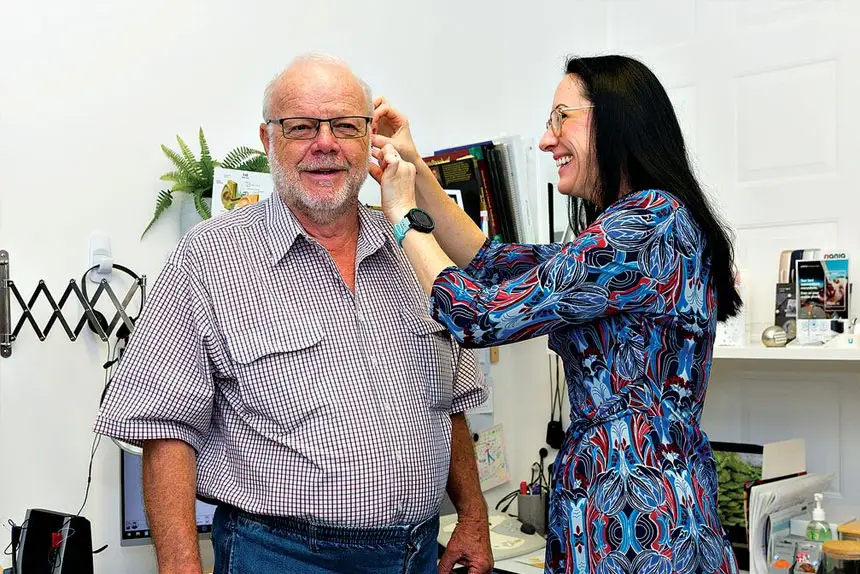
You attend the appointment, you’re fitted with your first pair of hearing aids, and for a moment you hope life will feel easier again.
Yet weeks later they’re sitting in a charger, not because you meant to abandon them, but because something about the experience never settled.

It only takes one unsuccessful fitting to set rehabilitation back years, years in which the brain and auditory nerve miss out on vital stimulation, and you miss out on the connections that once came so easily.
Many people in the Redlands don’t realise that a fitting can falter long before the devices reach their ears.
Best-practice care doesn’t start with technology. It begins with a conversation about what rehabilitation actually involves.
Change can feel strange at first. The brain needs time to recalibrate.
You need clarity about what improvement will look like in places that matter to you, whether that’s following a discussion at the Donald Simpson Centre or hearing your grandchildren more easily in the car.
When expectations are unclear, the entire process becomes harder than it needs to be.
Then comes the delicate balance of sound. Too quiet may feel gentle but starves the brain of the information it needs to rebuild listening strength.
Too loud may provide benefit but leave you overwhelmed in busy places. Creating the “just right” setting requires precision and patience.
A good fitting accounts for your hearing thresholds, personal comfort, lifestyle, and the emotional weight of feeling disconnected.
It also includes practical guidance: how to manage the devices, how to use communication tactics to stack the deck in your favour, and how to navigate noisy environments with confidence.
When a fitting fails, it’s almost never a matter of blame. More often, the foundations weren’t fully established.
At A Better Ear we follow the three pillars of a successful fitting.
Residual hearing defines the starting point, grounding expectations in what the auditory system can and cannot do.
Technology provides the tools by offering the right level of power, meaningful features, and tuning that aligns with your goals.
Rehabilitation produces the outcome through habituation, skill-building, and the follow-up adjustments that help everything “click” over time.
If even one pillar is weak, the chance of success narrows – not because people lack motivation, but because they were never properly supported.
At A Better Ear, we meet many locals who thought their first attempt meant they had “failed”.
But once their plan was rebuilt with the right structure, they found conversations smoother, listening less draining, and everyday moments more enjoyable again.
A carefully supported second attempt can open the door to the ease and connection you’ve been hoping to regain.