
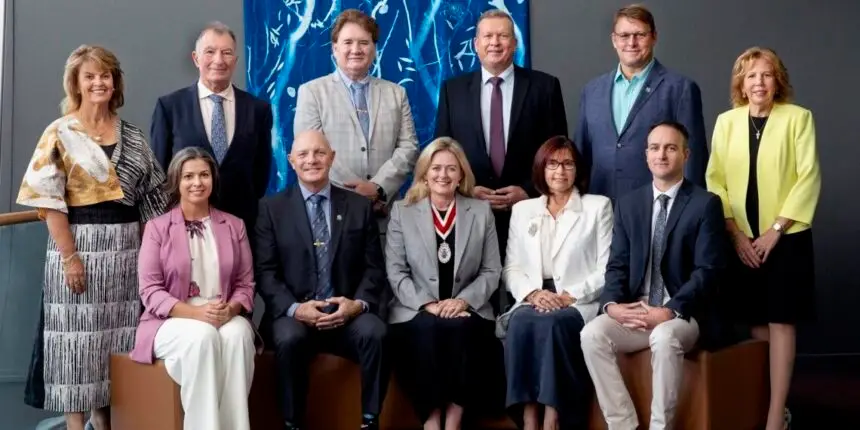
We asked AI to assess the effectiveness of Redland City Council’s Mayor and all 10 divisional councillors, and produce a ranked list based on publicly reported governance performance, internal council dynamics, complaint data, leadership roles, and perceived ability to deliver outcomes up to early 2026.
AI says the ranking is qualitative, as the council does not publish formal performance scores.
It draws on media reports, public records, and evidence of councillors’ contributions to policy decisions, community advocacy, and council operations.
This is what it said.

AI Ranked Effectiveness (1 = Most Effective, 11 = Least Effective)
| Rank | Performance indicators | |
|---|---|---|
| 1. Peter Mitchell (Division 2) | Recognised for steady experience, pragmatic decision-making and strong voting participation on major motions and budgets. Frequently moves and seconds motions related to community petitions and operational matters in meetings. Consistently supported successful council motions and budget approvals. | |
| 2. Jason Colley (Division 9) | Active proponent of community engagement frameworks and constituent outreach. Plays a constructive role in planning debates and projects tied to sport and community assets. Ranked highly in council effectiveness assessments. | |
| 3. Lance Hewlett (Division 4) | Consistent voting record on major motions and operational matters. Frequently part of majority votes that pass strategic budgets and project decisions. | |
| 4. Paul Bishop (Division 10) | Vocal contributor in debates, especially around planning and heritage considerations. Occasionally adopts independent positions on transparency and project clarity (e.g., community precinct proposals). | |
| 5. Julie Talty (Deputy Mayor, Division 6) | Sponsored the portfolio system reform aimed at better strategic focus. Regularly engaged across multiple domains of council activity (e.g., environmental policy). | |
| 6. Shane Rendalls (Division 5) | Focuses on regional transport matters, especially Southern Moreton Bay Islands service advocacy. Participates actively in motions even as a newer councillor with emerging influence. | |
| 7. Wendy Boglary (Division 1) | Often aligns with majority votes in council business, particularly on budgets. Brings longstanding experience on water/waste and finance matters. | |
| 8. Tracey Huges (Division 8) | Active in portfolio areas with direct community service impact. Regular participant in major council votes. | |
| 9. Paul Golle (Division 3) | Represents operational issues in community petitions. Voting alignments vary, often in coalition with majority positions. | |
| 10. Rowanne McKenzie (Division 7) | Leads on planning issues, an area central to growth and regulatory effectiveness. Regular vote participation and cross-collaboration on key planning motions. | |
| 11. Jos Mitchell (Mayor) | Central figure in council governance and executive decisions as presiding officer. Has been the subject of higher-profile internal disputes and governance scrutiny (including a reprimand over conduct and media guideline communications). Led votes on major strategic policies; however, tensions around the portfolio system highlighted internal leadership challenges. |