



ONE year ago, residents across the Redlands and Bayside were bracing for what experts warned could become one of the most significant weather events in recent Australian history.
Severe Tropical Cyclone Alfred was bearing down on South-East Queensland.
For several tense days in early March, communities across the region prepared for the worst.
Schools closed, public transport stopped, ferry services were cancelled and thousands of residents filled sandbags as emergency alerts warned of destructive winds, flooding and coastal damage.

It was the first time a tropical cyclone warning had been issued for Brisbane in more than three decades.
While the system ultimately weakened to a tropical low shortly before landfall on March 8, Alfred still delivered torrential rain, damaging winds and widespread disruption across the Redlands and the broader Bayside.
One year later, the storm remains etched in the memory of many residents.
Cyclone Alfred formed from a tropical low in the Coral Sea in late February 2025 and quickly intensified as it tracked towards the Queensland coast.
The Australian Bureau of Meteorology issued cyclone watches and warnings stretching from Sandy Cape to northern New South Wales, including Brisbane, the Gold Coast and the Redlands.
Emergency preparations ramped up rapidly.
Across South-East Queensland, hundreds of thousands of sandbags were distributed as authorities urged residents to secure homes and prepare emergency kits.
Schools and universities closed, major sporting events were cancelled, and airports and public transport networks were shut down as the storm approached.
On the Redlands Coast and Bay Islands, residents were told to stay indoors and prepare for possible evacuations.
At the height of the storm, emergency warnings were issued for Redland City and the island communities, including North Stradbroke Island and the Southern Moreton Bay Islands.
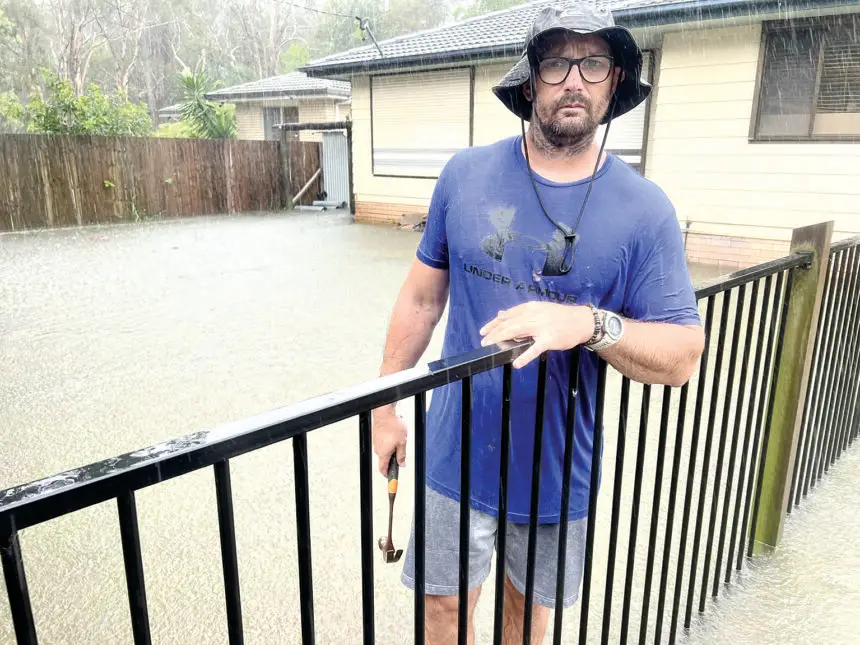
As the remnants of Alfred moved across the region, gusts of up to 100km/h battered the Redlands while heavy rain caused localised flooding.
The storm knocked out power to thousands of homes across the city.
At one stage more than 320,000 properties across South-East Queensland were without electricity, including about 40,000 in Redland City alone.
Emergency services responded to dozens of incidents involving fallen trees, damaged roofs and flooded streets.
Council facilities including libraries, waste services and IndigiScapes were temporarily closed while crews assessed damage and cleared debris.
In some areas, residents faced days of disruption as power was restored and clean-up efforts began.
Yet even amid the chaos, remarkable moments emerged.
During the height of the weather emergency, Redlands MP Rebecca Young made headlines after helping coordinate the rescue of two residents stranded by ferry cancellations.
In one case, Russell Island resident Joshua Doyle was left stuck overnight at the Weinam Creek ferry terminal after missing the last ferry home before services were suspended.
With evacuation centres unavailable and transport cut off, Mrs Young worked with police and the Coast Guard to organise a lift back to the island aboard a vessel transporting emergency medication.
In another incident, she personally searched for a man stranded after returning from a funeral overseas when his phone died and he was unable to contact family.
The storm also produced a moment of unexpected joy.
As Cyclone Alfred approached North Stradbroke Island, twins were born at Dunwich after midwives had been stationed on the island as part of emergency preparations.
Premier David Crisafulli described the birth as “a little moment of magic” during an otherwise stressful time for the region.
While Alfred caused widespread disruption, it also revealed the strength of the Redlands and Bayside communities.
Neighbours checked in on one another, shared generators and opened their homes to people who had lost power.
Across social media and local streets, residents offered “power and showers” to those in need while volunteers and emergency crews worked side-by-side clearing debris and restoring services.
For many locals, those acts of kindness became the defining memory of the storm.
Cyclone Alfred ultimately caused an estimated $1.3 billion in damage across eastern Australia and claimed at least one life.
But in the Redlands and Bayside, the storm served as a reminder of both the vulnerability of coastal communities and the importance of preparation.
Local disaster planning groups, emergency services and community volunteers all played a critical role in keeping residents safe during the event.
And while Alfred did not bring the catastrophic impacts some feared, it provided a powerful warning about the growing risk of extreme weather across South-East Queensland.
Twelve months on, the fallen trees have long been cleared and power lines repaired.
But the memory of Cyclone Alfred, and the resilience it revealed, still lingers.
Because while the storm may have tested the Redlands and Bayside, it also showed something stronger than any cyclone.
A community ready to look after its own.