



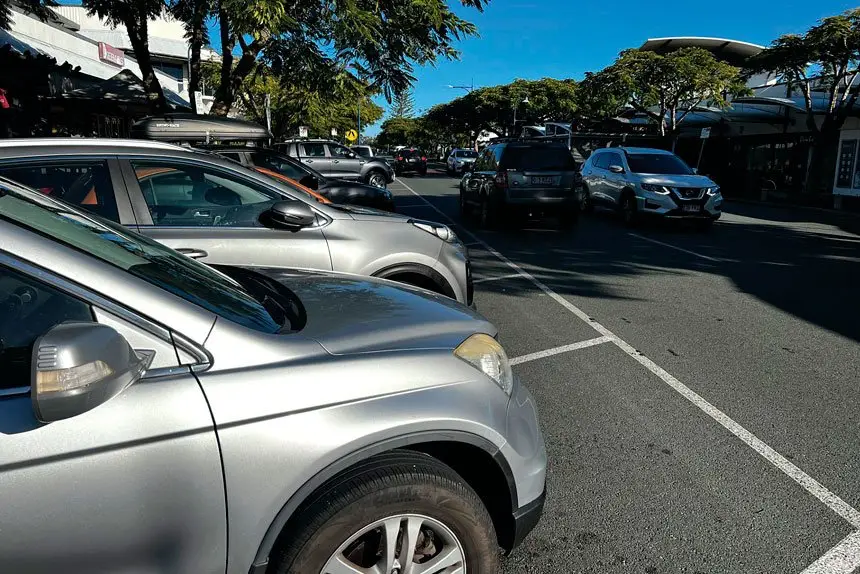
REDLAND City Council wants to roll out a new strategy to reshape how people move around the city, with less reliance on cars and more emphasis on walking, cycling and public transport.
The Redlands Coast Access and Parking Strategy, set to be debated by councillors yesterday, outlines Council’s long-term plan to ensure key destinations like town centres, train stations and ferry terminals are easier and safer to access for everyone – not just drivers.
Redland City Mayor Jos Mitchell said the strategy was about delivering sustainable and equitable access to places that make Redlands Coast a great place to live, work and raise a family.
“Key destinations such as town centres, train stations, ferry terminals and major recreation reserves have traditionally evolved to meet the needs of car users, and as such most of these areas are tailored to car parking with limited access for other transport types,” she said.

“The strategy aims to address these historical constraints and ensure destinations across the city are safe and appealing for everyone, from pedestrians, cyclists and people with limited mobility.
“We also want to encourage more people to leave their car at home and take another mode of transport when travelling across the city.”
The strategy responds to the Redlands Coast Transport Strategy, which sets out a 20-year vision to transition from a car-dependent community to one that embraces other modes of transport.
Around 20 per cent of residents currently don’t drive, and that figure could nearly double over the next two decades.
Parking remains a contentious issue across the city, especially in areas where demand exceeds supply.
But Council argues that simply adding more car spaces won’t fix the problem.
The strategy highlights the high cost of providing parking – both to Council and households – and notes the environmental and social impacts of car-focused design, such as congestion, safety risks, and poor accessibility for people using other forms of transport.
Instead, the strategy proposes better management of existing parking infrastructure through improved turnover, clearer signage and more compliance measures.
It also encourages enhancements such as additional end-of-trip facilities like lockers and bike racks, safer and more inviting streets for walking and cycling, increased space for community and public transport, and improved travel information for both residents and visitors.
Council is also aiming to revitalise the most active areas of town by prioritising pedestrian and cyclist access closest to key locations like ferry terminals, train stations and retail hubs, while pushing car parking to the edges.
“Car parking will still be provided in areas where it is most needed, such as in development sites, but it will be balanced with access for other travel modes and delivered in a way that avoids impacts to neighbouring streets,” Mayor Mitchell said.
“Land uses that reduce or negate the need to travel will also be considered in some destinations.”
Council will prepare detailed Destination Access Plans for key areas, looking at how to optimise access across all modes of transport and plan for future growth.
The planning scheme will also be updated to support development that offers a mix of access options.
“We will also advocate to the Queensland Government for improved public transport and other ride-share options in and out of our key destinations,” the Mayor said.
“It is anticipated that these improvements will bring forward a range of social and economic benefits for our city and help households by reducing the need to own one or more cars.”
Mayor Mitchell said the strategy was the start of Council’s efforts to modernise its transport future.
“I look forward to Council working closely with our community to prioritise efficient, affordable and equitable access to our city’s key locations in the years ahead as we build an exciting future for everyone on Redlands Coast,” she said.