




By guest columnist Amanda Ariotti, MAudSt, AAudA (CCP), BBiomedSc. Amanda is a Masters-qualified independent audiologist specialising in hearing rehabilitation for older adults at A Better Ear.
Last week, one of our patients stopped Damien our clinic manager in the hallway with an insight that made me smile. “The more often I come,” he said, “the more I realise the real differences your clinic offers.” This gentleman, in his 60s, has worn hearing aids for years and visited many clinics. But until working with us at A Better Ear, he hadn’t understood something essential: no two ears are the same. Not only do different people have unique ear shapes, but even an individual’s left ear can differ significantly from their right.
These differences affect how sound travels, which is why achieving clarity – not just volume – requires precise clinical work.
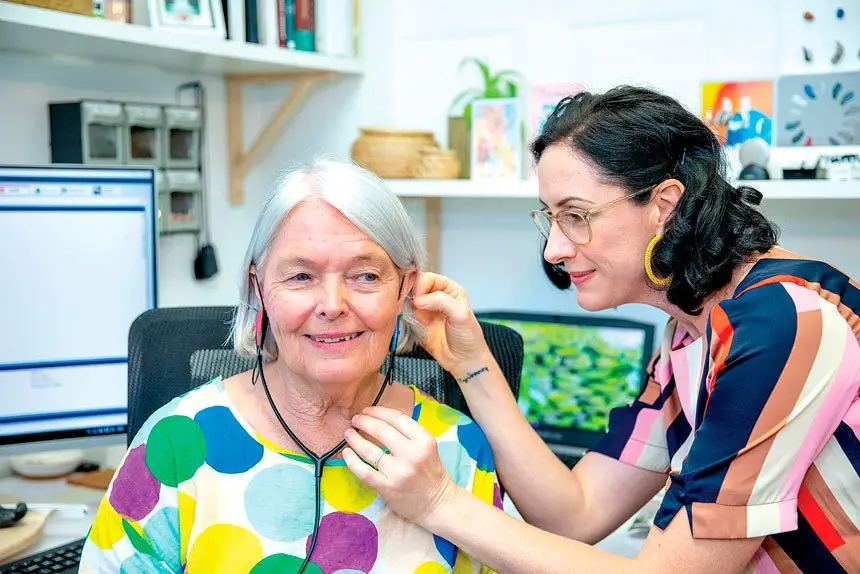
At A Better Ear, we take these differences seriously. One of the ways we ensure the best possible hearing experience is through a process called Real Ear Measurements (REMs). REMs allows us to measure sound frequencies in real-time, directly in your ear canal, as we fine-tune your hearing aids. This ensures that the sound reaching your eardrum matches exactly what your hearing loss prescription requires. It’s not about making everything louder; it’s about amplifying specific frequencies, so conversations become clearer and sounds more natural.

Unfortunately, despite being recognised as best practice in audiology, many clinics skip this step. In fact, because hearing care isn’t a regulated healthcare profession (yes, you read that right), REM isn’t required, meaning it’s often left out to save time on self-funded patients. But at A Better Ear, we believe in doing what’s right, not just what’s required. We use REMs for all our fittings because we know it makes a difference – not just in how well you hear, but in how much you enjoy using your hearing aids.
The benefits of getting the fit right from the start are profound. Research shows that hearing aids fitted with REMs lead to better outcomes – people experience less listening fatigue, feel more connected in social situations, and even reduce their cognitive load. These improvements can lower the risk of social isolation and may contribute to better brain health over time, potentially lowering the risk of dementia.
For us, best-practice audiology isn’t just a professional standard – it’s a community responsibility. Your hearing plays a crucial role in your quality of life, and every step we take at A Better Ear reflects our commitment to that. We are here to provide more than just hearing aids; we’re here to help you rediscover the joy of connecting socially with friends and family.
If you or someone you love is ready to experience the difference that expert, patient-centred care can make, I’d love to help. Call us at A Better Ear and take the first step towards better hearing today. Send suggestions for future articles to: [email protected].