



Do you know someone with hearing aids they never wear? Unfortunately, this is a common situation in our profession.
While hearing rehabilitation offers proven, evidence-based benefits, dissatisfaction can occur when best practices are not followed. This can result in poor fittings with unmet expectations, leaving people frustrated and their hearing needs unresolved.
Major hearing aid manufacturers invest heavily in research and development to create their flagship devices. Innovations like the Genesis AI 24, Intent 1, and Infinio Sphere 90 are engineered to deliver peak performance in complex environments – from pubs and cafes to family dinners.
However, these premium AI devices are just part of the picture. To ensure hearing aids are accessible across all budgets, manufacturers scale back features to produce more affordable, lower-tier models.

At their best, hearing aids transform lives by helping people reconnect with loved ones and re-engage with the world. At their worst, they can feel like an unwanted encumbrance and a poor investment.
So, what causes this disparity? With all the incredible advancements in AI and technology, why do some people still experience inferior outcomes and dissatisfaction?
Dissatisfaction with hearing aids often arises from two key factors: poor fitting procedures and unrealistic or misaligned expectations. Fitting a hearing aid is a complex process that requires technical expertise, precise calibration, and a deep understanding of each individual’s listening and psychosocial needs.
No matter how advanced a device is, a poorly fitted hearing aid will never perform as intended. This is where best-practice audiology makes all the difference.
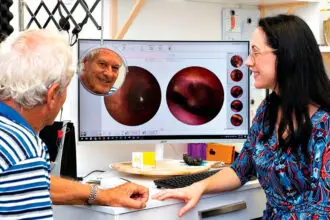
Using evidence-based methods, we meticulously fine-tune each device. Believe it or not, we measure and adjust for the resonant frequencies within each unique ear canal of each unique individual, ensuring a tailored fit that is both clinically appropriate and optimised for your preferences.
Equally important is setting realistic expectations. Hearing aids are not simply designed to “make things louder” but rather to “make speech clearer”. However, speech spans a range of frequencies and cannot be entirely separated from the sound of the natural world. Trying to amplify speech without also increasing other sounds in the same frequency range is like attempting to remove “light red” without affecting pink.
This is where counselling and education play a crucial role. Helping patients understand what hearing rehabilitation can and cannot do is essential for success. At A Better Ear, we take the time to discuss your listening goals and ensure your expectations align with what’s achievable.
Hearing rehabilitation is as much about education as it is about treatment. When approached with care and expertise, the outcomes are life-changing – better communication, improved mood, and a reduced risk of social isolation. By adhering to best-practice audiology and offering expert, empathetic guidance, we help you feel confident that your investment in hearing health is the right one. If you or someone you love is struggling to hear, call A Better Ear to book an initial consultation and make a fresh start today.