



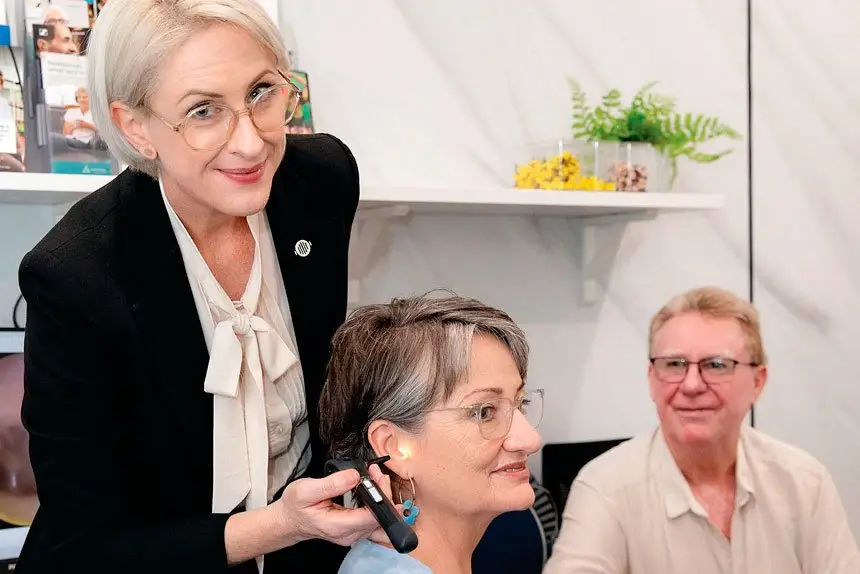
By Penelope Woods, MAudSt, MAudA (CCP), BMus, is a Masters Qualified Independent Audiologist and Hearing Health Advocate serving the Redlands Community.
Too loud. Tinny. Background noise from all directions.
Sadly, these are all common complaints I hear from people who’ve tried hearing aids – sometimes at great cost – only to give up on them altogether.
It’s disheartening, especially when the issue isn’t the device itself, but how it’s been fitted and adjusted.

For years now, hearing aids have been capable of extraordinary precision, and every year they become increasingly sophisticated.
But that technology only delivers if the person programming the device takes the time to understand your hearing needs and follows best-practice audiology – a meticulous set of international clinical rules and standards developed by scientists at Australia’s National Acoustic Laboratories to ensure reliable outcomes.
Rushed appointments, shortcuts in testing, or simply relying on default settings, can lead to fittings that are uncomfortable, ineffective and discouraging.
The most common kind of hearing loss stems from damage to the delicate hair cells in our inner ear – or cochlea, the organ of hearing.
These cells don’t regenerate, and a hearing aid can’t repair them, but it can work around the damage – if adjusted properly.
That means carefully tailoring amplification to your unique hearing profile, lifestyle, and even how your brain processes sound. When done well, this approach can reduce listening effort, support cognitive function, and vastly improve quality of life.
The good news? Many people who have had poor experiences can benefit from a refitting of their existing devices with a clinician who takes the time to get it right.
The solution isn’t necessarily a new hearing aid, but a better fitting –delivered by a clinic that values clinical accuracy, empathy, and long-term outcomes.