
There are no easy budgets anymore either at local, State or Federal level.
If today’s Redland City Council budget meeting proved anything, it is that every dollar now comes with an argument attached.
Construction costs continue to climb.
Labour costs are rising.

State and federal governments continue shifting more responsibilities onto local councils while contributing proportionately less funding.
At the same time, residents quite rightly expect roads to be maintained, parks mowed, playgrounds upgraded and rubbish collected every week.
Against that backdrop, Acting Mayor Julie Talty found herself delivering a $468 million operating budget and a $136.2 million capital works program that she probably never expected to present.
Only a week earlier she had no idea she would be standing in the mayor’s chair.
She handled it calmly, professionally and confidently.
It is now the third major six week period this year in which Cr Talty has stepped into the role during Mayor Jos Mitchell’s continuing absence, and she deserves credit for the steady way she has guided council through what is arguably its biggest decision of the year.
The question now becomes how long that arrangement remains sustainable.
Being Acting Mayor is effectively a full-time role in itself.
Add to that the responsibility of representing Division 6 and it is fair to ask how long one person can realistically carry both workloads.
At some point that becomes a conversation council, the State Government, and the community may need to have.
I note much of the public discussion online today has centred on the new “fair use” waste system.
Unfortunately, some of that debate has generated more heat than light.
Let’s look at the facts.
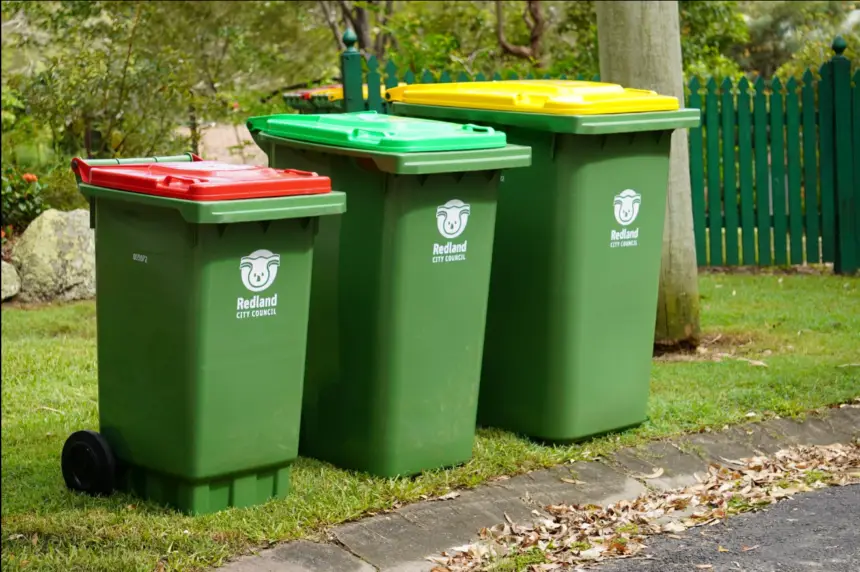
From October, each registered vehicle linked to a Redland City resident will receive 12 free visits every financial year to the Birkdale or Redland Bay Recycling and Waste Centres before landfill or green waste charges apply.
That means:
- One registered vehicle = 12 free visits a year.
- Two registered vehicles at your household = 24 free visits a year.
- Three registered vehicles = 36 free visits a year.
Most households own two vehicles.
That effectively means most families will have access to around 24 free visits every year before paying a cent.
Put another way, that’s roughly two free trips every month.
When compared with other parts of Australia, that hardly sounds unreasonable.
When I left Victoria in January 2025, residents in the City of Ballarat received just two hard waste vouchers each year before they were expected to pay disposal charges.
That’s right, just two.
Redland residents are understandably protective of a system they’ve enjoyed for many years, but 12 free visits per registered vehicle remains a generous arrangement by comparison.
Councillor Tracey Huges made perhaps the most practical observation during the debate.
She reminded residents that every piece of rubbish we throw away is trucked out of the city because Redlands has no landfill of its own.
Those costs continue to escalate, and they are ultimately paid by every ratepayer.
Her message was simple: be smarter with your waste.
Recycle more.
Reduce what goes into the red-lid bin.
Think before making another trip to the transfer station.
That is difficult to argue with.
One aspect of Monday’s meeting did leave this editor scratching his head.
Cr Jason Colley ultimately voted against the budget.
He was measured in his comments and raised legitimate concerns about council’s operating expenditure and long-term financial discipline.
They are issues worthy of debate.
Cr Colley is also one of council’s hardest-working and most diligent councillors.
Even some of his past detractors also recognise the heavy lifting he has done on their behalf.
Nobody questions the effort he puts into representing his community.
But politics is ultimately about decisions.
After 27 budget workshops, countless meetings and months of negotiations, every councillor knew exactly where the budget was heading.
Then, when the cameras were rolling, Cr Colley voted no.
Yet every one of the projects in his division remains funded because the other councillors voted the budget through.
It raises an interesting philosophical question.
If a councillor cannot support the budget that funds projects in their own division, should those projects still proceed?
Or should that funding instead be redirected to divisions represented by councillors who supported the overall financial plan?
There is no simple answer.
Councillors are elected to vote according to their conscience and form a city wide view, not under pressure from colleagues, divisional ratepayers or public opinion.
At the same time, budgets are collective documents. Every project exists because somebody voted to fund it.
Perhaps that’s a debate worth having before next year’s budget.
Overall, this budget feels less about new projects and more about protecting what already exists.
Roads. Water. Wastewater. Parks. Trees.
The things residents often don’t notice until they stop working.
Council has also clearly begun accepting that years of deferred maintenance and ageing infrastructure can no longer be ignored.
That is not glamorous. It does not win headlines. But it is probably the right priority.
Budgets are ultimately about choices.
Nobody leaves the chamber completely happy.
This year, Redland City Council appears to have chosen maintenance over monuments, discipline over ambition and sustainability over popularity.
Whether residents agree with every decision is another matter.
But after sitting through 27 workshops and hours of debate for the past 11 months, nobody could honestly argue the decisions made today were made lightly.