



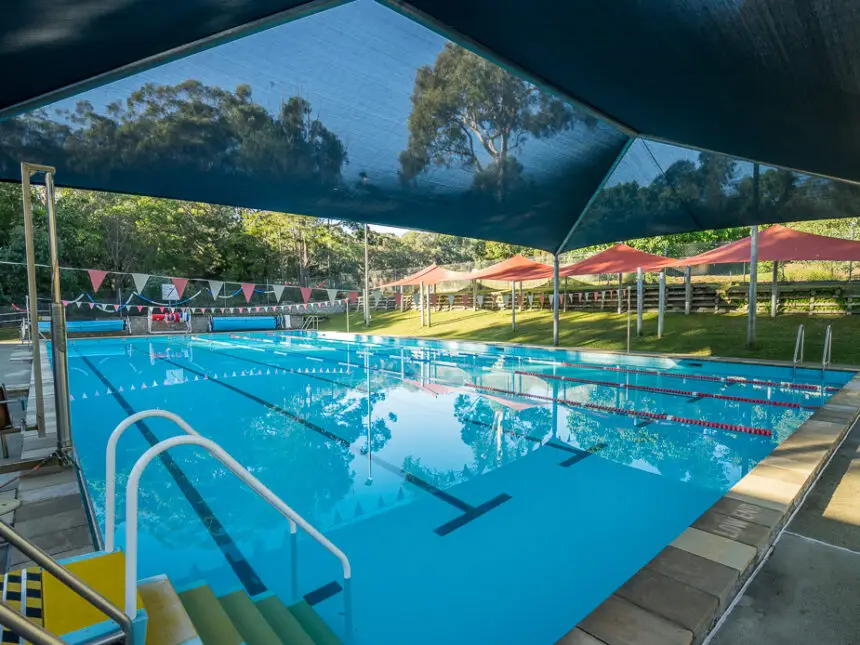
A Russell Island resident has called on Redland City Council to launch an independent investigation into the transfer of the Bay Islands Aquatic Centre, claiming the deal may have been unlawful and has deprived island communities of a vital public asset for nearly two decades.
Addressing council during public submissions, Damon Kendrick, representing the Bay Islands Pool Community, said legal advice suggested the handover of the community-funded pool to the Queensland Department of Education was “highly irregular” and potentially in breach of multiple laws and policies.
“This is not about blame, it’s about stewardship,” Mr Kendrick told councillors.
“It’s about ensuring that public assets funded by ratepayers remain in public hands, with transparency, accountability and value for money.”

The Bay Islands Aquatic Centre was built with $930,000 in ratepayer funds, including a specific levy, and was intended to serve the wider Southern Moreton Bay Islands community.
Mr Kendrick said a previous council transferred the pool and land to the Department of Education for about 11 per cent of its construction cost, resulting in restricted community access for the past 19 years.
He said the loss of control over the asset had had significant health and social impacts, particularly for older residents. According to the 2022 Census, 61 per cent of Southern Moreton Bay Islands residents are aged 60 and over — more than double the national average.
“Disability increases sharply with age, and water-based exercise is one of the most effective ways to manage pain and mobility limitations,” he said.
“Many islanders rely on this pool for their health and wellbeing.”
Mr Kendrick said seasonal closures of the pool for up to five months left elderly and disabled residents with no practical alternative.
He cited concerns raised with the Australian Human Rights Commission, noting that the nearest alternative pool in Cleveland requires a 1.4km walk each way, an “impossible distance for many”.
He warned that restricted access and prolonged closures risked constituting ageism and ableism in practice.
The submission outlined a series of concerns, including a possible breach of council’s fiduciary duty to protect a community-funded asset, potential non-compliance with the Local Government Act, and alleged breaches of Queensland land transaction policy, which requires transfers to state departments to occur at market value.
Mr Kendrick also questioned whether the Land Act 1994 requirements were met and whether the Department of Education complied with its own asset acquisition standards in accepting the transfer.
He urged council to commission a formal, independent review into the transfer, including whether all legal and statutory requirements were met, whether the public interest of ratepayers was protected, and whether the Department of Education followed its own policies.
The issue has now been raised with state and federal ministers responsible for education and local government.
Mr Kendrick also highlighted recent increases in pool pass prices, saying a seasonal pass had risen from $180 last season, or $167 concession, to $322.50 this season, with no concession available.
“On islands with double the national average of elderly and disabled residents, that omission is unacceptable,” he said.
He told councillors the issue was about more than just access to a pool.
“This goes to governance, accountability and the integrity of public infrastructure,” he said.
“Ratepayers are watching and they are asking for leadership and the return of their community pool.”