

By Penelope Woods, MAudSt, MAudA (CCP), BMus, is a Masters Qualified Independent Audiologist and Hearing Health Advocate serving the Redlands Community.
Have you ever been stopped in a shopping centre and offered a quick, free hearing check?
If you’ve never had your hearing tested, it’s natural to be curious. But what happens next matters.
For some people, that first step is enough to get them thinking seriously about their hearing. The difficulty is that those checks are sometimes taken to have the credibility of a full assessment. They don’t.

And when people assume that’s the standard, it lowers expectations of what proper hearing care should be.
At A Better Ear, patients often tell us they were amazed by their experience with us.
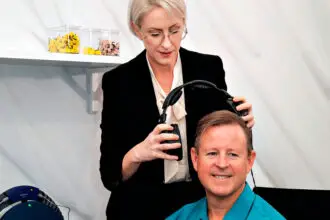
They notice the difference straight away: the calm reception, the completely sound-treated environments, the specialised diagnostic equipment, the time we take to understand their history, and the way results are explained.
Many say they’ve never learned so much about their hearing in one appointment. What surprises them most is that this isn’t extraordinary – it’s simply best practice audiology.
Unfortunately, many clinics aren’t set up that way. Quick screenings are often just the first step in a sales pipeline.
In many cases in Australia, the clinic is owned by a hearing aid manufacturer and run like a rebranded retail outlet.
Even with the Government’s Hearing Services Program clients (pensioners and DVA card holders), some business models focus on doing the bare minimum that can be claimed, and little else.
The result? People may feel pressured into devices they don’t understand, or reassured they’re “fine” when they have genuine concerns that aren’t being addressed. Sound familiar?
The consequences go beyond missing out on technology. Untreated or poorly managed hearing loss often shows up in everyday moments.
People tell us they worry about missing the punchline of a joke, interactions with a grandchild, or the quick change of topic around a table.
They can find themselves sitting back rather than joining in.
By contrast, when hearing is assessed properly and cared for, those simple joys become easier again – conversations flow, confidence grows, and life feels more connected.
That’s why the first step matters. A proper assessment – whether government-funded or private – should always be with a Masters-qualified audiologist in a clinical setting.
If you’ve ever wondered whether your hearing is where it should be, I’d encourage you to find out what a thorough assessment feels like.
At A Better Ear here at Hub68 in Ormiston, we take the time to do it right, so you can consider your options with confidence.