
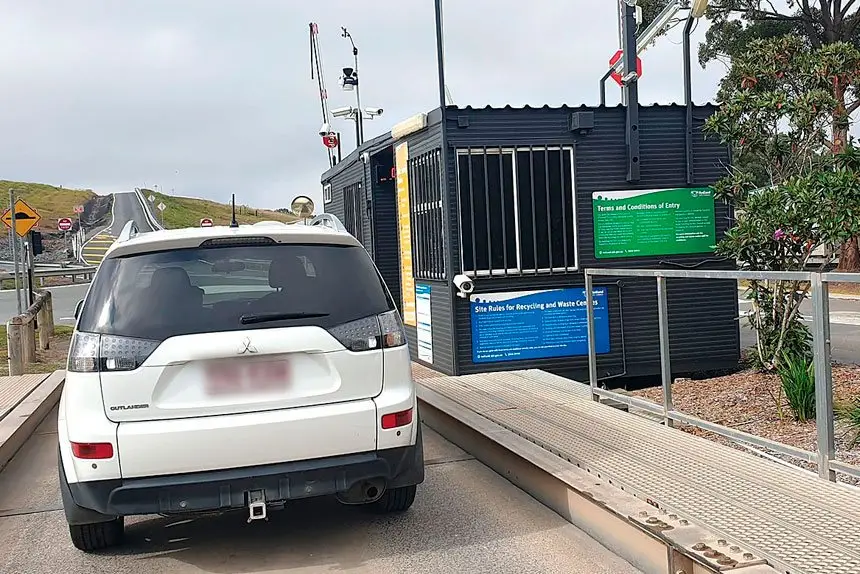
Redland City Council has voted against imposing a limit on the number of times vehicles can visit mainland dumps for free despite calls for stronger protections to prevent commercial operators gaming the system.
An officer’s report tabled in the May general meeting recommended introducing a limit of 26 visits per financial year for the disposal of domestic waste and domestic self-haul green waste at council’s Birkdale and Redland Bay facilities.
It also proposed implementing commercial charges for visits above the cap in a bid to crack down on business operators making false declarations about their load and “potentially profiteering” from the free use of waste centres.
If the proposal had been adopted, it would have overturned council’s 2012 decision to introduce unlimited free disposal of domestic waste for residents at its Redland Bay and Birkdale dump sites. Limits were not proposed for island waste and recycling centres.

A Redland City Council spokesman said failure to declare commercial waste was an offence under the state government Waste Reduction and Recycling Act and could result in future visits being automatically classified as commercial waste disposal.
Officers will now look at alternative fair use options for council waste services.
Audit data from the 2021/22 financial year revealed 1.5 per cent of vehicles visited mainland dumps more than 26 times, with the same group also accounting for 13 per cent of the green waste and mixed waste received at the sites.
Officers noted in their report that the data suggested a “large majority” of high-frequency users were dumping waste which had been collected through commercial arrangements where they had potentially collected a “fee or reward”.
Concillors voted 9-2 against introducing a limit and instead adopted an alternate motion to have officers devise a plan for residents and businesses to “effectively and fairly participate in waste management services”.
Cr Julie Talty was critical in her assessment of the original proposal, branding it a “reintroduction of tip fees by stealth” and saying the report relied entirely upon “assumption and supposition”.
We have a proposal here to punish the 99 per cent in order to find an easier way to find the one per cent who are doing the wrong thing.
“If you really think that this is an issue [councillors], then take it to the election next year and then the new council can introduce tip fees if they choose.”
Cr Tracey Huges said she had seen first-hand during a recent visit to the Birkdale waste centre instances of visitors telling “blatant lies” about what they were carrying into the tip.
“I was a little shocked to see … the entitlement of those that were clearly in breach,” she said.
“They were clearly operators of businesses and they were bringing in waste. The gate house had records on those vehicles coming in and there was just not a jolly thing they could do.
“I was at the top of the transport station and I was shocked at the disrespect …”
An officer told councillors the 26-visit limit was a “fair and reasonable” approach which would allow council to manage costs and change behaviours at its mainland waste centres.
“In our research and consultation with neighbouring councils, including those who charge gate fees, they feel that applying it to the vehicle is the most cost-effective and best utalisation of officers’ time, technology and resources,” the officer said.
“This is a behaviour change campaign that we believe … reduces the demand on our ageing infrastructure [and] reduces costs.”
Cr Paul Bishop said the amended motion would give council officers an opportunity to consider alternative methods and bring a range of options back to the table.