
Soaring rents and home prices, increasing mortgage stress, record immigration and a growing population are fuelling a housing crisis and increasing homelessness. In the face of this pressing need, tiny houses offer an alternative housing option.
Tiny houses have become popular in the United States. Their popularity is growing in other developed countries such as the UK and Canada. In Australia, however, planning and housing regulations present many barriers to using tiny houses as permanent homes.
Dire statistics highlight the need to find homes for Australians quickly and cheaply. The unmet need for social housing has been estimated at 437,000 households. The 2021 census counted 122,494 people as homeless. By 2022, more than 640,000 households’ housing needs were not being met.
Some local councils now see tiny houses as part of the solution to these problems. They are taking steps to make it easier for people to live in them.

Australia is trailing a global movement
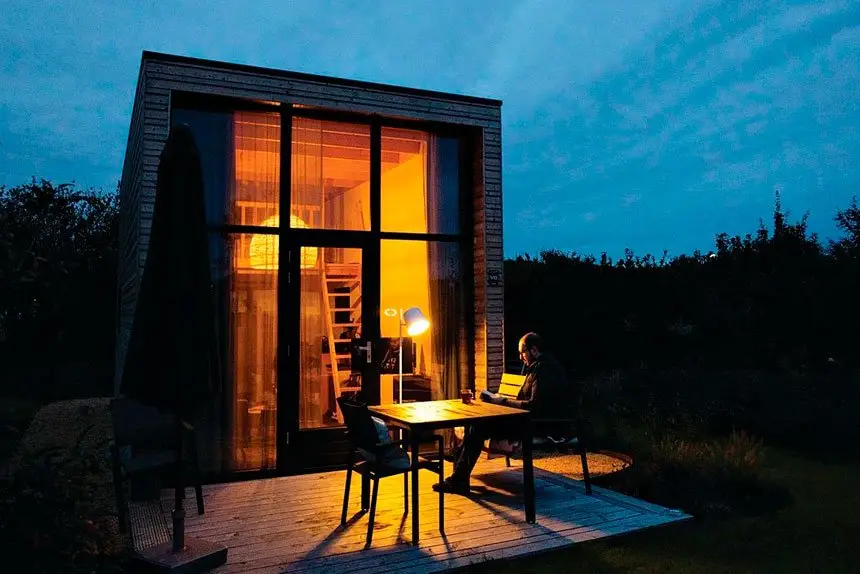
The tiny house movement is built on several values. These include a preference for smaller homes, the pursuit of minimalism, the desire to live more sustainably. The 2018 International Housing Code defines tiny houses as dwellings of 400 square feet (37 square metres) in area or less. In Australia, dwellings under 50 square metres are commonly regarded as tiny houses.
The two main types are tiny houses on foundations and tiny houses on wheels. The latter is built on a trailer and must comply with road-legal dimensions and vehicle regulations.
Tiny houses have long been used as dwellings overseas. Faced with high property prices and land scarcity, those who enjoy the convenience of city life with a minimalist lifestyle have embraced tiny homes.
Examples include micro-homes in Tokyo. Japanese micro-homes are often sited on irregular leftover pieces of land.
In the US, the Occupy Madison Village is a tiny house commune in Madison, Wisconsin. What’s happening in Australia?
In Australia, the various barriers to tiny house living include local government planning schemes, time limits and other restrictions on occupancy and connection to utilities. Over the past year, local councils have begun to make it easier to live in a tiny house.
The Shire of Esperance in Western Australia was the first local council in the country to recognise tiny houses as permanent dwellings in December 2022.
Mount Alexander Shire Council in Victoria removed the permit requirement for residents to park tiny houses on wheels on properties with existing dwellings in June 2023.
The Shire of Capel in Western Australia adopted a tiny house policy to allow ancillary dwellings and tiny house communities in August 2023.
The Surf Coast Shire in Victoria is starting a two-year trial of domestic use of tiny houses on wheels this year.
These changes are likely to help people who are struggling to find an affordable home and those on long waiting lists for social housing. occupants’ environmental footprint is smaller. T
Tiny houses do not cater for all households. They suit certain demographics, especially single and partnered people with no children or retirees.