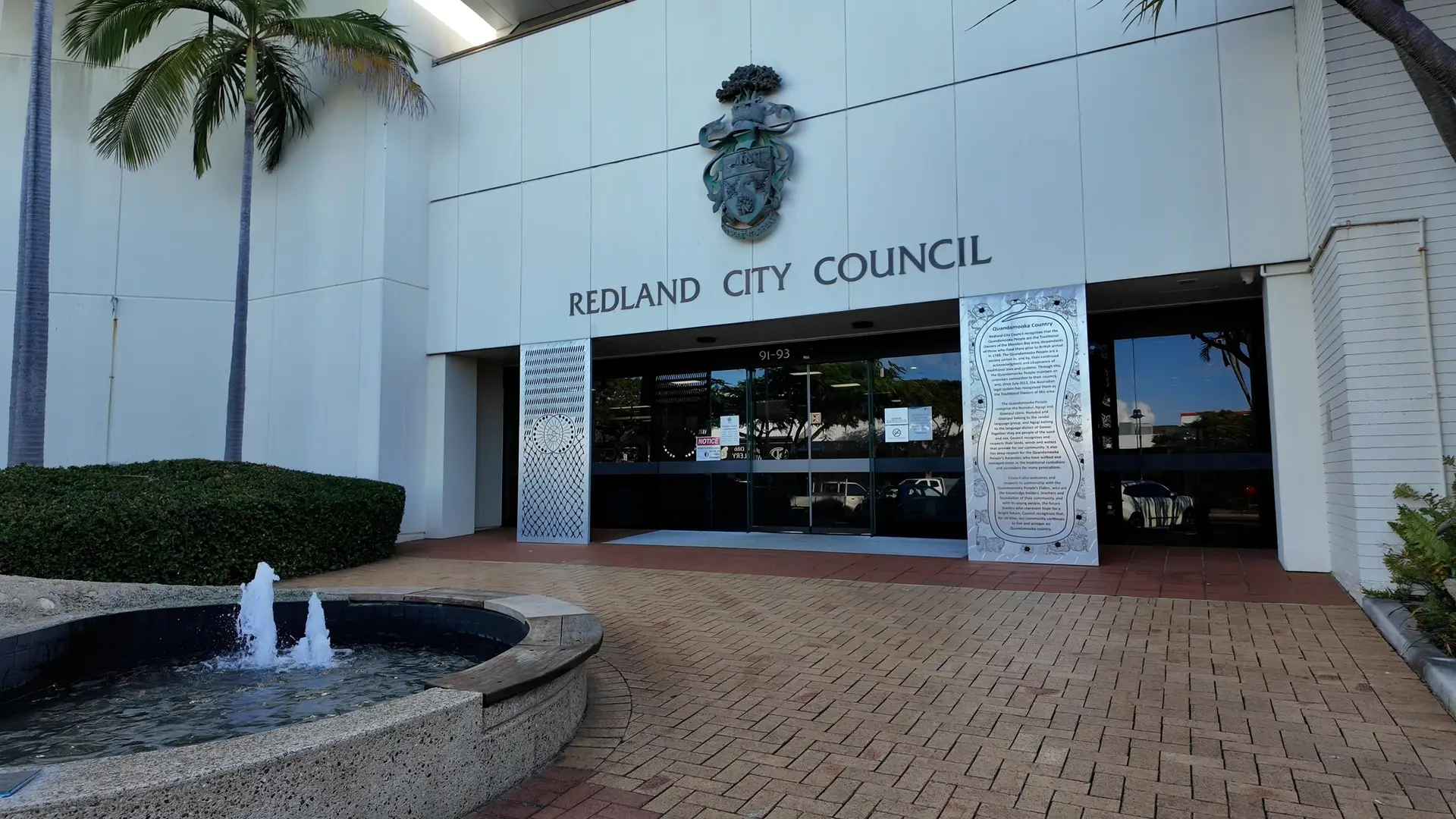


Redland City Councillors this morning agreed to sell a prime piece of Wellington Point land to an adjoining owner.
The public does not know precisely which land.
It does not know the buyer.
It does not know the price, the valuation, whether other buyers were considered, or why Council decided a permanent sale was preferable to retaining the asset.

That is not good enough.
Yes, commercial negotiations can sometimes require confidentiality.
Council is entitled to protect ratepayers from having its bargaining position exposed before a deal is complete.
But confidentiality should be the narrow exception — not a blanket that conceals the disposal of public land in one of the Redlands’ most valuable and tightly held village precincts.
The decision passed 6–3, with Acting Mayor Julie Talty, Cr Shane Rendalls and Cr Jason Colley voting against it.
Their opposition should make residents pause.
Wellington Point does not have public land to burn.
Every small parcel matters – for public access, village amenity, future infrastructure, pedestrian movement, parking, community use and Council’s ability to respond to changing needs.
Once freehold land is sold, it is gone.
Ratepayers lose control forever.
The reported use of the site for outdoor dining only sharpens the question.
If the land can support a commercial benefit for an adjoining business, why has Council surrendered ownership rather than negotiated a properly priced commercial lease?
A lease could deliver an ongoing revenue stream, allow the business to use the space, and preserve Council’s long-term control.
It could be reviewed, adjusted or ended if public needs changed.
A sale hands over that flexibility for a one-off payment.
Council’s new outdoor-dining approach is designed to help businesses activate public space and increase hospitality trade.
That may be sensible.
But it makes the land more valuable, not less.
It is difficult to understand why Council would sell a potentially strategic commercial asset just as its capacity to generate income and support expanded dining becomes clearer.
Then there is the question of process.
Why was the opportunity confined to an adjoining owner?
Why was there no open tender or transparent public process?
What independent valuation was obtained?
Was the sale price at, above or below market value?
What alternatives were assessed?
And what public benefit did Council identify that could not be achieved by leasing the land?
These are not anti-business questions.
Local hospitality businesses should be supported to thrive.
But support should not mean disposing of community assets without a compelling public explanation.
Council should now publish the location of the land, the purchaser’s identity, the sale price, valuation advice, reasons a lease was rejected, and the legal basis for dealing directly with the adjoining owner.
Ratepayers are not asking for every negotiating detail while a deal is live.
They are asking for accountability once the decision has been made.
Public land belongs to the community.
Selling it should require more than a closed-door discussion and a line item on an agenda.