
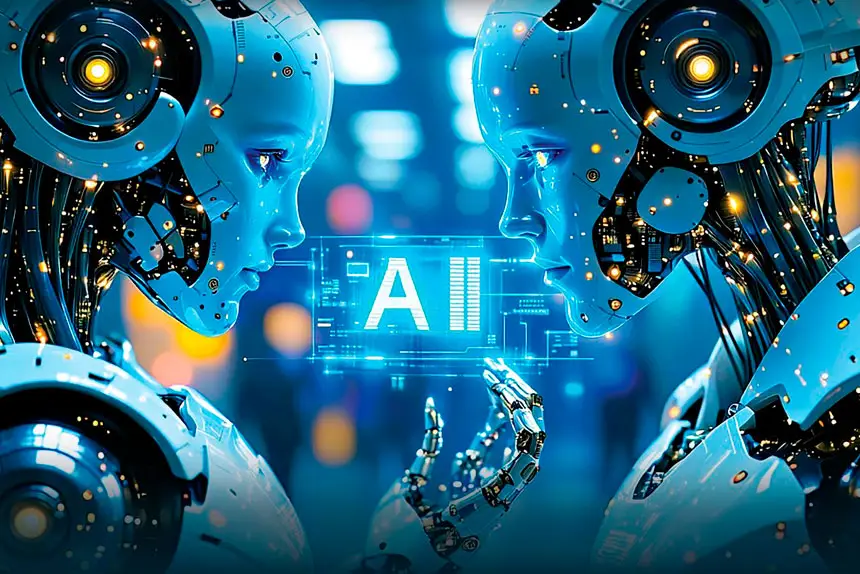
ARTIFICIAL Intelligence has often been discussed in this column, with questions around how it will likely shape our lives in the years ahead.
AI has already mastered chess, created art and assisted in medical diagnosis.
Now, it is apparently outperforming doctors in one unexpected area – empathy: that uniquely human quality that means so much to all of us.
Many readers have likely turned to AI at some point, that ever-present assistant available day and night to ask questions they may feel uncomfortable raising with a doctor.

Perhaps it is simply to decide whether a medical appointment is even necessary.
For some, cost may be the reason they seek answers online first. For others, fear or embarrassment plays a role. In some cases, gaining a little knowledge beforehand may even help people feel more prepared before visiting a doctor.
However, we should also be cautious.
AI responses do not always lead to better outcomes. Context can be misunderstood, warning signs missed, and advice may not always be appropriate for an individual’s situation.
Doctors themselves admit that empathy can decline over time. After all, despite often being placed on a pedestal, doctors are human beings with human limitations.
Perhaps we have created a healthcare system where empathy is increasingly difficult to maintain, when a doctor has only a 10-minute window to assess a patient and determine the best course of action.
How many of us have walked out of a consultation only to realise we forgot to mention half the things that were worrying us?
Doctors reportedly spend around a third of their working time dealing with paperwork and electronic records.
There are also things AI simply cannot do.
AI cannot hold a frightened child’s hand during a painful procedure.
It cannot recognise the silent distress in a teenager too embarrassed to speak openly about what is really wrong.
And AI cannot sit quietly beside a dying patient when words are no longer enough.
The healthcare system faces enormous challenges in the years ahead. Perhaps AI’s greatest contribution will not be replacing doctors, but supporting them.
Because while technology may become smarter, empathy remains one of the most important qualities we can offer one another.