
Redland City councillors will next week consider a proposal to appoint a dedicated “place co-ordinator” to oversee management of one of the region’s busiest waterfront parks.
The notice of motion, to be moved by Division 2 councillor Peter Mitchell at the April 15 general meeting, calls for a 12-month trial aimed at improving service delivery and community satisfaction at Raby Bay Foreshore Park.
Under the proposal, the Chief Executive Officer would authorise an existing council officer to take on additional responsibilities as a “place co-ordinator”, overseeing a more integrated, place-based approach to managing the park and surrounding council land.
The trial would focus on bringing together multiple council services — including maintenance, compliance, waste, and infrastructure — which are currently managed across different business units.

Cr Mitchell said the popular Cleveland foreshore had evolved into a high-use destination that was placing increasing pressure on existing systems.
In background material supporting the motion, he said there was a growing gap between “what is being delivered, what is needed, and community expectations and satisfaction”.
“Fragmented and asset focused management is not meeting demand expectations and change is needed,” the motion states.
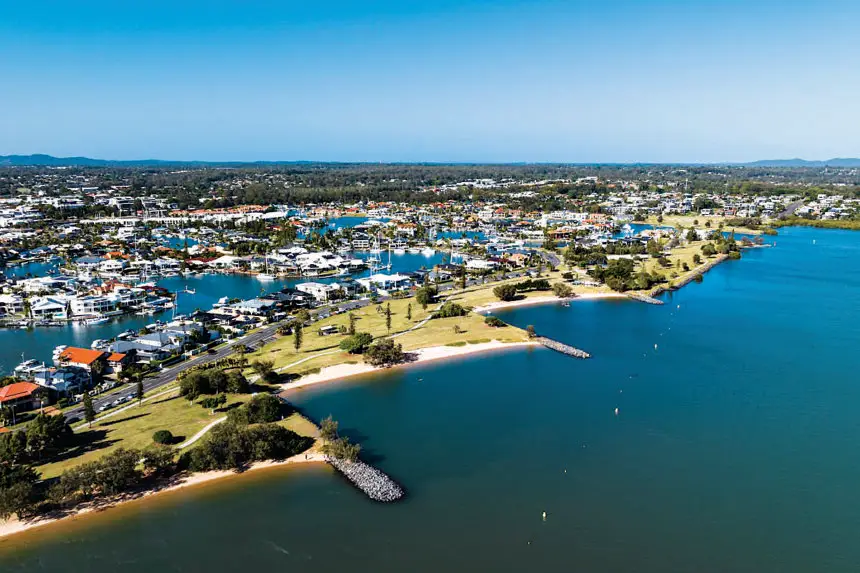
Raby Bay Foreshore Park is currently classified as a community park under council’s Open Space Strategy to 2026, but usage has surged over the past decade — particularly following COVID-19 — with the site now functioning more like a regional destination.
The park caters to a wide range of users, offering swimming areas, shared pathways, picnic facilities, playgrounds, dog off-leash areas, event spaces and access to Moreton Bay.
However, increased visitation has led to ongoing issues including turf wear, foreshore erosion, parking constraints, infrastructure strain and growing demands on waste management and compliance services.
The proposed co-ordinator would not have direct budget or asset control, but would be responsible for improving communication and coordination across council departments, as well as engaging with community stakeholders, event organisers and park users.
As part of the trial, council officers would be required to deliver a desktop audit of existing services and studies within three months, followed by a detailed action plan within six months outlining recommended improvements.
A final report at the end of the 12-month period would assess outcomes and inform whether a similar model should be adopted across other high-use parks in the city.
The motion also flags key areas for review, including drainage, erosion management, parking and pedestrian access, shade and seating, commercial activity, infrastructure needs, safety and waste services.
Cr Mitchell said the proposal represented a “practical, low-risk opportunity” to improve outcomes at one of council’s most valued open spaces.
Councillors will debate the motion at next Wednesday’s meeting.