
WHEN it comes to fuel security a “she’ll be right approach” is not a strategy.
Disruptions on the other side of the world are causing fuel shortages and price increases here in the Redlands.
At its narrowest point, the shipping channel through the Strait of Hormuz is only three kilometres wide for tanker traffic.
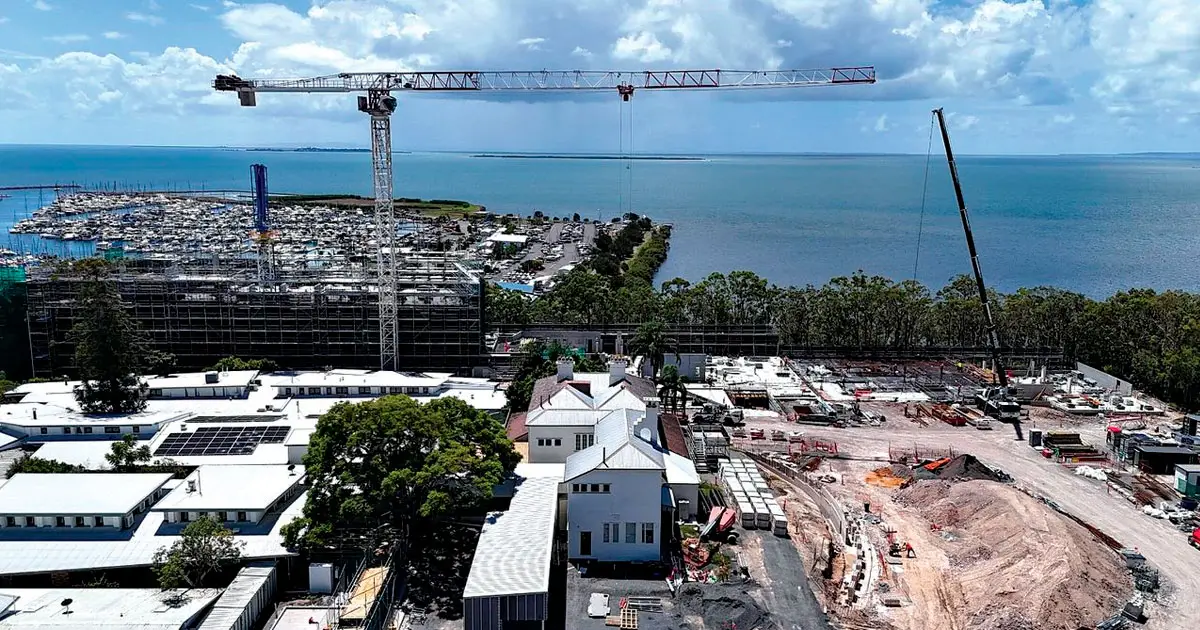
To put that in local terms, that is roughly the distance from Cleveland Point to Raby Bay Harbour.

Through that narrow passage flows an extraordinary share of the world’s energy supply.
Around 30 per cent of Australia’s fuel effectively passes through the Strait of Hormuz somewhere along its journey before being refined and shipped to us.
Meaning, in real terms, disruptions on the other side of the world can take weeks to show up in Australia’s fuel supply.
The Albanese Government spent the past week of Parliament claiming there is “nothing to see here” until finally being pressured into admitting there is an issue.
We must treat fuel security with the seriousness it deserves.
When last in Government, the Coalition took steps were taken to strengthen fuel security.
These included a Minimum Stockholding Obligation requiring fuel companies to hold baseline reserves in Australia, a Fuel Security Services Payment to support the nation’s remaining refineries, and a Diesel Storage Program to expand strategic fuel reserves.
These reforms were designed precisely for moments when global instability threatens supply chains.
We are now seeing the impact of the Government not taking this issue serious soon enough and not using the levers at their disposal to reduce the impact of fuel shortages.
Fuel is not just about filling up the family car.
Diesel keeps trucks moving, supermarket shelves stocked, and farms operating.
It powers construction sites, fishing boats, mining equipment, emergency vehicles and backup generators.
Australia quite literally runs on fuel.
Recent reports that some wholesalers have begun rationing petrol and diesel, with transport operators cut off from bulk supply and forced to buy at higher retail prices.
Last week Freedom Fuel’s Victoria Point ran out of fuel entirely for several days.
Not just one fuel grade. Everything. That should not be happening in suburban Australia.
But it’s not a one off.
My office is getting reports that other service stations are also struggling to maintain supply.
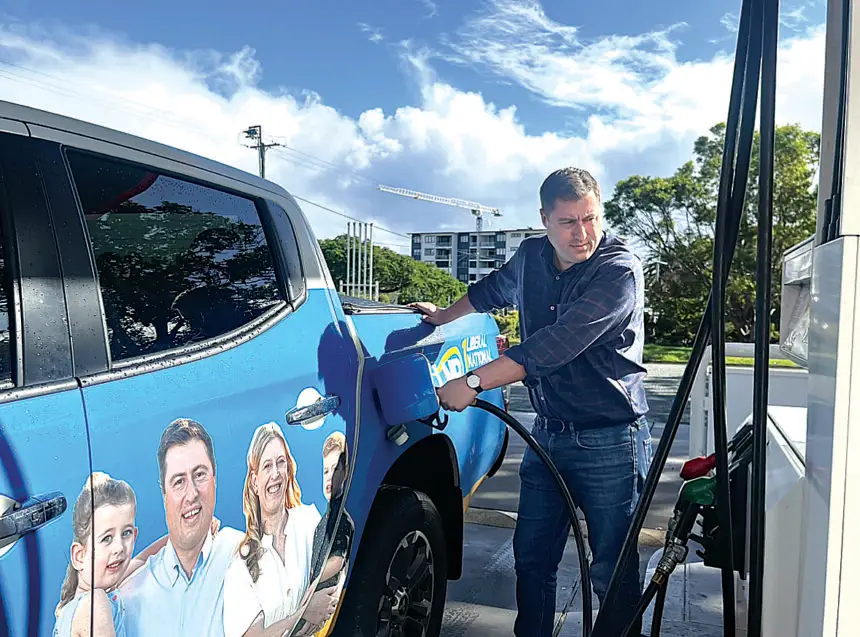
Fuel prices have risen sharply on the mainland, and even higher on SMBI.
On Macleay Island locals are reporting fuel prices at $3.51 per litre.
Let me be clear: this is not a reason for people to panic buy fuel.
Panic buying only makes problems worse.
Australians do not need alarmism.
But they do deserve a government that is monitoring national fuel stocks closely, asking the right questions, and making sure the country is prepared if global fuel supplies tighten.
This situation is evolving, and the Government needs to use foresight to analyse the issues that are forthcoming and take steps to intervene.