
From the editor’s desk
THIS week’s public outcry over Woolworths’ new $20 island “service fee” offers a useful lens for understanding one of southeast Queensland’s most persistent infrastructure debates: The idea of building a bridge to the Southern Moreton Bay Islands.
Like that Woolies fee debate, questions around cost, fairness and community benefit sit at the heart of the argument — and like that fee, what appears simple at first glance quickly dissolves under scrutiny.
From February 3, island residents will pay an additional $20 per grocery delivery, even those subscribed to Woolworths’ Delivery Unlimited service.

The backlash has been swift, fuelled by a sense that islanders are being penalised for geography rather than choice.
Woolworths points to barge transport and staffing costs.
Residents point to necessity, not convenience.
Both sides, in their own way, are right — and that tension mirrors the bridge debate almost perfectly.
Calls for a bridge intensified after Tropical Cyclone Alfred disrupted ferry services and exposed the fragility of island connectivity.
An online poll conducted after the event shows just how divided the issue remains: 52 per cent of more than 2300 respondents supported building a bridge, while 48 per cent opposed it.
That is not consensus.
It is a community split down the middle, grappling with competing ideas of fairness, lifestyle and cost.
The bridge concept has been circulating for decades, often resurfacing after major disruptions.
Federal Member for Bowman Henry Pike has said he does not oppose a bridge in principle, but only if two conditions are met: strong popular support and an economic case that stacks up.
At present, neither condition is satisfied.
State Member for Redlands Rebecca Young has also noted that the last formal assessment of a bridge is more than 10 years old, with no updated costings or environmental studies to guide decision-making.
The uncomfortable truth is that a bridge is not a single piece of infrastructure.
It is a trigger for a cascade of expensive upgrades.
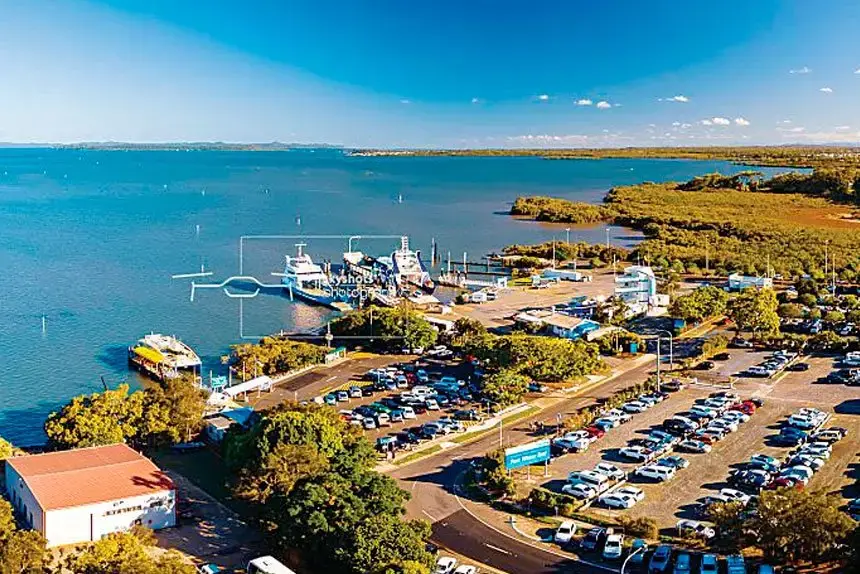
On the mainland, the frequently referenced Rocky Point alignment would land on the southern side of the Logan River, in a rural area with limited road capacity.
Entire transport corridors would need to be built or upgraded — including intersections, flood mitigation works and public transport links — before traffic could safely access the bridge.
On the islands, the implications are even more profound.
Russell, Macleay, Lamb and Karragarra were never designed to accommodate high-volume commuter traffic or heavy freight.
Widening roads, upgrading drainage, managing environmental impacts and reconfiguring residential streets would fundamentally alter the islands’ character.
Cr Shane Rendalls has estimated that, once these realities are factored in, the price tag would likely exceed $1 billion.
This is where the Woolworths fee becomes instructive.
A $20 surcharge has sparked outrage because it makes the cost of island living visible and unavoidable.
A bridge would do the same — but on a vastly larger scale.
The question is not whether connectivity has value; it clearly does.
The question is who pays, how much, and whether the benefit justifies the cost.
Some residents argue improved connectivity could unlock the islands’ potential for families and workers.
Others ask why mainland taxpayers should subsidise an island lifestyle.
Redland City Council has been clear that any bridge would be a Queensland Government responsibility — and the state has shown no indication it intends to pursue a project of this magnitude.
The Woolworths fee debate reminds us that infrastructure is never free, and convenience always has a price.
When the full costs of a Southern Moreton Bay Islands bridge are laid bare — financial, environmental and social — it becomes clear why the proposal continues to stall.
Like that $20 fee, the bridge sounds simple until the bill arrives.
And when it does, the project looks less like progress and more like a mission impossible.