



By REBECCA YOUNG MP
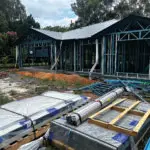
In recent months there has been increasing discussion about development on the Southern Moreton Bay Islands, with some suggesting the islands are experiencing a “housing boom”.
While it is true the islands are growing, the available data shows this growth is consistent with the trend of the past decade, rather than a sudden surge in development.
It is understandable that residents are asking questions about how the islands are changing and what that means for infrastructure, services and the character of the community.

Census data shows the number of occupied dwellings across the islands increased from 3,088 in 2016 to 4,018 in 2021 — an increase of 930 homes over five years, or just over 30 per cent. Based on current approvals and development patterns, it is reasonable to expect the number of occupied homes may approach around 5,000 dwellings by 2026.
This equates to an average of around 180 to 200 additional homes each year, a rate broadly in line with the development pattern the islands have experienced since 2016.
Recent figures provided by the Russell Island Progress Association show 118 residential approvals across the islands between January and July 2025, including 98 approvals on Russell Island.
If approvals continue at a similar pace through the year, they would align closely with this long-term growth trend.
So why does it sometimes feel like a boom?
Part of the answer lies in the changing demographic profile of the islands.
The Southern Moreton Bay Islands have historically had one of the oldest populations in the Redlands, with a median age of around 60 years, compared with 38 years across Queensland. In recent years, however, the islands have gradually begun attracting more working-age residents and younger households, many drawn by the affordability of housing and the lifestyle the islands offer.
Even modest demographic shifts can change how a community experiences growth.
More working-age residents means more daily travel, more demand for services and more visible activity, which can create the perception that development is accelerating even when housing growth itself remains steady.
It is also important to understand the physical context of the islands.
Russell Island alone covers around 30 square kilometres, making it larger than suburbs such as Victoria Point or Cleveland, yet it has only a fraction of their population.
Housing remains widely dispersed across the island, keeping population density far lower than mainland suburbs.
Another unique feature of Russell Island is the large number of historically subdivided residential lots.
While there are currently only a few thousand homes on the island, many more residential lots exist, meaning development typically occurs gradually as individual properties are built on rather than through large-scale estate development.
This low-density settlement pattern is one reason traditional mainland infrastructure models — particularly fixed public transport networks — can be difficult to replicate on the islands.
Because many island residents rely on ferries to reach employment, education and services on the mainland, another issue often raised by residents is parking and access to ferry connections.
Facilities such as Weinam Creek at Redland Bay already experience strong demand for parking, highlighting how important these transport links are for island communities.
As growth continues, infrastructure questions such as wastewater management arise.
Most homes on the islands currently rely on on-site treatment systems, which are common in low-density communities.
Introducing a central sewer network in an island environment would be complex and costly, potentially requiring extensive pipe networks and even a marine pipeline to connect to mainland treatment infrastructure.
It is also worth noting that sewer infrastructure is typically driven by population density rather than population size. Communities such as Tamborine Mountain in the Gold Coast hinterland, with a population of around 8,000 residents spread across a similar land area, have historically relied on on-site wastewater systems for this reason.
For the Southern Moreton Bay Islands, careful planning will continue to be essential as the community evolves.
The data shows growth is steady and predictable, providing the opportunity to plan thoughtfully for the infrastructure and services island residents rely on.