



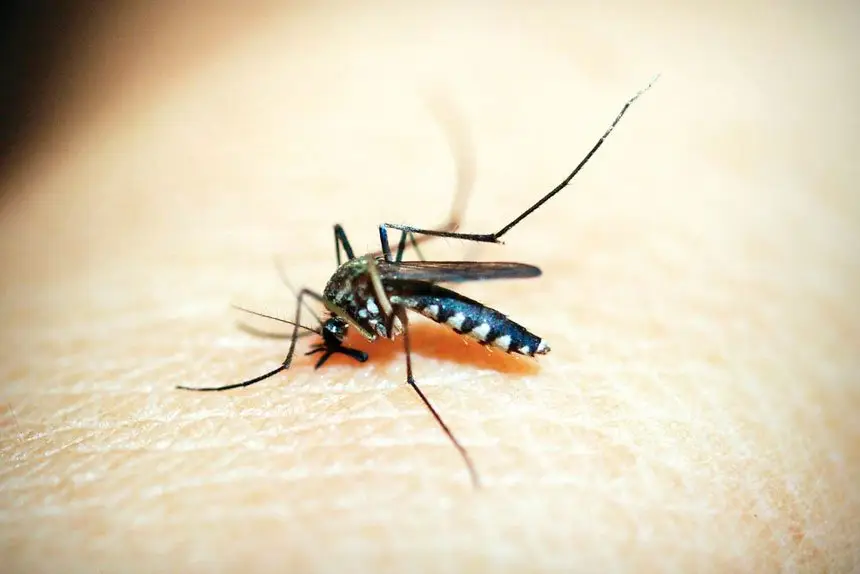
ONCE notorious for its overwhelming mosquito infestation, Russell Island is finally experiencing a respite from the buzzing menace that plagued its residents for generations.
Known as the “mosquito capital” of Queensland, the island’s battle with the bloodsuckers has been ongoing since the 19th century, with residents using creative methods—such as smouldering buckets of manure—to fend off the swarms.
The island’s mosquito problem reached its peak in the mid-20th century, forcing many to abandon their homes in search of relief.
For decades, mosquitoes became the antiheroes of Russell’s history, with visitors and residents alike struggling to cope with constant bites and the maddening buzz.

In 1984, a newcomer recalled running from the island’s dense scrub, scratching and pleading: “We have to sell; this is too much.”
However, after years of frustration, many who once fled returned, braving the bugs in the hope of building a new life on the island.
“Why would you want to live in a mosquito-ridden, muddy swamp?” mainland associates would often ask.
Despite the mosquitoes’ grip on the island’s reputation, a dramatic shift has occurred in recent years.
Residents now say that the “mozzie season” is all but over, with only the occasional straggler left to remind them of the past.
Peak mosquito breeding season (on average) is October to April, however this current season has had weather conditions that are not ideal for mosquitoes, so numbers have been lower than normal.
The change can also be attributed to both extensive land clearing during the building boom and a series of targeted aerial treatments.
In 2023 and 2024 alone, the Council carried out 57 aerial mosquito treatments, bringing the total to 157 treatments since 2019.
While the decline of mosquitoes marks a welcome victory for residents, it seems the battle against biting pests is far from over.
The sandfly, another infamous island nuisance, remains a significant challenge.
It’s worth noting that the term “sandflies” is often misused to describe biting midges, another nuisance that has plagued the region.
These insects have a six-week breeding cycle and thrive in shaded gardens with moist soil.
However, the chemicals required to control them are not approved for use in the Moreton Bay Marine Park, where they breed.
Using these chemicals would harm other insects and organisms that are important to the local ecosystem.
The only effective method of control is applying barrier treatments to flat surfaces where midges land once they hatch.
As for mosquitoes, there’s a common misconception that their numbers increase due to tree clearing.
This isn’t the case.
Mosquito reproduction naturally declines as we move into the cooler months.
The islands in the region are often associated with high mosquito activity because they sit within one of Australia’s largest mosquito breeding areas.
Redland City Council has been working closely with Queensland Health and the Berghofer Medical Research Institute, conducting extensive trapping and testing of mosquito species to better understand their breeding patterns and determine the most effective treatment methods.
Mosquitoes don’t just impact residents; certain species travel along creek lines and freshwater areas, affecting wildlife such as koalas.
Recent research has shown that the genome for Ross River virus can be transferred from mosquitoes to koalas and then to humans, complicating the issue even further.
A significant challenge for the council is the financial burden placed on ratepayers to cover the cost of mosquito management on state-owned land.
Despite more than three-quarters of all mosquito treatments occurring on land owned by the Queensland Government, no financial support is provided to the council for this essential public health service.
The council has repeatedly sought funding from the Queensland Government, yet the responsibility and costs continue to be shifted onto the local government.
This issue extends beyond mosquitoes, with fire ant control costs also rising, further straining council resources.
Without state government support, the increasing financial burden on Redland City ratepayers will be substantial.
The idea that mosquitoes will simply disappear is misguided.
The Redlands is home to one of the largest mosquito breeding areas in Australia, and continued development in these areas provides an ongoing blood source for mosquitoes.
This increases the need for ongoing management efforts.
The council currently uses a combination of drone technology, helicopters, and manual backpack spraying to target mosquito populations and reduce their impact on both residents and wildlife.
For now, islanders are learning to live with a different kind of annoyance, still finding humour in the lingering memories of their mosquito-filled past.
“Please shut the screen doors; you’ve got to do that here,” one local resident reminds visitors, echoing the old rule that kept mosquitoes at bay during the worst of the island’s infestation.
But for now, at least the buzz is gone.